Editor’s Note
**Editor’s Note:** This article explores the multifactorial nature of skin aging and the importance of a multimodal treatment approach, drawing on a decade of clinical experience with PicoWay technology and insights from Candela’s recent VIP symposium in Bangkok.
A decade of clinical experience highlights PicoWay’s versatility.
“Korean microneedling RF and HIFU technologies are highly competitive globally.”
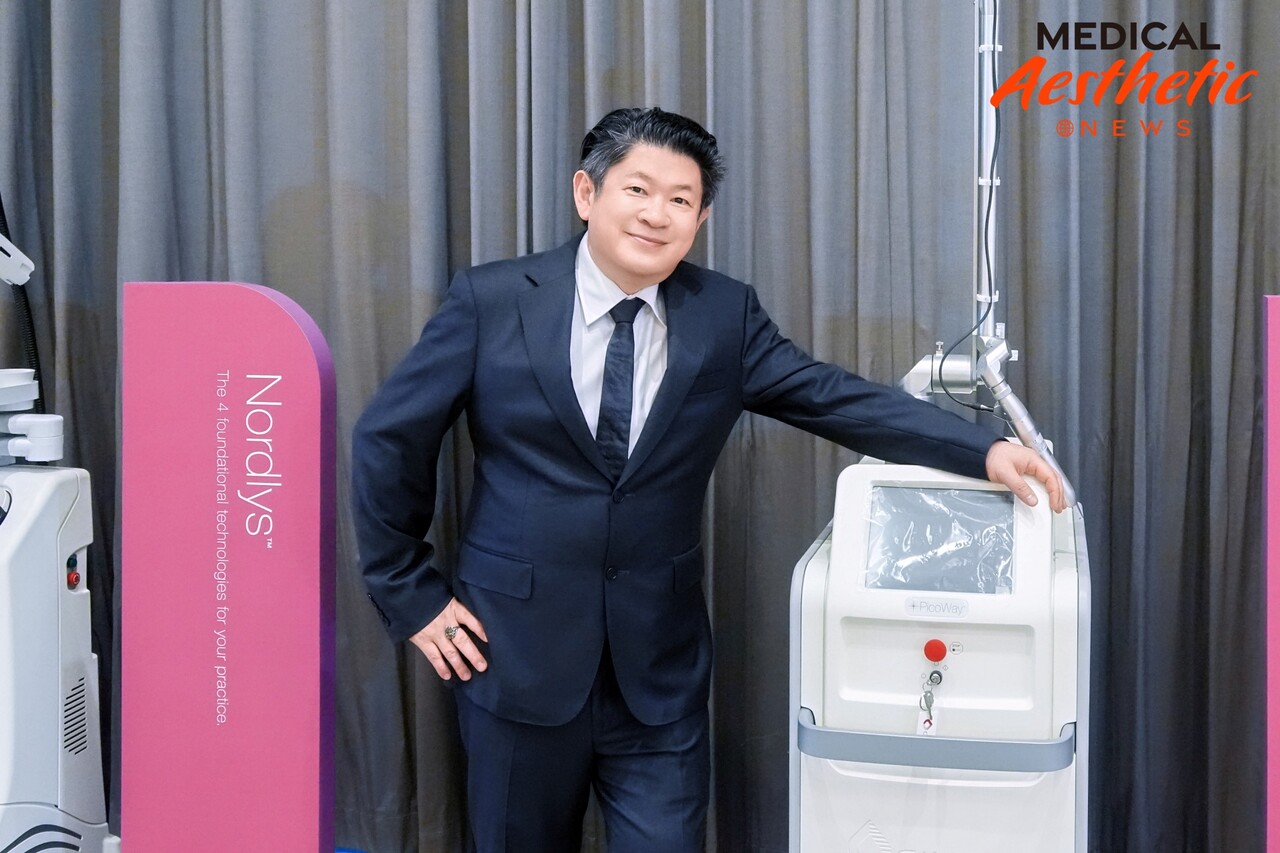
At Candela’s exclusive VIP symposium, ‘Turning Back the Skin Clock: Strategies in Skin Restoration,’ held in Bangkok on June 19, 2026, during IMCAS Asia 2026, Dr. Wichai Hongcharu, a dermatologist, laser specialist, and founder and director of Dr. Wichai Clinic (Bangkok, Thailand), delivered a presentation on the role of picosecond lasers in complex pigmentary disorders. He described the complex, refractory pigmentation encountered in Asian skin as a multifactorial process involving epidermal and dermal pigment as well as vascular components, and outlined a PicoWay-centered clinical strategy for managing this complexity.
Having trained at the Wellman Center for Photomedicine at Harvard, Dr. Hongcharu has accumulated approximately a decade of clinical experience with PicoWay. He identified its ultrashort pulse durations—which favor photoacoustic effects while reducing unwanted thermal effects that may contribute to melasma exacerbation—as well as its range of wavelengths and handpieces as key clinical strengths. We spoke with him about his clinical use of PicoWay, the competitiveness of Korean manufacturers, and emerging trends in the Asian aesthetic medicine market.
“The message I wanted to convey today is the role of picosecond lasers in complex pigmentary disorders. Asian patients often present with multiple overlapping pigmentary conditions rather than a single isolated disorder. Because several processes may coexist, having a device capable of addressing this complexity is critical. I believe such a device should be technologically advanced while also offering safety and patient comfort.”
“PicoWay’s greatest strength is its advanced technology. As far as I know, I haven’t encountered another picosecond laser that achieves a shorter pulse duration. This favors photoacoustic effects and helps reduce unwanted thermal effects that may contribute to melasma exacerbation. In my experience, this is a major advantage, because it can deliver good outcomes with less patient discomfort.”
“I first used PicoWay about ten years ago, and I consider it the most advanced picosecond laser technology. Even at that time, its ability to deliver very short picosecond pulses stood out. To this day, I have not encountered another device that delivers pulse durations in this range.”
“PicoWay is designed to be highly versatile and can be used across a broad range of skin types, from fair to deeply pigmented skin. Appropriate wavelength selection is particularly important when treating darker skin types. Because pulse characteristics vary by wavelength and handpiece, I can select the wavelength, beam delivery mode, spot size, and energy settings according to the depth of the lesion and the patient’s skin type. In other words, PicoWay enables an individualized approach to each patient and lesion.”
“PicoWay is already a highly refined, well-designed system. Over the past decade, its distinctive engineering has helped it establish a clear position in the market. Going forward, I would like to see a more modern console design and more ergonomic handpieces. Technically, I already consider it an excellent system. The main opportunity for improvement would be faster, more intuitive operation.”
“The field of aesthetic medicine has changed considerably in recent years. Technology is evolving to maintain efficacy while reducing the burden on patients. Patients increasingly expect to return to their daily routines quickly and with minimal downtime, so devices need to be both patient-friendly and practitioner-friendly.”
“Korean manufacturers are particularly competitive in microneedling RF. They also offer many excellent monopolar RF platforms, and the RF market in 2026 is highly competitive. HIFU is another area in which I believe Korean companies currently hold a strong position. It is striking how Korea has emerged as a global leader in aesthetic medicine.”
“Yes. I serve as an advisor and KOL for several Korean companies. I find Korean energy-based devices particularly interesting, and many are well suited to the skin types commonly encountered in Asian populations, including patients in Thailand.”
“Key trends this year include newer microneedling RF systems from Korean manufacturers, as well as platforms that combine monopolar and bipolar RF, multiple RF modes, or dual frequencies. Korean companies are developing versatile, multipurpose platforms aimed at improving the efficiency of skin-tightening treatments in our market.”