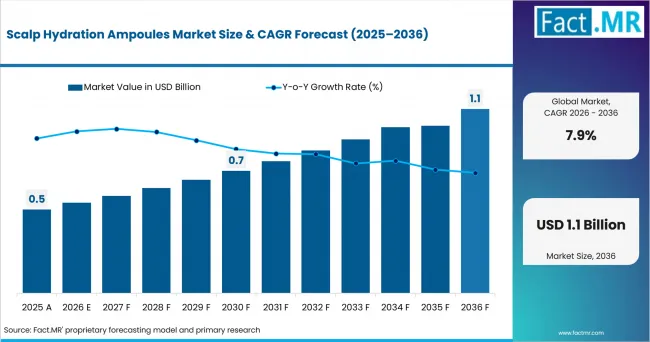
The scalp hydration ampoules market is gaining traction as regulatory listing discipline and the skinification of haircare reshape product development. South Korea leads with a projected 9.4% CAGR through 2036, driven by K-beauty scalp rituals and export-led innovation. For overseas buyers, this signals a shift toward treatment-led formats that require precise documentation, controlled dosing packaging, and skincare-inspired ingredient stories to succeed in premium and dermocosmetic channels.
## Market signal
Regulatory listing discipline is pushing brands to document ingredient identity and responsible-person data. The U.S. Food and Drug Administration reported 1,102,092 active cosmetic product listings under MoCRA as of March 2026, supporting stronger documentation expectations for leave-in scalp formulas before retail expansion. This trend raises trust requirements for USA and export-facing brands, helping explain why treatment-led formats can carry higher prices than rinse-off products.
## Skinification of haircare
Skinification of haircare is projected to capture 44.0% share in 2026 because scalp care language now borrows from skincare routines. This positioning connects humectants, barrier support, and microbiome balance into one easy story, letting scalp ampoules sit beside serums rather than basic conditioners. Hyaluronic Acid leads ingredient share due to low education burden and broad fit with dry-scalp positioning, while Niacinamide leads the active base layer by bridging oil-balance and barrier comfort language.
## Regional growth dynamics
South Korea is projected to record a 9.4% CAGR through 2036 as K-beauty scalp routines and export-led product development expand. Korea.net reported cosmetic exports reached USD 10.2 billion in 2024, allowing global launches to be tested through Korean scalp routines before wider rollout. China is expected to expand at 8.7% CAGR as online beauty buyers accept targeted treatment formats, though suppliers need China-specific texture claims due to humid climates. The United States is forecast to grow at 8.1% CAGR, supported by prestige beauty and salon channel education. Japan is expected to advance at 7.8% CAGR, with the Japan Cosmetic Industry Association reporting hair care accounted for 28.0% of cosmetic shipments by value in 2023. Germany is projected to rise at 7.5% CAGR, where dermocosmetic retail favors clearer scalp comfort claims.
## Sourcing context
Packaging teams should support precise part-line application because consumers need controlled dosing. Small vial packaging cost exposure means scalp ampoules compete for the same shelf conversation even when product purpose differs. The American Academy of Dermatology Association states dandruff shampoo can treat mild to moderate seborrheic dermatitis, creating a clear boundary between cosmetic hydration and condition management. Brands that overstate medical outcomes risk regulatory review, so safer positioning focuses on hydration, comfort, and appearance support.
## What buyers should watch
Buyers should monitor regulatory updates like the FDA's February 2026 Cosmetics Direct update for biennial registration renewal, which gives responsible persons a clearer path for managing facility records. Dermocosmetic retail education formats have already trained some consumers to use hair products between wash days, making subscriptions work best when brands avoid cure language and focus on routine consistency. L'Oréal Groupe reported the global beauty market grew 4.5% in 2024, supporting premium beauty launches built around routines and usage discipline.