L Lashnews Medical aesthetics sourcing from China
News Sourcing Guide

【Cameroon】Body Filler: Cameroon’s Ministry of Health Clarifies Legal Framework

Editor’s Note

**Editor’s Note:** This article highlights a growing public health concern in Cameroon, where unlicensed influencers and individuals are promoting dangerous, unauthorized aesthetic injections. We urge readers to exercise extreme caution and consult only qualified medical professionals for any cosmetic procedures.

Context and Warning

The situation is serious. In Cameroon, injecting various products into the body for aesthetic purposes is a medical procedure, as it is elsewhere. In other words, only specialized doctors are authorized to perform it. Unfortunately, many Cameroonian influencers and unauthorized individuals are promoting it online through dangerous advertisements, thus opening the door to a real public health problem. Body filler is generally sought after by women to achieve curves in the buttocks, breasts, and other body parts.

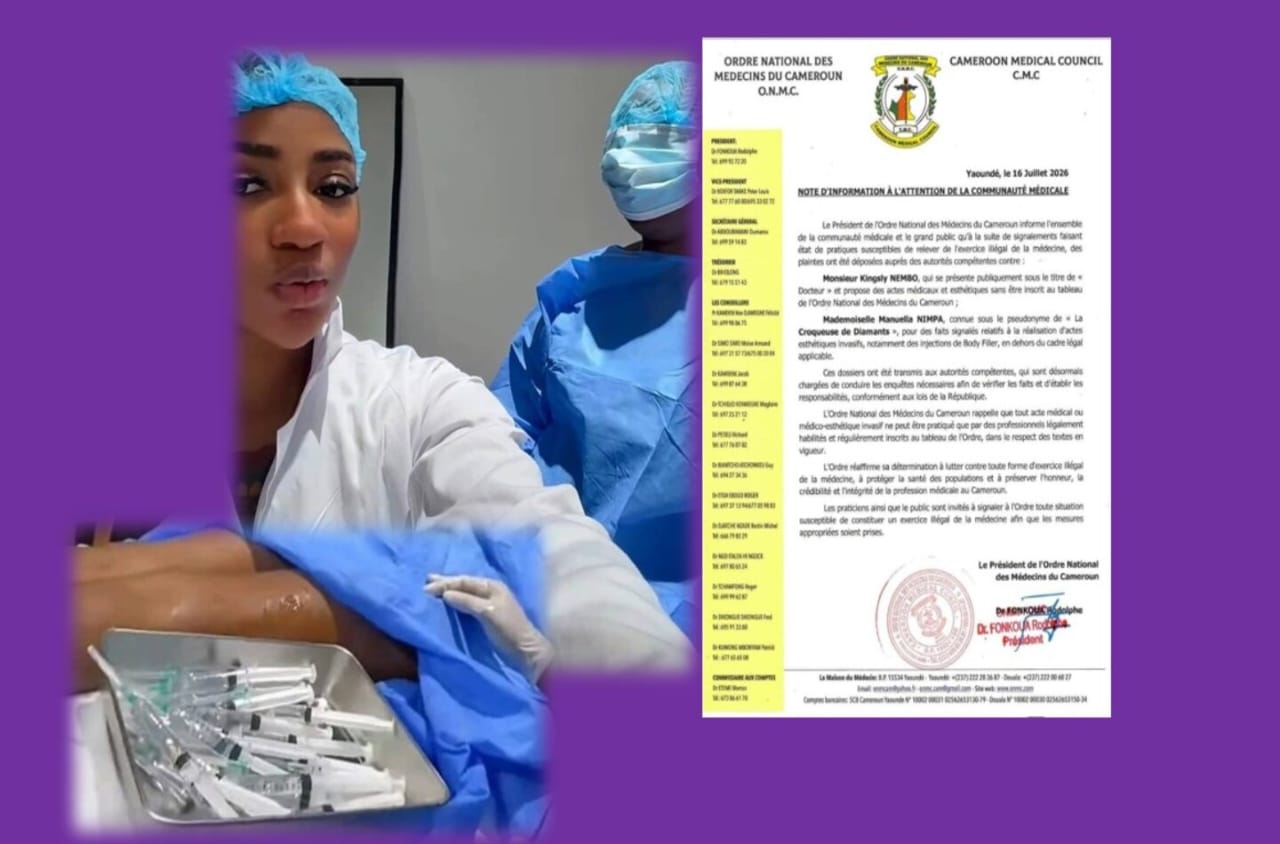
The statement from the Minister of Public Health, Manaouda Malachie, comes in a specific context: the proliferation of body filler offers on the internet in recent years, and a complaint filed on July 15, 2026, against two Cameroonian influencers, namely Manuella Nimpa, known as “croqueuse de diamants,” and Kingsly Nembo, by the President of the Cameroon Order of Physicians, Dr. Fonkoua Rodolphe.

The Minister of Health wanted to clarify the protocol related to the practice of this specialized medical procedure, while specifying the dangers to which users are exposed in the future.

“The Minister of Public Health, Dr. Manaouda Malachie, informs the national public that he has been made aware of the proliferation, on social networks and in certain private spaces, of promotional activities and injections of products presented under the name ‘Body Filler’ for the purpose of increasing the volume of the buttocks, breasts, or other parts of the body. The Ministry of Public Health reminds that acts of injecting body fillers constitute medical acts that must be performed exclusively by duly qualified health professionals, in authorized health facilities, in strict compliance with current regulations, and reserves the right to refer any offender to the competent authorities. The Minister particularly draws the public’s attention to the serious risks associated with the use of unapproved products or those administered by unqualified persons, including: severe infections; allergic reactions; deformities and chronic pain; migration of the product within the body; tissue necrosis; life-threatening complications. Consequently, the Ministry of Public Health invites the population to exercise the utmost vigilance regarding ‘Body Filler’ offers disseminated on social networks or in unauthorized locations; reminds that no aesthetic medical act should be performed outside a regulated health framework; urges anyone wishing to undergo an aesthetic procedure to consult a qualified doctor or surgeon in an authorized health facility; informs that the competent services of the Ministry are carrying out the necessary verifications, and that any activity carried out in violation of the regulations will be subject to the administrative and judicial measures provided for by the texts in force. The Minister of Public Health finally calls on the population to prioritize their safety and health, and to report any suspicious practice to the competent health authorities.”
Medical Risks and Regional Context

The procedure is far from trivial and requires advanced medical skills (plastic surgeons or aesthetic doctors). Because body filler is actually an injectable gel (usually based on hyaluronic acid) used to reshape and increase the volume of certain areas of the body without surgery. Consequently, uncontrolled use can lead to dangerous impacts on the health of its users, in this case women. Cameroon is not an isolated case. In Kinshasa (Democratic Republic of Congo), the demand for aesthetic interventions—injections, body contouring, BBL (Brazilian Butt Lift)—is exploding, driven by TikTok, Instagram, and aggressive digital marketing. The risks are the same: infections, necrosis, vascular complications.

Full article: View original |
⏰ Published on: July 22, 2026