Editor’s Note
This article explores the shift in Ireland’s aesthetics industry from traditional cosmetic procedures toward regenerative treatments, subtle injectables, and collagen stimulation, reflecting evolving patient preferences and industry innovation.
Experts explain why regenerative treatments, subtle injectables and collagen stimulation are replacing traditional cosmetic procedures across Ireland.
The aesthetics industry moves fast. One minute everyone wants lip filler; the next, collagen-stimulating injectables, peptides and a ‘ponytail’ facelift. If you want a snapshot of what’s capturing our collective attention, Google is as good a barometer as any. Over the past year, Irish searches for terms such as “deep plane facelift”, “vampire facial” and “bleph” — shorthand for blepharoplasty, the eyelid surgery that removes excess skin — have surged, alongside consistently high interest in Botox and fillers.
Just as telling are the treatments falling out of favour. Traditional fillers, which can migrate or become lumpy, harsh laser resurfacing and thread lifts, which often deliver short-lived results and can leave scarring, are less in demand, and the facelift — once viewed as a last resort for ageing celebrities — is moving into the mainstream.
Future Beauty Show founder Liz Dwyer, who has a front-row seat to the industry’s fastest-moving trends, believes our current aesthetics boom is being driven not only by changing attitudes, but by the explosion in clinics and treatments now available, meaning supply is finally starting to meet demand.
At the same time, Eavanna Breen, clinical director of the Eavanna Breen Skin and Laser clinic, says people can feel undue pressure thanks to social media and their peers.
In her own practice, Breen often encourages women to explore non-surgical treatments like microneedling and radiofrequency, which are popular for skin tightening.
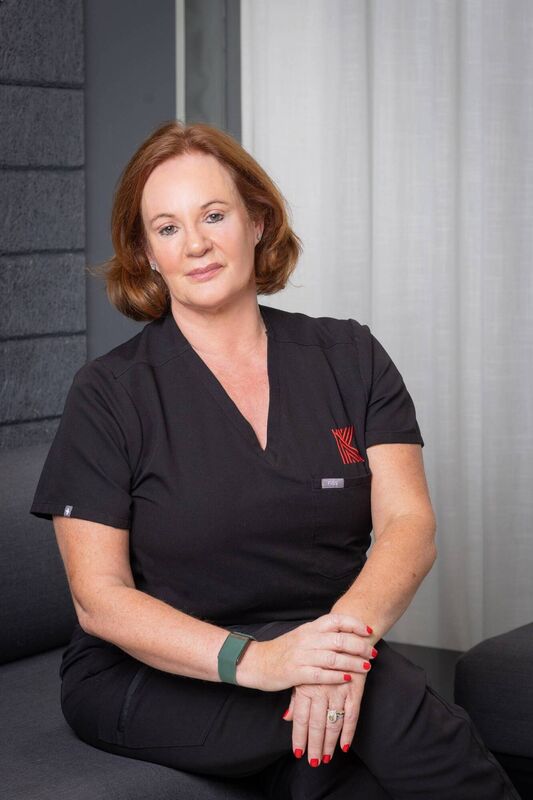
Eavanna Breen, clinical director of the Eavanna Breen Skin and Laser clinic. Picture: Emily Quinn

Microneedling offers similar results.
The new kid on the block, Exosomes, are microscopic particles derived from stem cells that deliver growth factors to dormant cells to stimulate collagen production and hair growth. They can be injected, but in the case of microneedling, they’re applied topically and worked into the skin that way.
Practitioners are moving towards ‘cocktails’ of injectables, and it is common for women to opt for the chest upwards (as opposed to just the face), “for a much more natural result”
The Institute offers a comprehensive list of face and body treatments, laser and injectables, including Philart, a polynucleotide injection. This uses purified DNA fragments derived from biocompatible salmon or trout, and works to stimulate cellular repair, boost collagen and elastin production, and deeply hydrate the skin from within.
Stateside, a common look among American Republican elites dubbed Mar-A-Lago face is big on fillers and heavy makeup. Here, Kerry Hanaphy says the tide is turning away from that unnaturally plumped look.
Clinician Kerry Hanaphy. Picture: Emily Quinn

Hanaphy, who has just opened her fifth cosmetic clinic in Dublin’s Nutgrove, extols the benefits of Botox and fillers, but she says the type of filler they used today and the results women are looking for have changed.
Ryan, who recently created ID Formulas, a new supplement designed to reverse biological signs of ageing, agrees.
She is a fan of Sculptra, an injectable made from poly-L-lactic acid (PLLA) which encourages cells to rebuild structural support.
In tandem with Sculptra, she is a fan of ablative treatments such as CO2 laser, radiofrequency, microneedling, and Ultherapy, all of which focus on collagen production.
And there’s something else that is driving up demand for cosmetic treatments: GLP-1 weight loss drugs. A recent Ireland Thinks poll found that 5% of Irish people are currently using, or have previously used, weight loss medications such as Ozempic, Mounjaro or Wegovy. That’s set to rise further as new drugs and oral options enter the market.
The results of significant weight loss, whether you’ve used a GLP-1 or not, can manifest in loose skin on the face and neck, aka ‘Ozempic face’.
Unsurprisingly, Ryan things supplements are increasingly entering the aesthetic chat, mirroring their popularity in the wider wellness space.