Editor’s Note
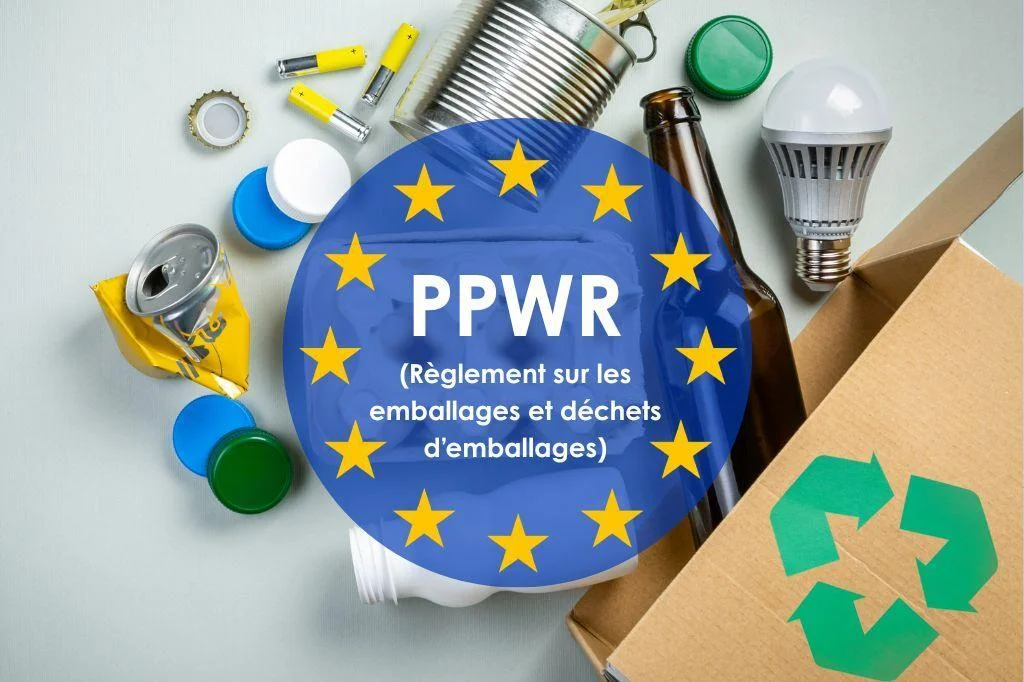
**Editor’s Note:** The PPWR regulation marks a significant shift in environmental policy, mandating that all packaging be recyclable, incorporate recycled materials, minimize harmful chemicals, reduce excess volume, and prioritize reuse. This binding regulation moves beyond earlier directives, setting enforceable standards for a circular economy.
The PPWR regulation establishes a new generation of environmental rules based on the principles of the circular economy. According to this regulation, all packaging materials must be:
- Recyclable.
- Partially made from recycled materials.
- As free as possible from chemicals of concern.
- Designed to reduce unnecessary volume and weight.
- Reusable whenever possible.
Unlike previous European directives, this regulation is directly applicable in all EU member states without needing to be transposed into national legislation, making it binding on all suppliers wishing to access the European market, including Moroccan companies.
Morocco is home to over 13,000 industrial enterprises, thousands of which export directly or indirectly to Europe. The regulation’s impacts will span numerous sectors, including:
- Plastics industry.
- Food industry.
- Fruit and vegetable exports.
- Fishing sector.
- Automotive industry.
- Textiles.
- Electrical and electronics industries.
- Cosmetics.
- Pharmaceutical industries.
All these sectors rely daily on packaging materials, which are now required to comply with the new European standards.
The Moroccan plastics industry will be one of the most affected sectors by these reforms, as it includes hundreds of companies, provides tens of thousands of jobs, and supplies various national industries with packaging solutions.
Manufacturers will need to invest in:
- Using recycled plastic resins.
- Developing eco-design solutions.
- Improving product recyclability.
- Gradually increasing the proportion of recycled raw materials.
Companies that adapt early will enhance their competitiveness, while those that lag behind risk losing strategic markets within the EU.
The food industry, as one of the largest export sectors to Europe, will also be required to adapt its product packaging.
Exporters of:
- Berries,
- Citrus fruits,
- Tomatoes,
- Olive oil,
- Canned fish,
- Processed food products,
will need to prove their packaging complies with the new standards to ensure continued access to the European market.
The automotive sector, which has become Morocco’s leading export sector with over 160 billion dirhams in annual exports, will not be immune to these changes.
Packaging materials used for transporting:
- Spare parts,
- Electronic components,
- Electrical equipment,
- Batteries,
will gradually be required to comply with PPWR requirements.
Global industrial groups operating in Morocco, already engaged in decarbonization programs, are expected to accelerate the pace of this transformation.
Despite its mandatory nature, PPWR is not just a regulatory burden but also opens new industrial horizons.
European demand for sustainable and recyclable packaging materials is expected to grow significantly in the coming years, giving innovative Moroccan companies a chance to strengthen their presence with major European clients and enter high-value-added markets.
Morocco possesses several strengths that qualify it to benefit from these transformations, including:
- An ambitious industrial strategy.
- Advanced logistics infrastructure.
- Modern industrial zones.
- Exceptional geographical proximity to Europe.
- Growing investments in plastic recycling.
- Expanding circular economy projects.
- Expansion of renewable energy and decarbonization projects.
These factors provide a conducive environment for developing a new generation of sustainable packaging materials.
Adapting to PPWR requires the mobilization of all stakeholders.
Companies must invest in:
- Research and development.
- Updating production lines.
- Strengthening quality control systems.
- Obtaining required European conformity certifications.
In turn, public authorities, professional associations, technical centers, standardization bodies, and financial institutions will play a key role in supporting this transformation.
Priorities include:
- Developing an integrated national plastic recycling industry.
- Increasing production of recycled plastic for food packaging.
- Strengthening testing and control laboratories.
- Supporting small and medium-sized enterprises in meeting standards.
- Training new talent in eco-design and lifecycle analysis of packaging materials.
The “Made in Morocco” label, launched in 2025, can become a strategic tool to support the competitiveness of Moroccan companies.
By combining industrial quality, environmental compliance, and innovation, this label will give Moroccan products an additional competitive advantage in European markets, where environmental standards have become a key factor in purchasing decisions.
By 2030, the PPWR regulation could become a powerful driver for modernizing Moroccan industry.
Companies investing today in sustainable packaging solutions will enjoy a long-term competitive advantage, strengthen their presence in global markets, and contribute to building a more innovative, sustainable, and resilient Moroccan industry capable of facing economic transformations.
Ultimately, the challenge is no longer just about complying with European legislation, but about turning this commitment into an opportunity to enhance competitiveness, innovation, and value creation.