Editor’s Note
**Editor’s Note:** This article examines the sharp rise in Taiwanese outbound travel, with a particular focus on the surge in visitors to South Korea—from 540,000 to 2.32 million—and what this growth curve reveals about shifting travel trends and regional tourism dynamics.
According to the latest statistics from the Tourism Administration, Ministry of Transportation and Communications, Taiwanese outbound travel reached 5,365,205 person-trips in the first quarter of 2026, a 19.4% increase year-on-year. Japan remains the top destination, with South Korea closely following in third place.
Data released by the Korea Tourism Organization (KTO) for the same period is even more noteworthy: approximately 540,000 Taiwanese travelers visited South Korea in Q1 2026, a substantial 38% increase year-on-year. The full-year figure is projected to reach 2.32 million, setting a new historical record. The key question behind these numbers is: where exactly are these growing numbers of travelers spending their money?
The answer is no longer the beauty counters at duty-free shops or the garment wholesale streets of Dongdaemun. The itineraries of Taiwanese visitors to South Korea are being rewritten. Industrial-style warehouse cafes in Seongsu-dong, designer brand alleys in Hannam-dong, and curated flagship stores in Apgujeong are gradually replacing Myeongdong and Dongdaemun as the core must-visit destinations.
This shift is not unique to Taiwanese travelers but reflects a broader trend among all foreign tourists visiting South Korea. A report by Far East News, titled “Experience-Based Consumption in Seoul,” comprehensively analyzes the causes and on-site examples of this structural shift, from consumption data to the displacement of commercial districts, outlining the complete trajectory of Seoul tourism moving from “where to buy” to “where to feel.”
KTO data shows that approximately 4.76 million foreign tourists visited South Korea in Q1 2026, a 23% increase year-on-year. Among them, Taiwanese tourists, numbering 540,000, ranked third globally, with a growth rate of 38%, significantly higher than the overall average growth rate of inbound tourists. This indicates that the Taiwanese segment is not only growing in size but also at a faster pace than the overall market. KTO has set a clear target of 2.32 million Taiwanese visitors for the full year, highlighting the increasing importance of the Taiwanese market.
A comparison with the Japanese market is instructive. According to the Japan Tourism Agency’s Q1 2026 survey on inbound visitor consumption, Taiwanese travelers ranked first globally with a total expenditure of 388.4 billion yen, surpassing South Korea’s 318.2 billion yen and China’s 271.5 billion yen.
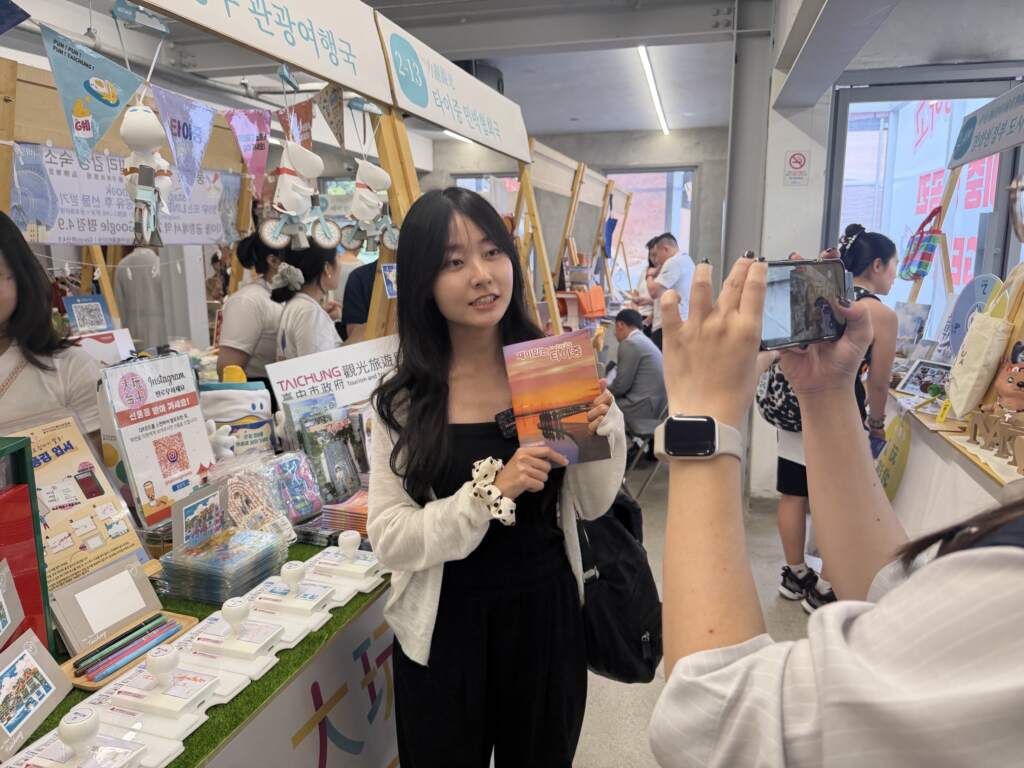
While the spending power of Taiwanese travelers in Japan is undeniable, these figures also illustrate that the budget allocation for Taiwanese outbound tourism is expanding simultaneously across multiple destinations, rather than being concentrated in a single market. To consolidate and expand this growing customer base, KTO held a large-scale tourism exhibition in Taiwan in mid-May, inviting Korean celebrities and chefs for on-site interactions, aiming to convert online buzz into actual bookings and spending.
The shift in Seoul’s commercial center of gravity is not merely a media narrative. According to KTO data, credit card spending by foreign tourists in Seoul in April 2026 reached 1.1532 trillion won, a 50.5% increase year-on-year. Spending at large shopping malls increased by 62.5%, while medical tourism spending rose by 59.2%, and spending in the beauty industry increased by 35.0%.
Shopping remains the largest expenditure category, but the consumption pattern is clearly diversifying, expanding from simple goods transactions to high-value-added consumption centered on experiences and preferences, such as medical care, beauty, and food.
The significance of this trend for Taiwanese readers goes beyond “Seoul is fun.”
When a tourism market’s consumption structure shifts from goods-oriented to experience-oriented, it means travelers are willing to pay a premium for “unrepeatable place memories” rather than just comparing prices.
Seongsu-dong, originally a factory district with preserved red brick buildings and old warehouses, has become an opportunity for independent brands and pop-up stores. The movement patterns of local youth have become a wind vane for the next destinations of foreign tourists.
This is evident from flight and booking data. Travel agencies like Cola Tour have consistently reported growth in both group tours and independent travel to South Korea, with a clear diversification of travel themes beyond traditional shopping itineraries in the capital area.
With the launch of Incheon Airport’s Smart Pass facial recognition system and the extension of the K-ETA exemption for Taiwanese travelers until the end of 2026, the friction in customs and entry procedures has been significantly reduced. This is particularly crucial for high-frequency repeat visitors—they don’t need a “first-time tourist must-buy list” but are looking for different experiential scenes with each visit.
This structure of high-frequency repeat visitors naturally aligns with experience-based consumption venues. When a traveler visits Seoul multiple times a year, the product mix in shopping malls loses its novelty. However, a brand flagship store that changes its display content every 21 days, or a designer brand alley in a side street with new stores opening each time, can continuously provide reasons for return visits.
This also explains why brands like Gentle Monster, which turn eyewear stores into curated spaces, continue to accumulate discussion on Taiwanese social media, rather than being just a fleeting topic.
The simultaneous growth in the number and spending power of Taiwanese travelers to South Korea is not just bystander information for local tourism and retail operators.
First, competition for flights and charter routes is intensifying. KTO’s clear target of 2.32 million visitors means airlines and travel agencies will continue to increase marketing resources to capture this market, potentially leading to more frequent adjustments in airfares and itinerary designs.
Second, for independent cafes, select shops, and designer brands in Taiwan, observing the logic of Seoul’s commercial district displacement reveals that the key to determining foot traffic is no longer the size of the store decoration budget, but whether the brand can continuously provide a “different from last time” spatial narrative and content update frequency.
Official statistics from both the Taiwan Tourism Administration and KTO point in the same direction: the scale and growth rate of Taiwanese travelers to South Korea are rising, and consumption behavior is shifting from pure purchasing to an experience orientation.
For travelers still planning their second-half-of-the-year trips to South Korea, Seongsu-dong, Hannam-dong, and Apgujeong have already replaced Myeongdong and Dongdaemun as the most discussed actual landing options on social media. The speed of this shift is likely to be further validated in the next quarter’s official statistics.