Editor’s Note
**Editor’s Note:** BASF and Bota Biosciences have launched a recombinant human collagen III raw material, SkinNexus Collag3n, marking their entry into the global market.
BASF and Bota Biosciences have jointly developed the recombinant human collagen III raw material ‘SkinNexus Collag3n’ and entered the global raw material market, according to the medical device industry on the 22nd.
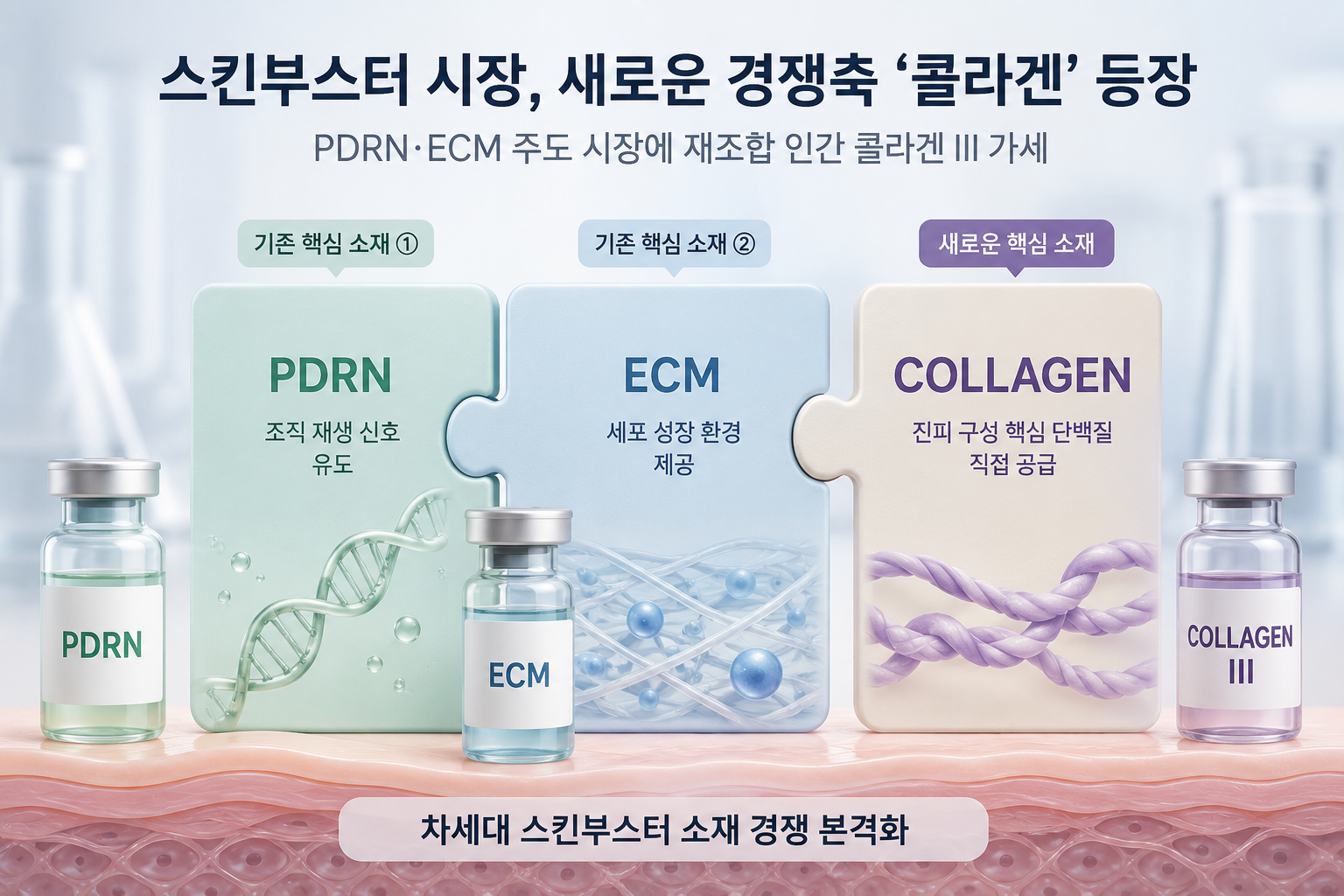
Competition over next-generation skin booster materials is intensifying. While PDRN and ECM-based products currently dominate the domestic market, the entry of BASF, the world’s largest chemical company, with recombinant human collagen III is expected to accelerate the collagen market being pioneered by Korean company BioPlus.
The domestic skin booster market has been led by PDRN and extracellular matrix (ECM) products. PDRN, a salmon-derived DNA component, has rapidly expanded its market with tissue regeneration effects, while ECM-based products have also strengthened their position in medical settings through skin regeneration and tissue restoration. Medical professionals’ experience and consumer awareness have been concentrated on these materials, making it difficult for new mechanism raw materials to establish themselves.
However, the global market is showing signs of a gradual shift in the competitive landscape for next-generation skin booster materials. Recombinant human collagen III is gaining attention due to its differentiated mechanism from existing PDRN and ECM. While PDRN acts as a signaling molecule inducing tissue regeneration and ECM focuses on providing a cell growth environment, recombinant human collagen directly implements the core protein that constitutes the dermis.
Notably, the microbial fermentation-based production method avoids animal-derived raw materials, reducing infection and immunological risks, and enables mass production of uniform quality in GMP environments.
The collagen III ingredient from BASF and Bota Biosciences is a vegan recombinant protein produced through yeast fermentation, featuring 100% identical amino acid sequence to human collagen. In 3D skin models, collagen I, III, and V production increased by 48%, 82%, and 71% respectively, and clinical trials on women aged 53-70 showed skin sagging and wrinkle improvement effects within 4 weeks.
As BASF is the world’s largest chemical company and a ‘game changer’ in the global raw material market, expectations are rising that the recombinant human collagen III market will gain momentum.
In Korea, BioPlus has succeeded in developing recombinant human collagen III and is moving to preempt the market. The company has developed Korea’s first recombinant human collagen III with an amino acid sequence identical to human collagen, expanding its business into skin boosters, cosmetic raw materials, and medical materials.
While PDRN and ECM products have established a strong foothold in the domestic skin booster market and a short-term market shift is unlikely, the company believes it can increase market share in the long term by leveraging the strengths of next-generation materials. BioPlus plans to begin full-scale supply of collagen-related products from the third quarter of this year.