Editor’s Note
**Editor’s Note:** This analysis, based on KOTRA’s latest report on the Japanese cosmetics market, outlines three critical strategies for Korean beauty brands: premiumization, securing original patents, and diversifying distribution channels. As K-Beauty seeks deeper market penetration, these approaches are key to overcoming imitation risks and building a resilient portfolio.
A SWOT analysis of the Japanese cosmetics market conducted by KOTRA offers interesting insights, suggesting strategies for the next phase of K-Beauty expansion. (Cited from KOTRA’s ‘Next K-Beauty: Strategies for Korean Companies Entering the Japanese Cosmetics Market’)
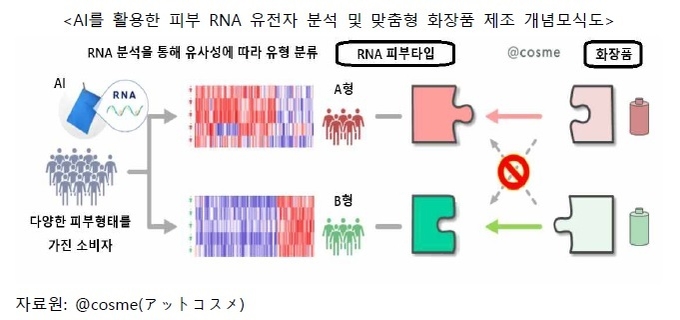
First, the recent Japanese cosmetics market shows two major trends: ▲ The expansion of the ‘Seibunkai’ (成分買い) culture, where consumers purchase products based on ingredients that guarantee skin improvement efficacy and safety tailored to individual skin concerns; and ▲ The integration of advanced technologies like AI and digital marketing into R&D, manufacturing, distribution, and marketing to enhance productivity and customer experience.
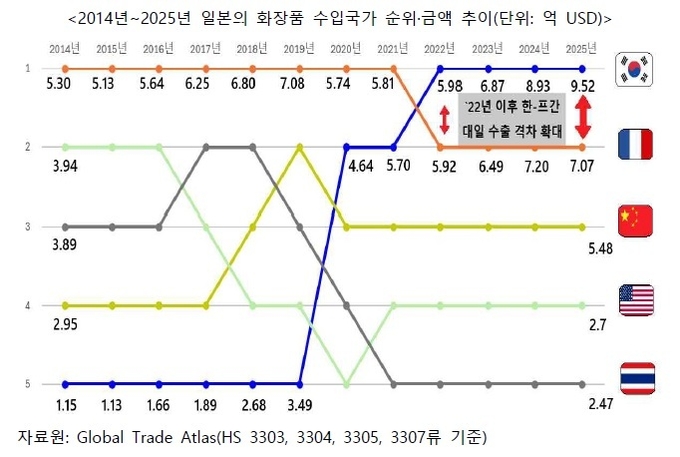
Currently, K-Beauty has maintained its position as the No. 1 imported cosmetics brand in Japan for three consecutive years, widening the gap with second-place France. Local female consumers evaluate K-Beauty’s appeal as offering good value for money, pleasant texture, trendiness, and effective ingredients.
K-Beauty’s Strengths include: ➊ Securing a technological edge in formulating high-efficacy ingredients specialized for skin diagnosis and trouble care, such as Houttuynia cordata, Cica, and PDRN; ➋ Proactively analyzing consumer needs by examining Japanese e-commerce sales trends and SNS product reviews; ➌ Possessing a flexible and advanced supply chain that minimizes lead time from new product planning and production to export in response to market changes.
Conversely, Weaknesses identified include a solidified image as a value-for-money brand, a skewed consumer base, and limitations in expressing efficacy and effects due to quasi-drug regulations. While highly popular among the 10-20s age group, usage rates are lower among older demographics. Furthermore, entering the market only with general cosmetics limits the direct claim of scientifically-backed effects like wrinkle improvement, whitening, and skin regeneration. Trend-focused products may also suffer from low brand recognition and difficulty in establishing local distribution partnerships.
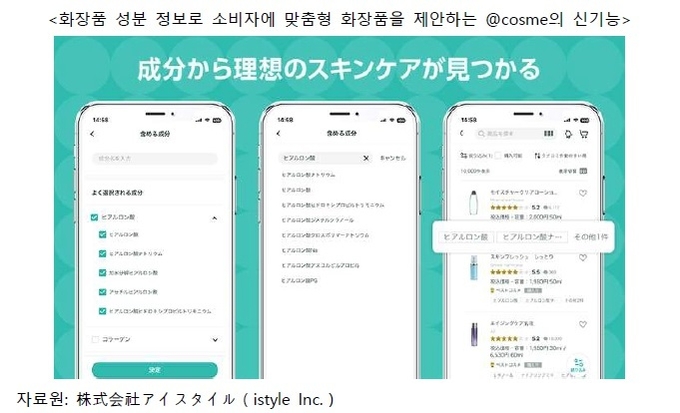
Nevertheless, ingredient-focused consumption and beauty tech utilizing AI and digital technologies are seen as Opportunities. KOTRA analyzes that as consumer purchasing criteria shift from brand to ingredient safety and efficacy, beauty tech-based personalized counseling, such as AI skin diagnosis and 3D virtual makeup, presents an opportunity for Korean companies to achieve high value-added.
On the other hand, Threats include premium products from Japan and the West, as well as the pursuit of latecomers from Asia like China and Thailand. The premium market is difficult to penetrate due to the brand power, technological prowess, capital strength, and long-standing trust of global and Japanese conglomerates. Additionally, the narrowing quality gap through global OEM/ODM and the development of niche markets using proprietary formulations and ingredients threaten K-Beauty’s stronghold. Furthermore, if regulations on cosmetic advertising efficacy claims are relaxed and the review process for quasi-drugs is simplified, ingredient competition in Japan is expected to intensify.
Based on the SWOT analysis, KOTRA proposes the following strategies for Korean companies entering Japan: ▲ Entering the premium market by obtaining quasi-drug (Iyakubugaihin) approvals; ▲ Maintaining innovative manufacturing competitiveness by securing early patents for proprietary formulas and active ingredients; ▲ Targeting the high-purchasing-power consumer base aged 40 and above, diversifying distribution channels into department stores and high-end select shops, and achieving high value-added through premium counseling centered on personalized precision skin diagnosis.
The advice is to shed the low-to-mid-price image and enter the high-value market by diversifying the portfolio with functional products that offer tangible benefits across generations—such as whitening, wrinkle improvement, and trouble care—and by adopting marketing based on scientific evidence like clinical data.
Experts also point out the need to physically limit the risk of core formula imitation and mass production of similar products through ‘black box processes,’ where only the generic base is outsourced to manufacturers while key active ingredients are added separately. Companies should also sign exclusive supply and usage agreements (lock-in) with manufacturers for specific ingredient combinations to prevent local competitors from imitating through the same manufacturing route.
Finally, the report emphasizes the need to enhance brand equity by providing customer experience (CX) through ‘experiential retail DX construction’ that combines Korean companies’ innovative IT capabilities with product planning skills, including in-store AI skin diagnosis and counseling services.