Editor’s Note
**Editor’s Note:**
KDRI, the clinical arm of GFC Life Science, is accelerating global expansion after showcasing at In-Cosmetics Korea 2026 and BIO Asia–Taiwan 2026, leveraging its expertise in human application tests and efficacy evaluations to support international cosmetic firms.
KDRI (Korea Dermatology Research Institute), the clinical business division of GFC Life Science (388610), is accelerating its entry into the global clinical evaluation market.
GFC Life Science is a bio R&D specialized company that has expanded its business areas from cosmetic bio-material R&D to clinical evaluation, functional skincare, and medical devices. The Korea Dermatology Research Institute, the company’s clinical business division, supports domestic and international cosmetic companies in product development and regulatory compliance, focusing on human application tests and efficacy evaluation technologies.
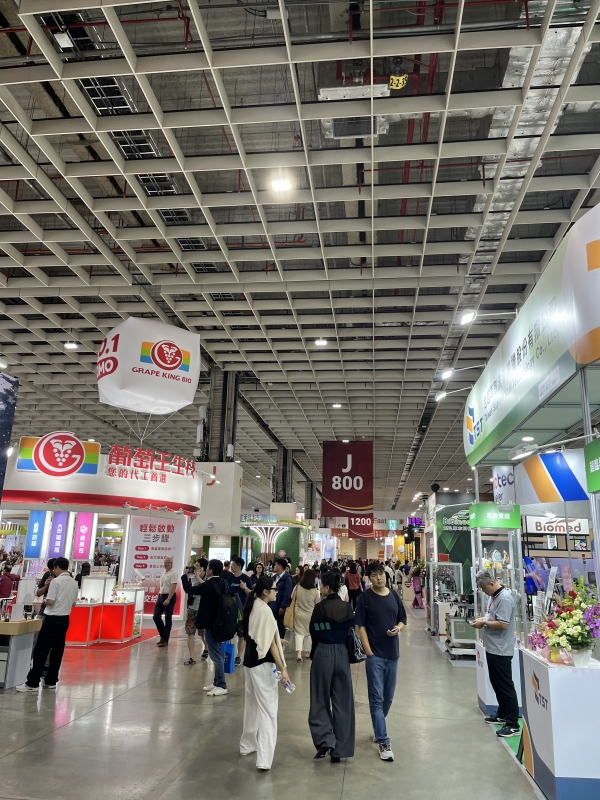
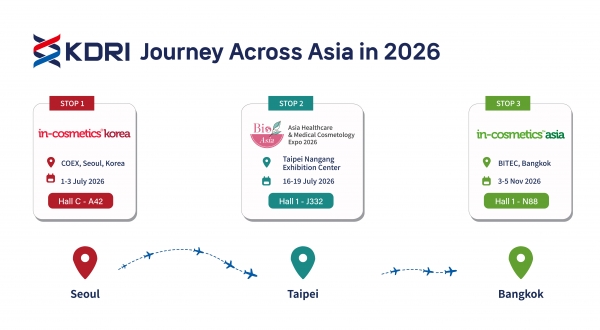
Following its participation in ‘In-Cosmetics Korea 2026’, KDRI recently expanded its overseas market presence by attending ‘BIO Asia–Taiwan 2026’ held at the Taipei Nangang Exhibition Center (TaiNEX) in Taiwan.
KDRI plans to further participate in ‘In-Cosmetics Asia 2026’ in Bangkok, Thailand this November, aiming to strengthen its position as a global evaluation institution, focusing on key Asian markets.
At BIO Asia–Taiwan 2026, KDRI conducted clinical evaluation and safety test cooperation consultations with local companies alongside its Taiwanese partner NewCore.
In particular, as interest in regulatory compliance and product reliability assurance grows in the Taiwanese cosmetics market, KDRI confirmed demand for safety tests to prepare PIF (Product Information File).
Beyond PIF-related tests, consultations at the event also covered hair loss efficacy evaluation, sensitive skin assessment, skin absorption tests, and skin temperature reduction tests. Active inquiries were made regarding KDRI’s patented evaluation technologies, with analysis indicating that the overseas applicability of KDRI’s clinical evaluation technologies has been positively confirmed.
Additionally, cleansing product developers showed high interest in KDRI’s patented technology for analyzing surfactant residues in the stratum corneum. This technology precisely analyzes cleansing ingredients remaining on the skin after product use to evaluate residue levels, offering a differentiated approach from conventional simple cleansing power evaluations.
Through this global exhibition, KDRI also proposed new evaluation methods, including:
▲ Anti-aging evaluation based on cellular senescence
▲ Cleansing efficacy evaluation for 2-Nonenal, a causative component of silver generation body odor
▲ Age-related changes in skin microbiome analysis and balance care technology
The anti-aging evaluation based on cellular senescence is a next-generation test platform that combines changes in cellular senescence biomarkers such as SA-β-gal with human application tests evaluating skin homeostasis decline due to cellular senescence, to assess anti-aging efficacy.
The cleansing efficacy evaluation for 2-Nonenal targets 2-Nonenal, a primary causative substance of lipid oxidation odor commonly observed in the silver generation, and objectively evaluates cleansing efficacy before and after product use through LC-MS/MS analysis of stratum corneum samples.
The skin microbiome age-related change analysis and balance care technology is an analysis platform based on next-generation gene sequencing technology that analyzes changes in skin microbial genomes and evaluates correlations between skin aging and skin microbiome balance.
