Editor’s Note
This article highlights the risks of seeking aesthetic treatments abroad, using a Taiwanese patient’s adverse reaction to Juvelook injections in South Korea as a cautionary example. It underscores the importance of considering post-procedure care, liability, and communication challenges before undergoing overseas medical procedures.
- A Taiwanese consumer developed facial nodules and swelling after receiving Juvelook injections in South Korea, facing difficulties seeking follow-up care upon returning to Taiwan.
- Risks of overseas aesthetic treatments include challenges in post-procedure follow-up, unclear liability, and gaps in communication and medical records.
- Doctors advise seeking immediate medical attention if symptoms like worsening redness, swelling, heat, pain, pus, or persistent lumps occur, and to bring relevant medical documents.
- Cross-border aesthetic procedures require prior verification of practitioner qualifications, product information, post-treatment follow-up mechanisms, and consideration of downstream medical costs.
#MedicalAesthetics #Nodules #PostProcedureFollowUp #Juvelook #CrossBorderAesthetics
By Yang Shan-chun, Chao Health
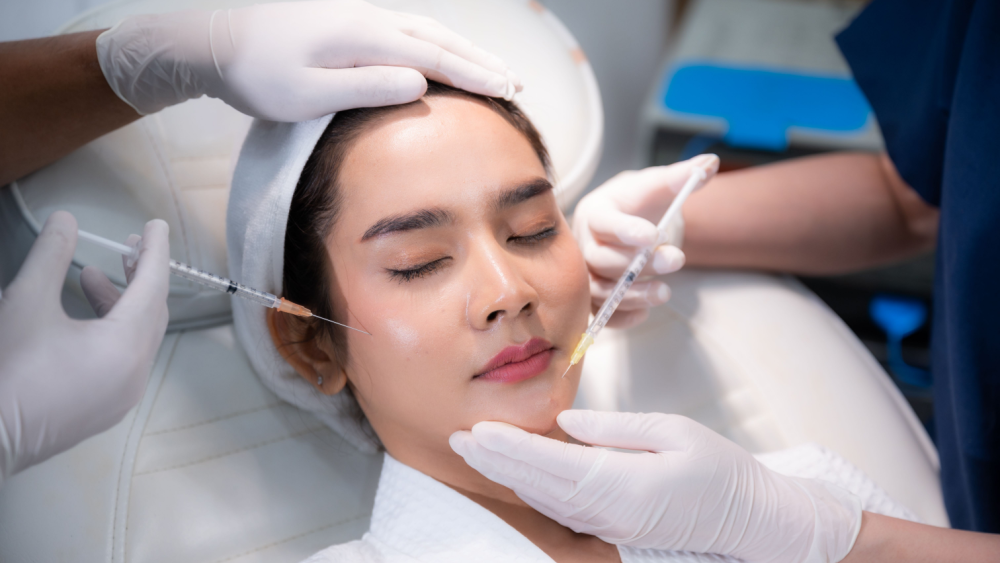
South Korea’s convenient medical aesthetic services and transparent pricing have attracted many Taiwanese to incorporate treatments into their travel itineraries. However, a recent case involved a consumer who developed facial swelling and nodules after receiving Juvelook injections in South Korea, requiring ongoing medical attention after returning to Taiwan. Dr. Liu Jia-lin, Director of Xin Shen Aesthetic Medicine Clinic, stated in an interview that the cause of individual cases must be assessed based on medical history, injection records, and imaging, and cannot be determined solely from online photos.
Dr. Liu noted that Taiwanese who undergo aesthetic procedures abroad often face difficulties with post-procedure follow-up upon returning home. With limited time overseas, symptoms like redness, pain, lumps, or unevenness may appear days or weeks later, making it hard to return to the original clinic. When seeking care in Taiwan, the new physician may not know who performed the procedure, which product was used, the dosage, or the injection layer, complicating diagnosis and treatment.
Dr. Liu has previously treated patients who returned from surgeries in South Korea or China with issues like unevenness. Since he was not the original surgeon and lacked original records, he could not guarantee “100% recovery.” He emphasized that the接手 physician must first clarify the problem, explain the scope and limitations of improvement, and then discuss treatment options.
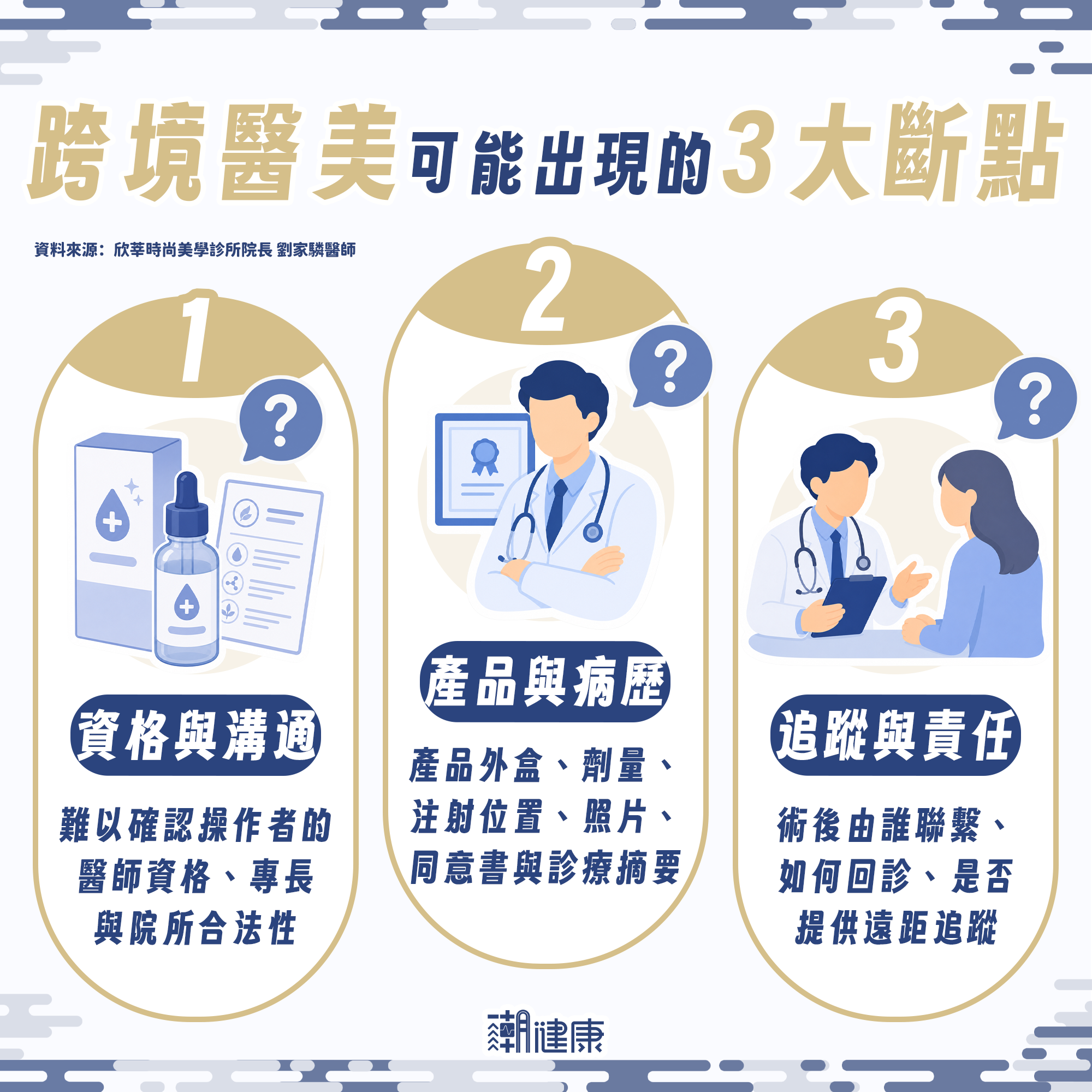
Dr. Liu identified three major gaps in the management of patients who undergo cross-border aesthetic treatments:
First, qualification and communication gaps. Without verifying the practitioner’s qualifications, expertise, and clinic legitimacy before the procedure, and due to language barriers, risks, alternatives, and complication management may not be fully understood.
Second, product and medical record gaps. The same product may have different specifications, and outcomes depend on dosage, preparation method, injection layer, and site. Without preserving the product box, batch number, dosage, injection location, pre- and post-procedure photos, consent forms, and treatment summaries, it is difficult to reconstruct the situation upon return.
Third, follow-up and liability gaps. Consumers should clarify before departure: who to contact post-procedure, how to return for abnormal symptoms, whether remote follow-up is available, how additional treatments are billed, and where to go for emergencies in Taiwan. Low-cost treatments that do not account for downstream medical costs may not be truly cheaper.
Dr. Liu stressed that for injection treatments, temporary redness and swelling may be normal, but if symptoms worsen with significant pain, heat, pus, skin color changes, vision abnormalities, or persistent lumps, an in-person evaluation by a physician is necessary. Doctors typically verify the procedure date, product, dosage, and site, and may use ultrasound to assess the lesion. Treatments for infection, inflammatory reactions, product deposition, or granulomas differ and should not be managed with self-massage, medication, or a single intervention.
Regarding Juvelook, its components include hyaluronic acid (HA) and poly-D,L-lactic acid (PDLLA). HA may be treated with hyaluronidase if appropriate, but PDLLA cannot be dissolved by hyaluronidase. Management strategies for infection, inflammation, or long-term granulomas vary and require identifying the root cause. This information is general medical advice and not a diagnosis of any online case.

Dr. Liu advised that overseas aesthetic procedures are not necessarily impossible, but risks are generally higher. Consumers should not only compare prices, treatment names, or before-and-after photos on social media, but also evaluate practitioner qualifications, medical communication, post-procedure follow-up, and the ability to handle complications.
He recommends that patients who undergo overseas aesthetic procedures proactively obtain the following documents from the overseas clinic to facilitate follow-up with their primary physician in Taiwan:
- Product name, box photo, batch number, and expiration date.
- Injection or surgery date, dosage, site, and layer records.
- Practitioner’s name, qualifications, and clinic contact information.
- Pre-procedure, post-procedure, and symptom progression photos.
- Consent forms, receipts, treatment summaries, and medication records.
- Time of symptom onset, treatments received, and responses.

Finally, Dr. Liu reminded that if after an overseas procedure, symptoms such as “persistent worsening of redness, swelling, heat, and pain,” especially with significant tenderness; wound pus, fever, skin color changes, rapid swelling expansion; or post-procedure lumps that do not subside for weeks, increase, or affect appearance or daily life, seek immediate medical attention. Do not delay the golden treatment period, lest the pursuit of beauty compromise your original appearance.