Editor’s Note
**Editor’s Note:** This article examines the rising demand for aesthetic medicine in Taiwan and the growing involvement of diverse medical specialties. New amendments to the Special Management Regulations aim to standardize physician training and enhance professional competence in the field.
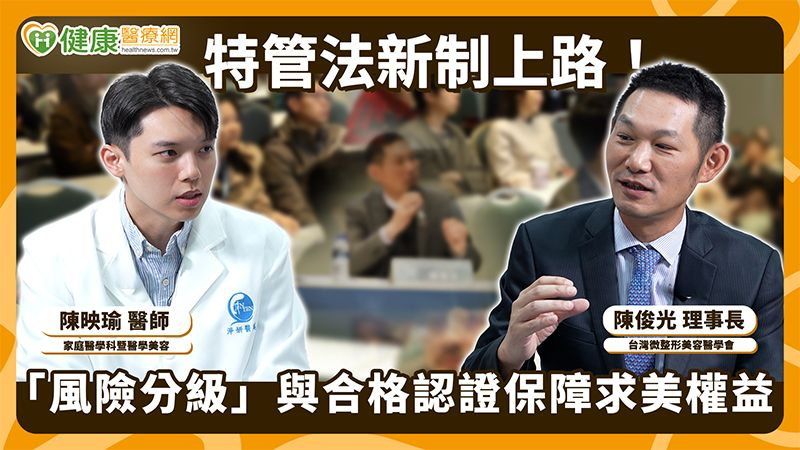
Dr. Chun-Kuang Chen, Chairman of the Taiwan Micro-Plastic Aesthetic Medicine Society, noted that aesthetic medicine has developed in Taiwan for over 20 years. In recent years, an increasing number of medical specialties have entered the field, drawing greater public attention to physicians’ professional competence. A key direction of the recent amendments to the “Special Management Regulations” is to classify procedures by risk level—distinguishing special cosmetic surgery, general cosmetic surgery, and special cosmetic procedures—and to clearly define the qualifications required for physicians in each specialty.
Under the new regulations, physicians must complete two years of Post-Graduate Year (PGY) training before entering aesthetic medicine. Those performing specific cosmetic procedures must also complete 32 hours of educational training. Physicians already practicing in the field must obtain 24 hours of continuing education credits every three years.

“Many believe that obtaining a medical license is sufficient to practice aesthetic medicine, but the field evolves rapidly, and professional development for physicians is now a priority in the medical community,” said Dr. Chen. Medical education is no longer confined to hospital systems. With the rapid growth of the self-pay aesthetic market, practitioners also need robust education and regulation. Recently, the Taiwan Micro-Plastic Aesthetic Medicine Society partnered with the Taiwan Academy of Family Medicine to host a credit-bearing course—the first time the Ministry of Health and Welfare approved a non-specialty society as the course organizer. The event attracted over 400 physicians and focused on clinical experience sharing and cross-specialty dialogue regarding micro-plastic procedures.
Dr. Ying-Yu Chen, a family medicine and aesthetic medicine physician who participated in the course, noted that previously, aesthetic medicine training was concentrated in traditional medical institutions. Physicians entering the field often had to rely on self-study, small workshops, or mentorship. The new regulations not only set qualification thresholds but, more importantly, provide systematic continuing education channels. This joint course by two major medical societies marks a step toward the institutionalization of aesthetic medicine education, allowing physicians to stay current and enhance their skills, while offering patients greater assurance during treatments.
Dr. Chun-Kuang Chen emphasized that aesthetic medicine differs from general disease treatment. Patients often seek to improve appearance or maintain a youthful look, so physicians must understand their true expectations. He frequently encounters patients who request popular treatments without understanding the underlying issues. “Aesthetic medicine is still a medical act, not ‘ordering a meal’ or a simple consumer choice. Physicians must first assess the patient’s specific problems, make a diagnosis, and then jointly discuss suitable treatment options.”

Effective doctor-patient communication to reduce expectation gaps is especially critical in aesthetic medicine. Dr. Ying-Yu Chen shared that family medicine focuses on non-emergency health issues, emphasizing disease prevention and health maintenance, and often considers patients’ lifestyles, preferences, and acceptable treatments. This philosophy aligns closely with aesthetic medicine.
Using apple cheek treatment as an example, she explained that even for the same area, some patients want to correct hollowness, others seek more fullness, and some aim to improve overall complexion. Different goals require different materials and injection techniques.
As aesthetic techniques continue to evolve, physicians must become more familiar with human anatomy and learn to conduct risk assessments and enhance medical safety before procedures. Dr. Chen stated that the society will continue to collaborate with different specialties, promoting large-scale seminars, anatomy training, and hands-on workshops to help physicians master the latest techniques and clinical risk management.