Editor’s Note
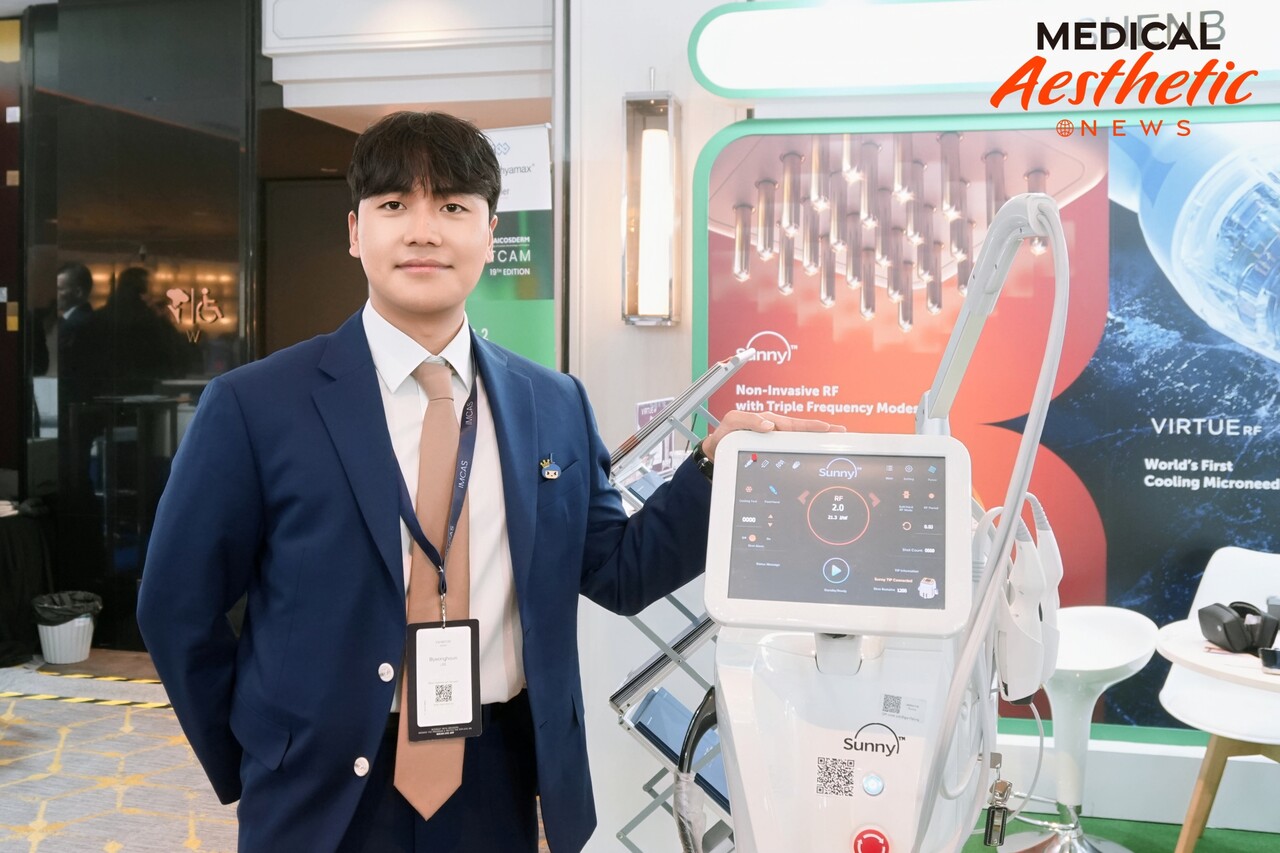
SHENB’s non-invasive RF platform drew strong interest from physicians at IMCAS Asia 2026 in Bangkok, reflecting rising global demand for K-beauty and Korean medical aesthetics. The company is expanding across Asia with its Sunny device, featuring a Quasar tip with 25 independently moving RF pins for enhanced skin contact. Taiwan now accounts for over 30% of its market share.
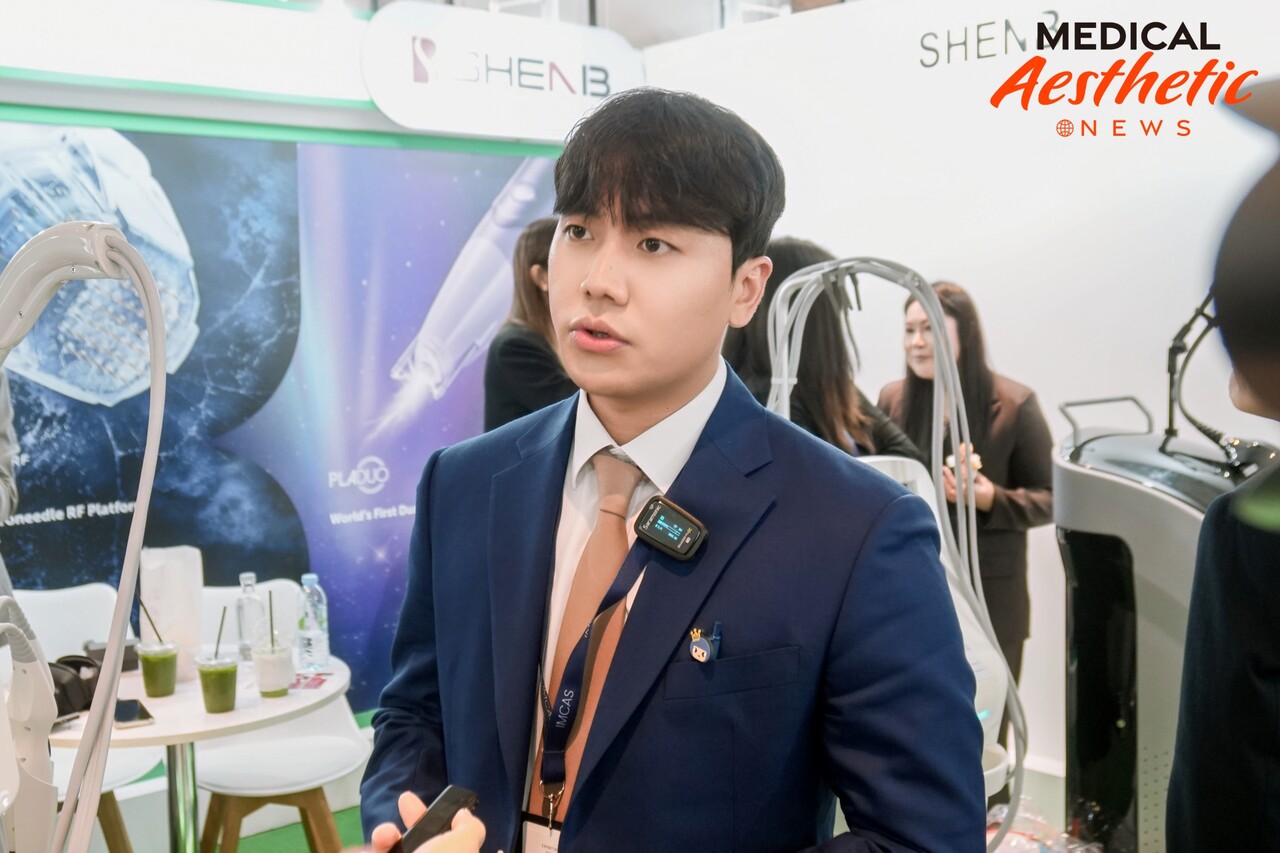
As international interest in K-beauty and Korean medical aesthetics continues to grow, SHENB says this momentum is also drawing greater attention to Korean-made non-invasive radiofrequency (RF) devices. At IMCAS Asia 2026 in Bangkok, the SHENB booth drew a steady stream of physicians interested in the company’s non-invasive RF platform.
SHENB is expanding across Asia with Sunny, a non-invasive RF platform that delivers RF energy in both monopolar and bipolar modes, while working closely with its exclusive distributors in each market. The device’s Quasar tip, used with the Pulsar handpiece, features 25 independently moving RF delivery pins that conform to curved contours to maintain close skin contact during energy delivery. According to the company, Taiwan accounts for more than 30% of its sales across Asia, making it SHENB’s largest Asian market by revenue.
As interest in non-invasive devices continues to grow, many physicians have visited our booth to take a closer look at Sunny. Our main purpose in taking part in IMCAS Asia was to provide on-site support for the exclusive distributors we work with in each market.
Our main focus right now is Sunny, a non-invasive RF device. One of its key differentiators is its patented technology: the 25 RF delivery pins in the Quasar tip move independently, allowing the tip to conform to curved contours and maintain close skin contact while delivering energy to areas that can otherwise be difficult to target.
Sunny has been selling actively in Thailand, where IMCAS is currently taking place, as well as in Taiwan and parts of Europe. Of our Asian markets, Taiwan has generated the highest revenue — it accounts for more than 30% of our total sales in Asia.
The medical aesthetics market in Asia evolves very quickly. Responding rapidly to those shifts and staying ahead of new trends is probably our biggest challenge. To keep pace, we conduct market research and take part in exhibitions such as IMCAS to track recent developments across the industry. Above all, we leverage our patented technology to secure exclusive distribution agreements in each market, and we regard that process as particularly important.
With interest in K-beauty running high, more patients from other countries are traveling to Korean clinics for treatment, and that’s fueling renewed interest in our non-invasive devices as well. These new products haven’t reached the market yet, but we’re actively researching new technologies and preparing a number of them.
We’ve recently seen imitation devices and consumables emerge in China and several other markets. To address this, we’ve built country-specific codes into Sunny tips — when a tip is attached to the device, it won’t operate unless the code matches the designated country. This helps us manage unauthorized cross-border distribution and prevent genuine tips from being used outside their designated markets.
One of our greatest strengths is our collaboration with physician KOLs. For both Sunny and Virtue RF, physicians from Thailand and a number of other countries share their clinical experience and treatment approaches at domestic and international conferences, including IMCAS. Separately from these academic activities, we continue to conduct product-specific research and publish related findings.
As I mentioned, trends in the Asian aesthetics market move fast. Demand for non-invasive devices is expanding significantly right now, so we plan to place greater strategic emphasis on non-invasive devices in line with that momentum.