China's cosmetic exports surged 42.4% year-on-year to 1.76 billion yuan in May 2026, while imports fell 17.2%, signaling a strategic pivot from domestic dominance to global expansion. The shift is reshaping supply chains, with Chinese brands aggressively entering overseas markets via e-commerce and social media, posing new competitive dynamics for international buyers and distributors.
## Export boom driven by strategic shift
The export growth reflects a deliberate move by Chinese beauty brands to replace foreign labels in the domestic market while expanding abroad through price competitiveness and platform distribution. According to China's General Administration of Customs, May exports reached 1.76 billion yuan, contrasting sharply with the import decline.
## Korea market explodes 1,351%
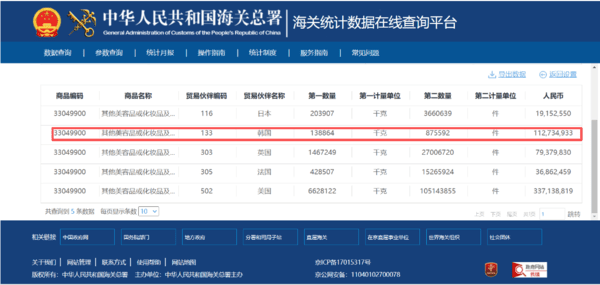
Exports to Korea hit 112.73 million yuan, a staggering 1,351.9% increase from a year earlier, representing roughly a 14-fold expansion in just one year. Analysts attribute this to ultra-low-priced color cosmetics and basic skincare products flooding into Korea via Chinese e-commerce platforms like AliExpress and Temu, penetrating even K-beauty's home market.
## US remains top export market
The United States remained the largest destination, with exports of 337.14 million yuan, up 78.7%, accounting for 19.1% of total exports. Social media platforms like TikTok have helped Chinese brands rapidly gain traction among Gen Z consumers.
## Europe and Japan grow; UK declines
Exports to France rose 43.3% to 36.86 million yuan, and Japan grew 13.3%. The UK was the only major market to contract, falling 14.4%.
## What buyers should watch
For overseas importers and distributors, the data signals a fundamental shift: China is no longer just a market but a direct competitor. The rapid rise of C-beauty in Korea and the US suggests that sourcing strategies must account for Chinese brands' growing global footprint. Distributors should monitor pricing pressure and platform-driven distribution models that could disrupt traditional channels.