Editor’s Note
**Editor’s Note:** This article explores a novel approach to enhancing topical exosome delivery through laser-created microchannels, addressing the barrier posed by the stratum corneum. Dr. Santi Jaturawichanant’s technique offers a potential alternative to injection-based methods, with implications for efficacy and safety in aesthetic dermatology.
Topical, non-injection EV formulations versus polymer boosters amid granuloma concerns
Topical application of exosome preparations faces a recognized limitation: the intact stratum corneum can restrict transcutaneous delivery. Dr. Santi Jaturawichanant, MSc in Dermatology, of B’est Clinic in Bangkok, addresses this limitation through laser pretreatment. By creating fine microchannels across the epidermis and into the superficial dermis, he seeks to facilitate deeper and more efficient topical delivery of the exosome preparation. The concept he returns to is the “golden period” — in his clinical practice, he regards the first two to three days after treatment as the interval during which he believes the laser-created channels have not yet fully closed and topical delivery remains most favorable. His protocol is built around capturing it.
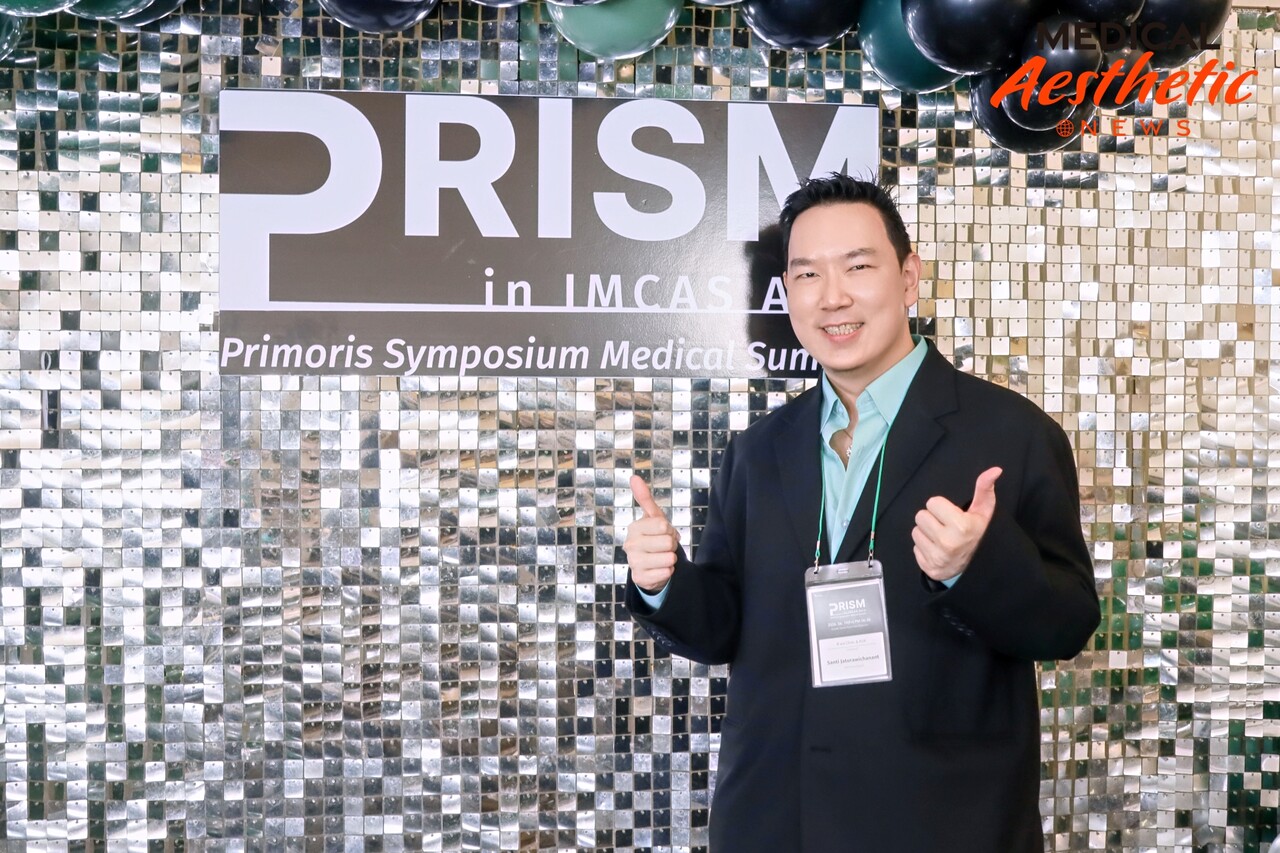
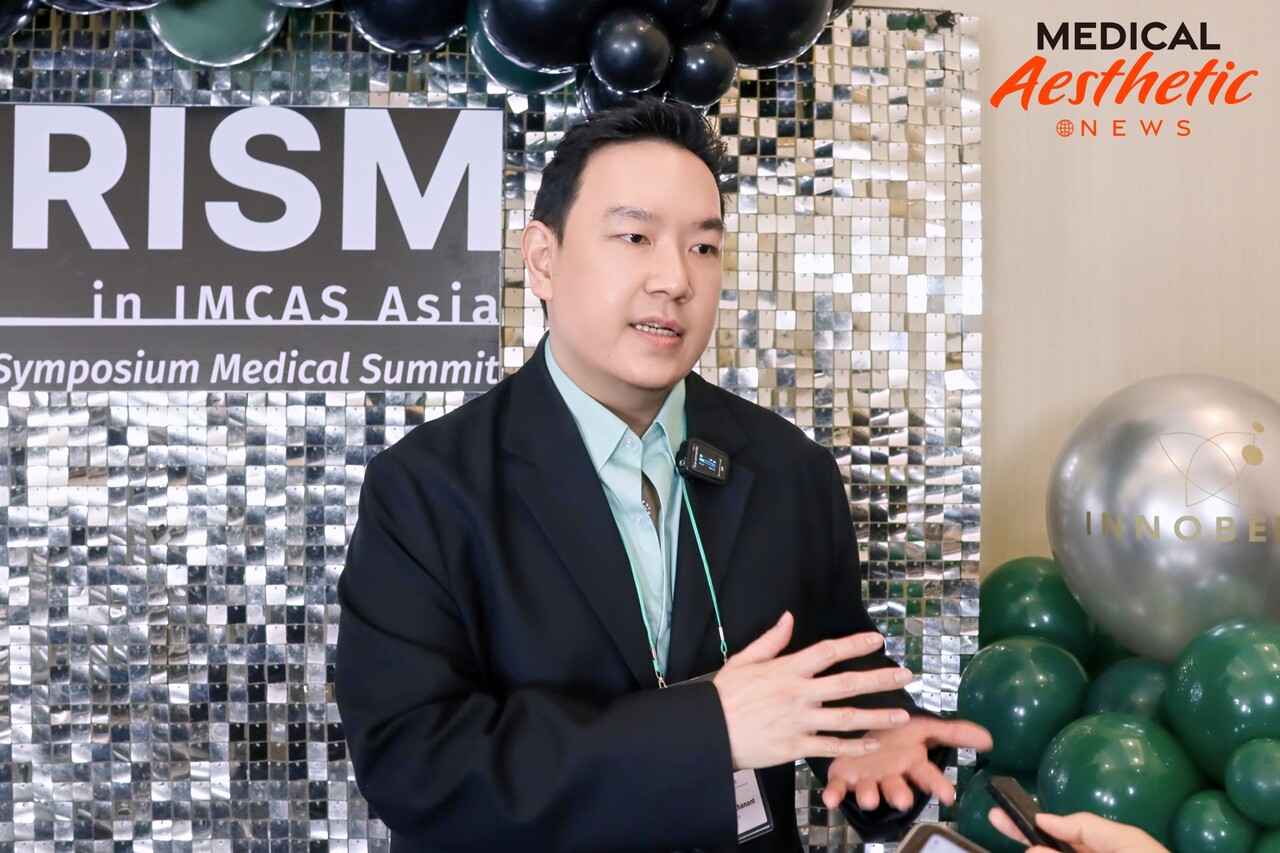
A KOL for Primoris International’s P198 exosome skin booster line, Dr. Santi spoke at the PRISM in IMCAS Asia 2026 dinner symposium on June 19 and subsequently delivered a live patient demonstration, “Synergistic Exosome Therapy with Laser on Face,” in the official IMCAS scientific program. We sat down with him to discuss his clinical use of laser–exosome combination protocols for concerns including enlarged pores, wrinkles, and acne scarring, as well as their potential effects on skin quality and hydration, and his perspective on how Korean medical aesthetics is being received in Thailand and the broader Southeast Asian market.
IMCAS Asia has now been running for more than a decade. A wide range of trends in aesthetic medicine, longevity, and wellness are emerging from Asia, and physicians from Western countries also attend the congress.
There is already evidence suggesting that stem cell-derived exosomes, a type of extracellular vesicle, can be absorbed through the skin when applied topically. So topical application alone does have an effect.
The patient population at an aesthetic medicine clinic like mine is predominantly concerned with the appearance of the skin. Enlarged pores, wrinkles, and acne scars are among the most common concerns I see.
Polymer-based skin boosters carry a clinical consideration worth noting: when polymer particles cluster or accumulate at an injection site, they may contribute to granuloma or nodule formation.
My protocol calls for immediate post-procedure exosome application — as soon as the laser session is complete. I then provide the patient with product for home use, with instructions to reapply over the following two to three days.
In my experience, almost every patient I have treated with P198 has been satisfied with the outcome.
One case in particular remains with me. A patient presented with an allergic skin reaction and visible lesions. We were able to compare an area where the exosome preparation had been applied with an area that did not receive the preparation. The treated area appeared to improve more quickly, with inflammation subsiding sooner. It was a memorable side-by-side observation for me.