Editor’s Note
**Editor’s Note:**
This report covers VIOL Medical’s recent “Vision All Insight 2026” academic event in Seoul, where six physicians shared clinical strategies for microneedle RF, monopolar RF, and HIFU using the company’s Sylfirm X, Cellinew, and Duotite devices. The article highlights a layer-by-layer treatment approach from epidermis to SMAS, alongside the company’s expanding academic outreach in Korea.
Six physicians share clinical expertise spanning microneedle RF, monopolar RF, and HIFU
From the epidermis to the SMAS: a layer-by-layer strategy built around Sylfirm X, Cellinew, and Duotite
VIOL Medical presents an integrated three-device portfolio as its academic outreach in Korea expands
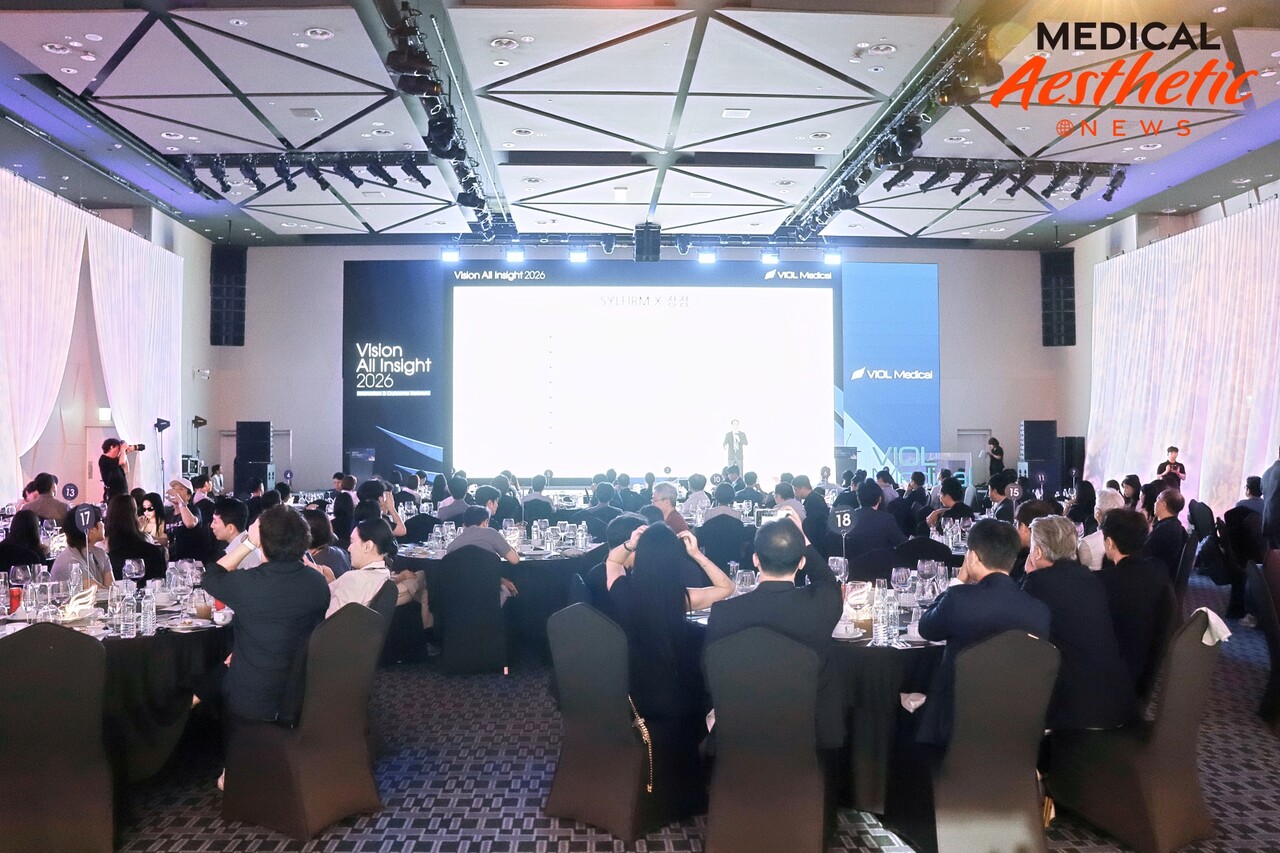
VIOL Medical held its academic event “Vision All Insight 2026” on June 27 at the Halla Grand Ballroom on the third floor of the Convention Tower at Seoul Dragon City. The evening opened with a welcome reception, congratulatory remarks, and dinner, followed by two lecture sessions built around the company’s three devices — Sylfirm X, Cellinew, and Duotite — and concluded with a prize drawing and an awards ceremony. Actress Hyesun Shin, a VIOL Medical brand ambassador, attended as a special guest and took part in a photo session.
Ahead of the congratulatory remarks, a recorded welcome message from VIOL Medical CEO Eunchun Lee was screened. Unable to attend in person due to an overseas business trip, Lee said in the message that the company was entering a new phase of growth through change and innovation, and that the event had been prepared to strengthen communication with physicians and exchange new insights. He added that VIOL Medical would continue to return with academic programming and events of practical value to clinicians.

The first speaker, Dr. Jaewoo Park of BIO Plastic Surgery Clinic, opened with “Expanding Clinical Applications of SYLFIRM X: From Conventional to Emerging Indications,” reassessing where Sylfirm X stands in a crowded radiofrequency (RF) microneedling market. Having used a range of microneedle RF platforms — Scarlet, Infini, Genius, and Virtue RF among them — he said Sylfirm X, which he has used since 2020, remains his preferred device.
He addressed two views he said are commonly raised about the device: that its effect is comparatively mild, and that its non-insulated needle carries more risk of adverse events than insulated designs. Speaking from his own experience, he said treatments could be performed without topical anesthetic and that he was satisfied with the device’s treatment speed, post-treatment recovery, and clinical outcomes. He nevertheless emphasized that treatment should be individualized according to the indication, skin condition, and selected parameters. On the non-insulated needle specifically — the point he said draws the most frequent debate — he described it as a preference rather than a drawback.
Insulated needles, by contrast, act primarily on the dermis with limited epidermal effect, whereas the non-insulated design, in his view, may support remodeling across a broader vertical span from the epidermis to the dermis.
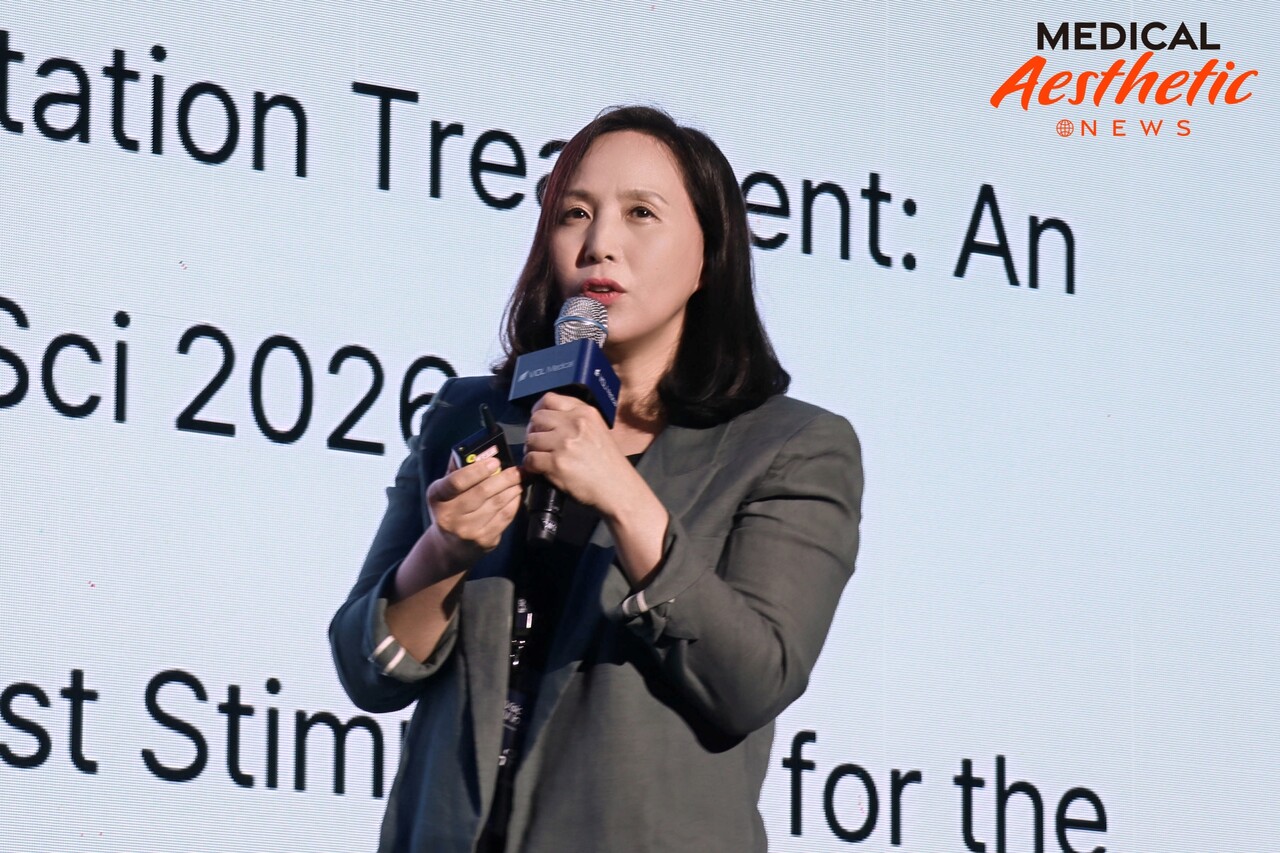
Dr. Park characterized Sylfirm X as extending beyond simple tightening to a broader “therapeutic energy-based device” (EBD), which he uses in his practice for a range of concerns including acne, rosacea, erythema, melasma, and other pigmentary disorders. Rather than targeting vasculature or pigment alone, he suggested that addressing the dermal environment and basement membrane together may support longer-term control of recurrent pigmentation and erythema. He also noted that microneedle RF may help modulate cellular senescence in aging skin, an observation broadly consistent with published RF microneedling research on the senescent fibroblast milieu. That said, because the non-insulated needle also delivers heat to the epidermis, parameter selection and patient screening remain essential in pigmentary conditions. Sharing follow-up photographs of a patient he has treated with microneedle RF (Scarlet, followed by Sylfirm X) for more than a decade, he closed with the view that “microneedle RF will remain for many years to come.”
Professor Hwa Jung Ryu of the Department of Dermatology, Korea University Ansan Hospital, followed with “Beyond Tightening: The Clinical Value of Non-Invasive Monopolar RF with Cellinew,” walking through the mechanism and clinical implications of the 6.78 MHz monopolar RF platform.
She described dermal aging as a cycle in which collagen breakdown loosens the extracellular matrix, causing fibroblasts to shift from a stellate to a rounded morphology as senescence sets in. Controlled tissue heating to approximately 55–65°C, she said, can induce partial denaturation and immediate contraction of collagen’s triple-helical structure, followed by a remodeling response that may continue for approximately six months.
Citing the concept of “tensegrity,” increasingly discussed in the literature, she explained that monopolar RF may contract and remodel the fibrous septa of the subcutaneous tissue, restoring tension to a structure that has grown lax, while also imparting mechanical tension to fibroblasts that promotes collagen synthesis. She cited data suggesting that the burden of fragmented collagen increases by approximately 400% between ages 20 and 80, and that this damaged collagen resists further heat-induced breakdown — the rationale, she said, for “prejuvenation,” or treating before damage accumulates. In her formulation, the value of prejuvenation lies in treating skin while the collagen matrix remains relatively intact and responsive.