Editor’s Note
**Editor’s Note:** This article highlights the practical, data-driven approach of Korean physicians in aesthetic medicine, emphasizing the integration of pharmacologic agents with energy-based devices as a key strategy for optimal clinical outcomes.
Practical Clinical Experience, Candid Data — The Korean Physician’s Way
‘The Key Is Combining Pharmacologic Agents with Energy-Based Devices’
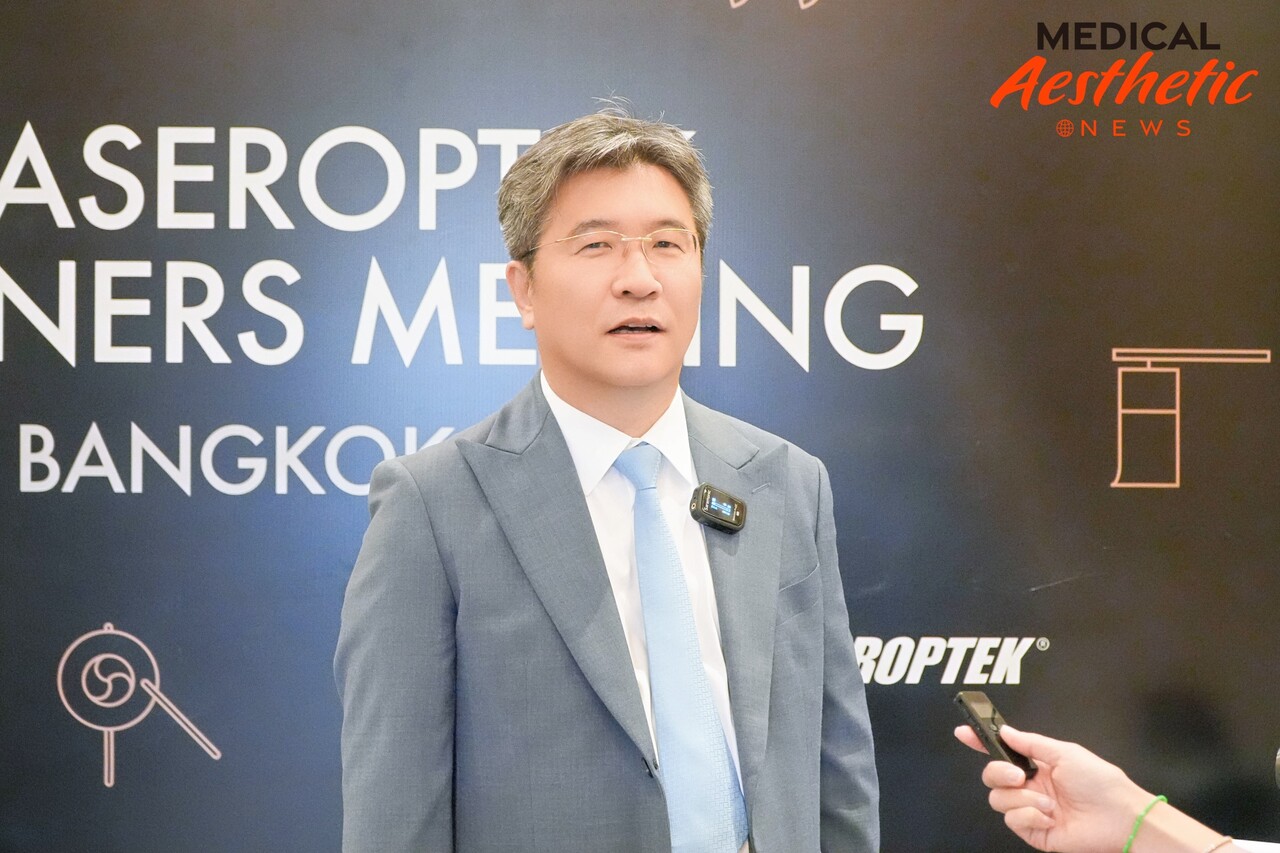
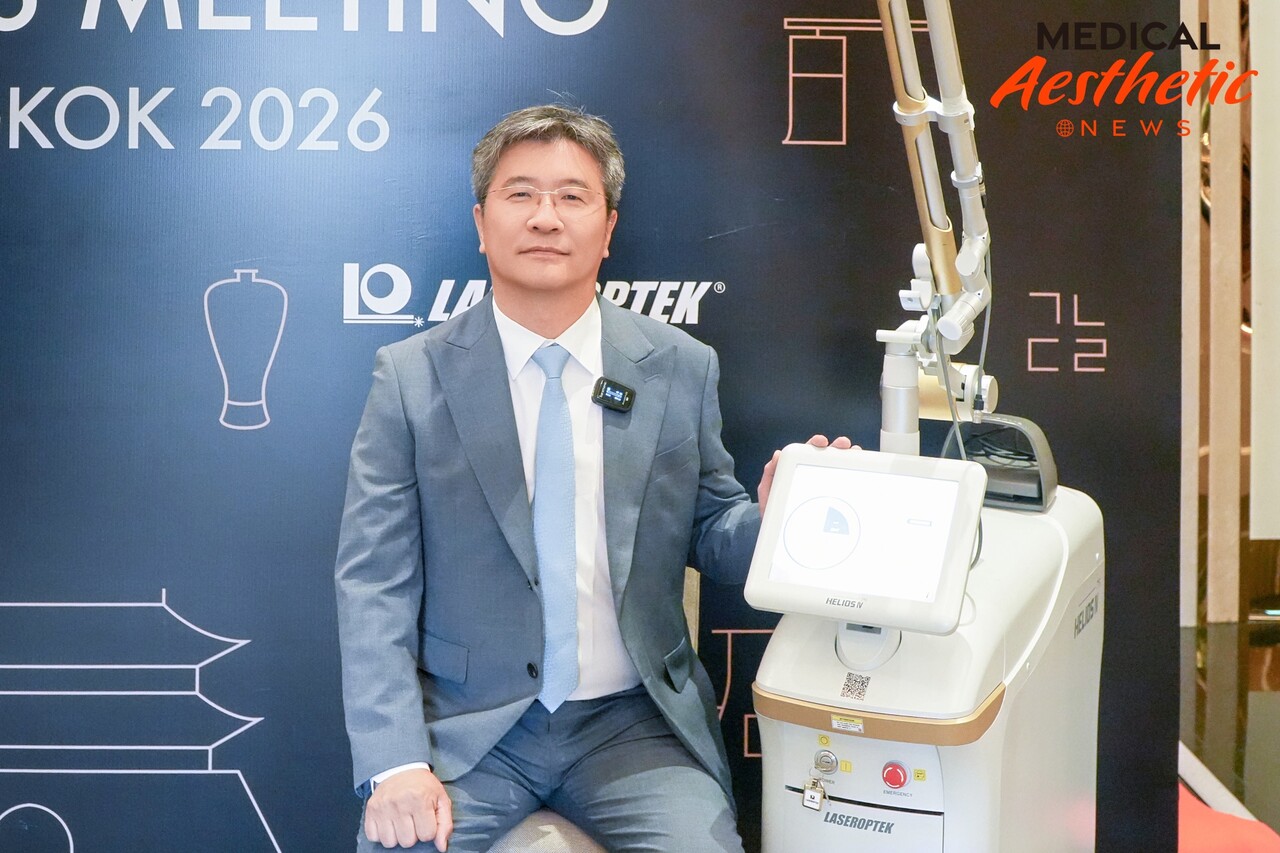
On June 18, the day before IMCAS Asia 2026 opened, the LASEROPTEK Partners Meeting (LPM) was held at the Grande Centre Point Ploenchit Hotel in Bangkok. Among the featured speakers was Dr. Sukbae Seo of SeoAhSong Dermatologic Clinic in Seoul, a key opinion leader for LASEROPTEK who has spent years incorporating the 785 nm picosecond laser (HELIOS 785 PICO) into his clinical practice. He is also a well-known international speaker who has regularly shared his clinical experience with Asian skin at IMCAS and other major global congresses.
At the LPM session, Dr. Seo presented his hands-on experience with the 785 nm picosecond laser — covering not only favorable outcomes but also cases in which responses fell short, along with clinical points that call for caution. It was a fitting illustration of what he himself identifies as the hallmark of Korean physicians: presenting real-world clinical content in specific, candid, and practical terms.
For Dr. Seo, the strength of Korean physicians lies in a practical, science-based approach: discussing real-world clinical experience specifically and candidly while grounding it in scientific rationale. He brought that same approach to LASEROPTEK’s newly launched VASCURA 589, leading with the caveat that the device is still in its early days while carefully mapping out both its potential to go beyond existing systems and the areas where a new clinical framework has yet to be established. In an on-site interview, he shared his assessment of the device and his firsthand read on where K-Medical Aesthetics stands on the global stage.
“Many Korean products are now being introduced at international congresses such as IMCAS Asia and IMCAS World Congress, and I personally enjoy the role of directly experiencing new devices as they are developed and helping bring that clinical knowledge to a wider audience. Because this meeting is held in Bangkok, it is also a natural opportunity to engage with colleagues from Southeast Asia. As physicians treating similar patient populations, I think we have valuable clinical experience to share. There can be differences between the clinical experience of Western physicians and what we encounter when treating Asian skin, and I wanted to exchange those observations more broadly.”
Q. Are there any areas of clinical work or research that have been particularly engaging for you recently?
“A great number of new devices are coming to market right now, including platforms built on entirely novel mechanisms. I have been looking closely at a range of energy-based modalities — lasers, RF, magnetic, and shockwave — and I am actively involved in research and development, not only around individual devices but around how they can be combined. Combination treatment — finding ways to bring out the best of each modality together — is something I find increasingly important and am spending a great deal of time on.”
“Ultimately, the key question is how pharmacologic agents and energy-based devices can be combined to produce meaningful aesthetic outcomes. Both stand-alone pharmacologic and device-based treatments have value, but I believe combination strategies that make the most of each will become increasingly important going forward.”
Q. LASEROPTEK recently launched VASCURA 589. Having examined the device closely from its early stages, how do you assess its technical originality and clinical potential?
“We are still in the early stages, so we have not yet accumulated enough clinical outcomes data to draw firm conclusions. That said, I asked detailed questions and examined the underlying mechanism closely — including aspects the company has not yet publicly disclosed in detail. My initial reaction was genuine uncertainty: could this device really keep up with what already exists? At this point, though, I believe it has the potential to go beyond existing systems. Its originality lies particularly in its solid-state architecture, which requires no dye replacement, unlike conventional pulsed dye laser (PDL) systems. I expect it to become widely recognized on a global scale.”
Q. Compared with PDL, what clinical differences do you anticipate in practice?
Q. For physicians who currently use PDL and are considering adopting VASCURA 589 or bringing it into their practice, are there clinical hurdles to be aware of?
“Absolutely. The most important thing to understand is that the mechanism is fundamentally different from PDL. Approaching this device with the same assumptions you bring to PDL will not work. Energy settings, lesion-specific responses, and treatment endpoints all need to be redefined from the start. I am still working through those questions myself.”
Q. What is your firsthand sense of how K-Medical Aesthetics is perceived here at IMCAS Asia?
“The presence of Korean physicians and Korean devices at this congress continues to grow — in attendance, in presentations, and in the range of topics being covered. Much of what is happening here is the product of collaboration between Korean physicians and Korean companies. I take great pride in seeing those efforts become better known worldwide.”
Q. What do you see as the core clinical strengths of Korean physicians on the global stage?
“Korean physicians tend to communicate clinical content in a very specific, honest, and practical way, while consistently making an effort to ground it in scientific evidence. Some prominent international speakers are particularly skilled in presentation and stagecraft — what one might call the ‘show’ aspect of a lecture. Neither approach is inherently better; preferences vary depending on the meeting and the audience. But the practical, science-grounded approach that Korean physicians bring is, I think, a clear and distinctive strength.”