
Editor’s Note
**Editor’s Note:** This article highlights a crucial yet often overlooked principle in aesthetic medicine: the importance of patient readiness. Dr. Tran Nguyen Anh Thu reminds us that even for quick, popular procedures like Botox, the best clinical judgment sometimes means advising patience over immediate treatment.
According to Dr. Tran Nguyen Anh Thu, not everyone seeking treatment at a cosmetic clinic should receive it immediately. In many cases, the best decision a doctor can make is to advise the patient to wait a bit longer for better preparation.
Botox (botulinum toxin) injections are among the most popular non-surgical aesthetic procedures today, taking only 15–30 minutes with no surgery and minimal downtime. However, precisely because it is considered an “easy” procedure, many people become careless, leading to undesirable outcomes.
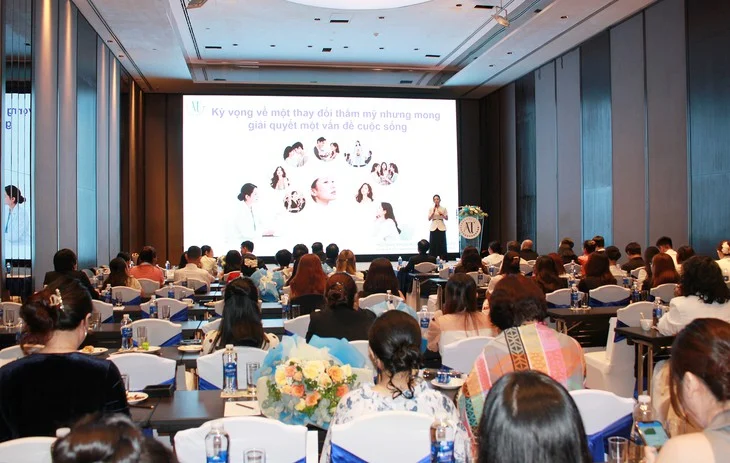
At a recent annual scientific conference in Ho Chi Minh City, two presentations—by Assoc. Prof. Dr. Nguyen Trong Hao, President of the Ho Chi Minh City Dermatology Society, and Dr. Tran Nguyen Anh Thu, Head of the Department of Dermatology, Immunology, and Allergology at Thong Nhat Hospital—offered noteworthy perspectives: safe aesthetic treatment depends not only on injection technique but also on choosing the right practitioner and the right timing.
According to Assoc. Prof. Dr. Nguyen Trong Hao, botulinum toxin is a highly effective treatment with a low complication rate when correctly administered for appropriate indications. However, most complications in actual practice stem from entirely preventable mistakes.
One principle experts emphasize is “less is more.” The goal of Botox is not to completely paralyze facial muscles but to reduce muscle activity to an appropriate level, smoothing wrinkles while maintaining a natural appearance.
Experts note that in the past, many facilities applied Western dosage protocols to Asian patients, often resulting in stiff faces and limited expression. Today, the trend is toward reduced dosages and individualized treatment based on facial anatomy and muscle activity levels.
A commonly reported complication is post-injection ptosis (drooping eyelids). The main cause is not the quality of the injection but incorrect site identification or improper technique, allowing the solution to spread to the levator palpebrae superioris muscle.
Furthermore, there are many less-known complications, such as abnormally elevated eyebrows, more noticeable under-eye bags after crow’s feet injections, or asymmetric smiles after masseter muscle slimming injections.
In elderly patients, if the doctor does not adequately assess forehead muscle function before treatment, forehead wrinkle treatment can lead to drooping eyebrows, heavy eyelids, or a tired facial appearance. Not only injection technique but also minor details in the preparation process can affect treatment outcomes.
Assoc. Prof. Dr. Nguyen Trong Hao noted that some studies show diluting botulinum toxin with saline containing benzyl alcohol can reduce injection pain in some cases. Meanwhile, cold compresses applied before and after injection—a practice adopted by many facilities—should be carefully considered, as excessively low temperatures may affect drug efficacy.
Similarly, choosing the appropriate antiseptic solution helps reduce the risk of irritation, especially when treating the face.
According to many experts, the success of Botox injections depends not only on the type of product used but also on anatomical knowledge, clinical experience, and strict adherence to safety principles at every stage of the procedure.

Experts say that many cases of unsatisfactory treatment results are not due to technique or the doctor’s skill, but because the treatment was performed when the skin condition or the patient themselves were not yet ready.
Inflamed skin, active acne, progressive melasma, or an unstable skin barrier can all reduce treatment efficacy and increase the risk of side effects.
For example, many people want to treat only acne scars while active inflammatory acne has not yet resolved. However, ignoring the cause and treating only the scars makes it difficult to achieve the desired results as new damage continues to appear.
Similarly, in patients with active melasma or rosacea, premature laser or invasive procedures can worsen the condition.
Another factor experts specifically point to is the gap between patient expectations and the reality of medical capabilities.
Experts advise that doctors should not only perform procedures but also help patients understand the limitations of each treatment, the time needed for results to appear, and the necessity of maintenance therapy.
Source: https://suckhoedoisong.vn/bac-si-tiet-lo-nhung-sai-lam-khien-tiem-botox-phan-chu-169260720092336998.htm