Editor’s Note
**Editor’s Note:** This article highlights a pivotal shift in the aesthetic medical market, where filler selection now prioritizes safety and biocompatibility over mere volume enhancement. The focus on reducing residual crosslinkers and byproducts in hyaluronic acid fillers underscores a growing demand for higher purity and patient safety.
In the aesthetic medical market, filler selection criteria are expanding beyond simple volume enhancement to prioritize safety and biocompatibility. For hyaluronic acid (HA) fillers injected into the body, the ability to effectively reduce residual crosslinkers and byproducts from the manufacturing process has emerged as a key factor determining product competitiveness.
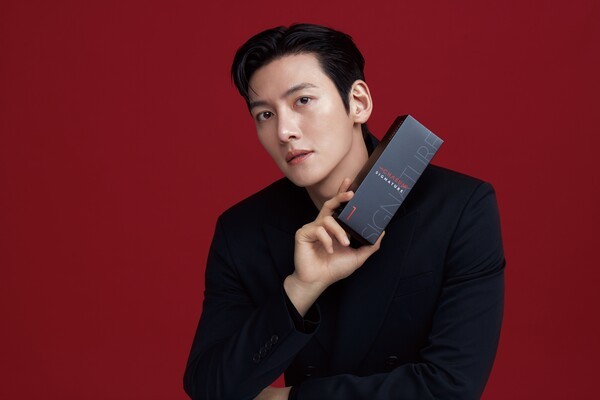
Global medical aesthetics company Hugel has launched a new hyaluronic acid filler, ‘The Chaeum Signature’, which enhances safety through its proprietary crosslinking technology.
The new product line consists of four variants with different physical properties, allowing medical professionals to select the most suitable product based on the treatment area and purpose. It is characterized by a significant advancement in filler manufacturing technology, built upon Hugel’s R&D capabilities.
While hyaluronic acid is a naturally occurring substance in the human body, it degrades quickly. To be used as a filler, it must undergo a ‘crosslinking’ process to connect the molecules. The commonly used crosslinker (BDDE) is crucial for maintaining the product’s shape and longevity, but minimizing its residual amount after manufacturing is considered essential for ensuring safety.
Hugel’s ‘The Chaeum Signature’ applies the MPC (Multi Purified Crosslinking) method, a proprietary technology developed by its affiliate Across. This method reduces crosslinker usage by over 50% compared to conventional manufacturing processes. Simultaneously, a special crosslinking process utilizing high-concentration HA raw materials achieves high crosslinking efficiency with less crosslinker, securing elasticity and shape retention comparable to existing products.
Notably, a multi-purification process spanning approximately two weeks effectively removes not only residual BDDE but also micro-hydrolysis byproducts (BDPE) that can be generated during crosslinking. According to the company, this enhances biocompatibility and product purity, strengthening the safety that medical professionals and consumers consider paramount.
Furthermore, the launch of four product variants with different rheological properties tailored to soft tissue characteristics and treatment goals allows medical professionals to make more precise product selections based on the specific area and procedure. This strategy is seen as a response to the growing demand in the medical aesthetics market for natural contour improvement and personalized treatments.
Recently, the global medical aesthetics market has shown a clear trend towards valuing not only treatment efficacy but also manufacturing process safety, raw material quality, and biocompatibility. Consequently, filler manufacturers are engaged in a technological race to reduce residual chemicals and enhance product uniformity and stability through advanced crosslinking and purification processes.
With ‘The Chaeum Signature’, Hugel plans to further strengthen its safety and quality competitiveness while expanding its HA filler portfolio, which includes the existing volume-enhancing ‘The Chaeum Premium’ and the large-volume body filler ‘The Chaeum Shape’, to continue its攻势 on the global medical aesthetics market.