Editor’s Note
**Editor’s Note:** This article examines how South Korea’s leading beauty firms are capitalizing on the global haircare boom through specialized, R&D-driven products and the enduring influence of the Korean Wave.
Leading South Korean beauty companies are expanding their presence in the global haircare market by leveraging specialized functional scalp and hair care product lines. Their accumulated R&D capabilities are synergizing with the Hallyu (Korean Wave) phenomenon, driving growth. K-haircare is expanding at a rate exceeding the overall growth of cosmetic exports.
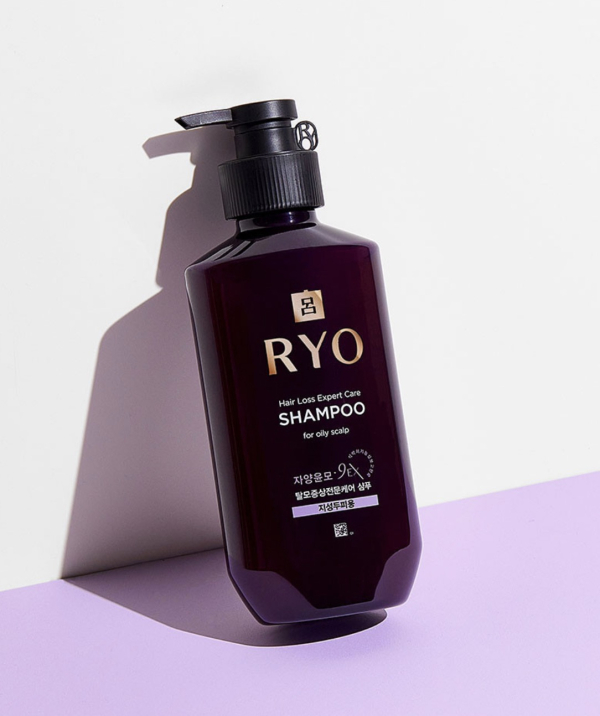
Amorepacific is targeting overseas markets with its haircare brand ‘Mise-en-Scène’ and herbal haircare brand ‘Ryo’. After establishing itself as a leading domestic haircare brand, Mise-en-Scène is expanding its global distribution network, focusing on styling products. The scalp skincare brand ‘Labo-H’ has also broadened its portfolio by strengthening its dedicated scalp line, led by its flagship product, the Hairline Ampoule.
Amorepacific’s R&I Center participated in the World Congress of Hair Research (WCHR 2026) held in Seoul last May. It presented research findings on ‘hair longevity,’ revealing that hair quality is determined from the early stages of formation, not just after damage. In collaboration with a research team from Kyungpook National University College of Medicine, they identified key factors governing hair structure formation. The research results are expected to be applied to the Rootzen line of the Ryo brand.
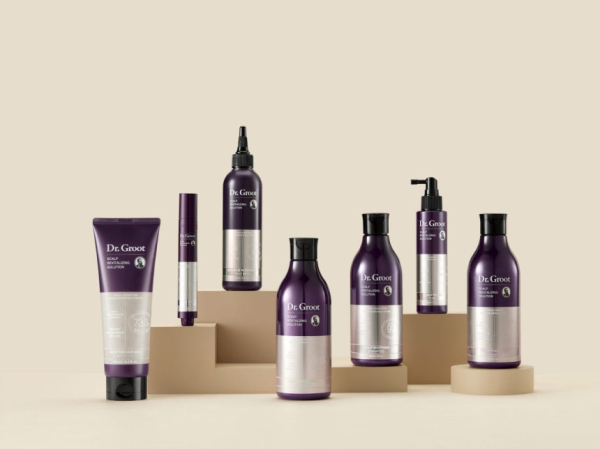
LG Household & Health Care’s premium scalp care brand ‘Dr.Groot’ has maintained the No.1 position in the anti-hair loss functional shampoo market for seven consecutive years since its launch in March 2017. The brand has developed products based on 528 registered patents, 148 clinical trials, and a genetic database of 60,000 people.
Since 2021, Dr.Groot has been actively entering the global market through Amazon, and in March of this year, it launched on Sephora’s official online mall. In May, it pre-launched in approximately 90 major Sephora offline stores in North America, expanding its local distribution channels. It is scheduled to officially launch in over 400 stores across the United States in August.
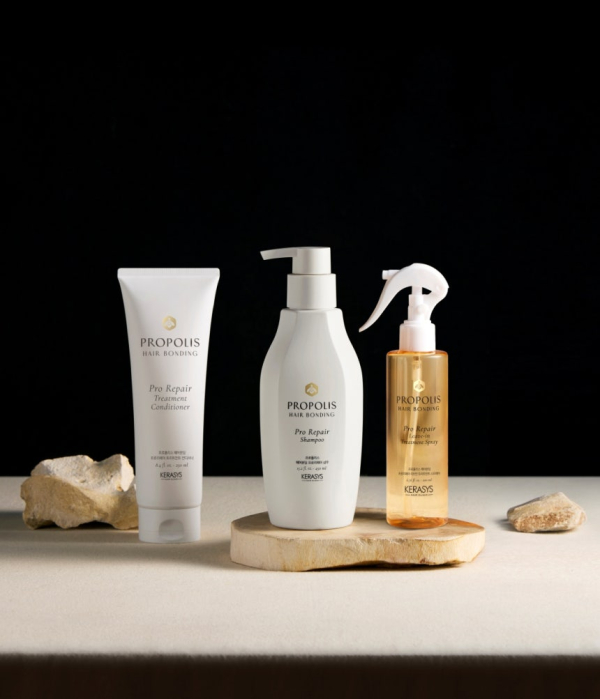
Aekyung Industrial is diversifying its portfolio with ‘Kerasis’ and the anti-hair loss functional brand ‘Blackfore’. Kerasis has segmented its lineup with the damage-care specialist brand Kerasis Oilex and ceramide treatments targeting middle-aged consumers.
According to Aekyung Industrial, sales of the Oilex Double Effect line increased by 34% year-on-year. Sales of the Ceramide Treatment surged 128% year-on-year, driven by a segmentation strategy targeting specific hair concerns like severely damaged hair, fine damaged hair, and wavy hair. Cumulative sales have exceeded 4.58 million units.
Since its launch in January 2023, Blackfore has expanded its market presence with product efficacy focused on reducing scalp heat and hair loss count. The company stated that its flagship product, Root Power Scalp Cool & Deep Clean Anti-Hair Loss Shampoo, demonstrated a 321.29% increase in protein binding strength within hair and a 54.90% reduction in hair loss count after four weeks of use in human application tests. Aekyung Industrial recently presented research results on the hair loss alleviation efficacy of L-THP, a component derived from Corydalis yanhusuo, at the 14th World Congress of Hair Research.
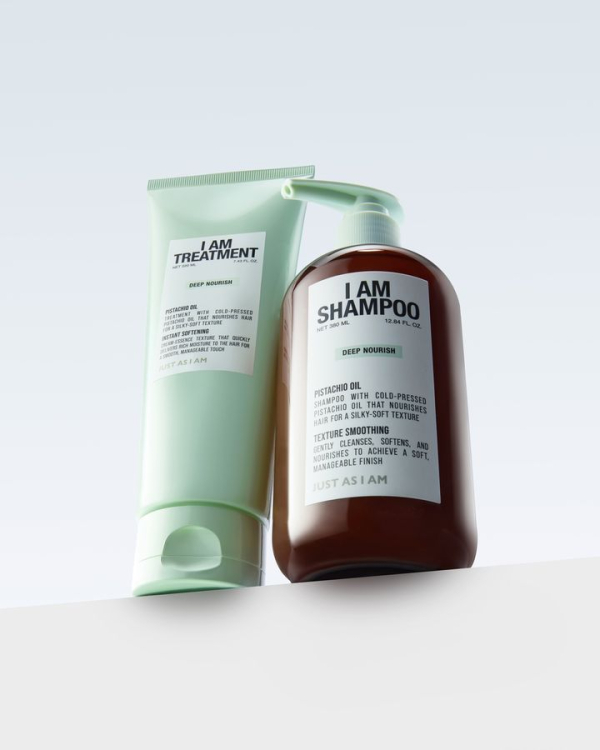
Shinsegae International is targeting the functional scalp care market with its haircare brand ‘Just As I Am’. In May, it launched a new intensive care line for damaged hair called ‘Deep Nourish’, further segmenting its product range. The company reported that Just As I Am’s sales from January to April this year increased by 100% compared to the same period last year.
Aromatica is expanding its hair and scalp care line centered on rosemary as a key ingredient. Its flagship product, Rosemary Root Enhancer, has ranked highly in the scalp treatment category on Amazon in the US and Europe. The Tea Tree Purifying Tonic, which offers a scalp cooling effect, also forms part of the lineup.
Product competitiveness is reflected in actual export figures. According to the Korea Customs Service’s trade statistics, exports of hair products (including hair oils, conditioners, and dyes) from January to May this year totaled $232.72 million (approx. KRW 346.8 billion), a 30.6% increase from $178.15 million (approx. KRW 265.3 billion) during the same period last year.
Last year, annual exports of hair products reached an all-time high of $478.17 million (approx. KRW 712.1 billion). The trend over the past three years shows consistent growth: $358.22 million in 2023, $413.08 million in 2024, and $478.17 million in 2025. If the current growth trend continues, this year’s figures are expected to surpass last year’s record. Major export destinations include the United States, China, and Japan.
The cosmetics industry attributes this growth to the spread of Hallyu content and the technological prowess of domestic companies. R&D capabilities accumulated in skincare are being applied to hair products, building trust in the global market with low-irritation, high-functionality ingredients. The trend is moving beyond simple hair loss prevention to encompass user experience and lifestyle. Demand for meticulous scalp care, treating the scalp like facial skin, is also increasing.
According to the Ministry of Food and Drug Safety, total cosmetic exports, including hair products, reached a record high of $11.4 billion last year. The provisional figure for the first half of this year is $7 billion, up 27.3% year-on-year, marking the highest performance for that period.