Editor’s Note
**Editor’s Note:** This article examines the practical demand drivers for paper-based cosmetic dividers, focusing on regulatory compliance and industry standards rather than market trends.
Demand for paper-based cosmetic product dividers exists because buyers need the product to perform inside a real operating workflow, beyond a trend label. EU Packaging and Packaging Waste Regulation references place compliance or claim evidence close to launch decisions, while EPA Sustainable Materials Management resources keep quality and safety expectations visible. ISO, FSC and FEFCO packaging standards add the country and standards context that procurement teams use when they compare suppliers, so paper-based cosmetic product dividers suppliers need documented performance before accounts scale.
The commercial opportunity is clearest where paper-based cosmetic product dividers reduces a specific pain point for brand owners, packaging engineers, e-commerce teams and fulfillment operators. Accounts are expected to compare SKU economics, supplier service and proof of drop performance, compression fit, material certification, line handling and waste-reduction claims before volume moves from trial runs to recurring purchase orders.
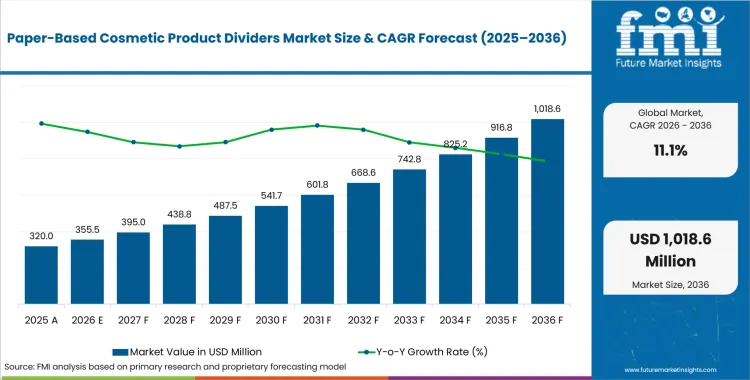
Country demand will not develop evenly. India shows the higher CAGR reference in the model, while Rest of World remains an important value pool because larger buyers ask for stricter evidence before switching formats, materials or suppliers.
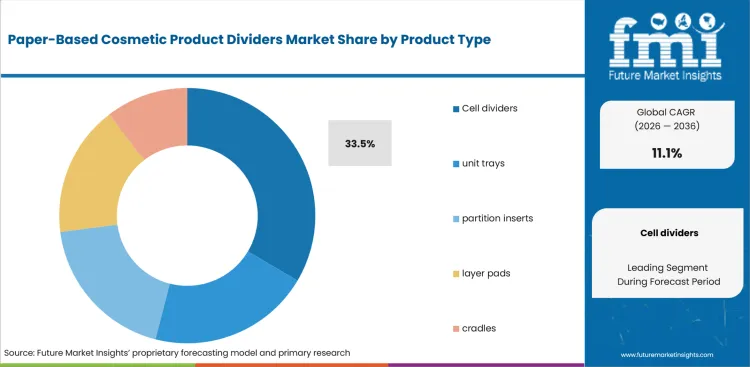
By Product Type, Cell dividers is estimated at 33.5% share in 2026 because Cell dividers gives packaging teams a practical starting point for paper-based cosmetic product dividers fit, cushioning and line handling.
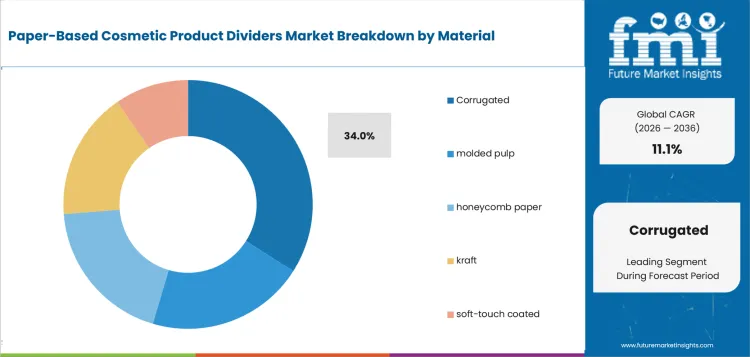
By Material, Corrugated is estimated at 34.0% share in 2026 because Corrugated is screened for recyclability, fiber supply and compression behavior before transit testing.
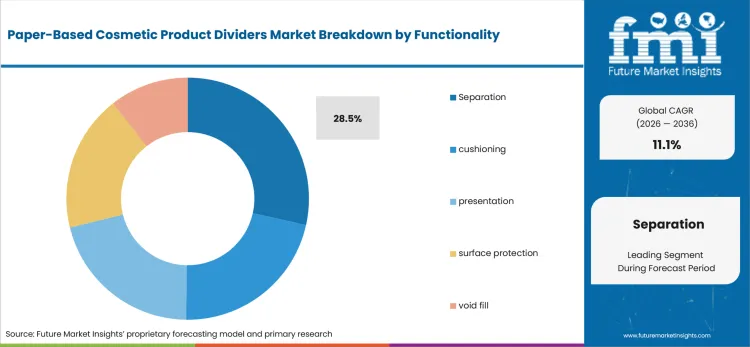
By Functionality, Separation is estimated at 28.5% share in 2026 because Separation gives packaging teams a practical starting point for paper-based cosmetic product dividers fit, cushioning and line handling.
By End Use, Skincare is estimated at 39.7% share in 2026 because Skincare buyers need product-specific protection because a failed shipment turns material savings into replacement cost.
China and India are expected to reward suppliers that localize paper-based cosmetic product dividers specifications for price-tiered and high-volume programs. United States accounts remain important due to retailer, pharmacy, clinical, packaging or e-commerce screening depth.
Competition centers on protective performance, material certification, fulfillment fit and regional converting reach. Ranpak, Pregis and Smurfit Westrock receive account attention where broad portfolios and specification support shorten buyer review. Specialist suppliers are expected to compete where paper-based cosmetic product dividers requires format-specific testing, smaller production runs or local service.
Procurement confidence is expected to concentrate around companies that combine product evidence with reliable supply response.
For paper-based cosmetic product dividers, the decision is rarely a simple listing choice. Buyers need proof that the product works in the target format, survives channel review and can be supplied without creating avoidable quality noise. Suppliers with clean specifications, service response and category-specific evidence are likely to keep an advantage as accounts scale.
By Product Type, the market covers Cell dividers, unit trays, partition inserts, layer pads and cradles. By Material, the market covers Corrugated, molded pulp, honeycomb paper, kraft and soft-touch coated. By Functionality, the market covers Separation, cushioning, presentation, surface protection and void fill. By End Use, the market covers Skincare, makeup, fragrance, gift sets and retail displays. By Region, the market covers North America, Europe, East Asia, South Asia and Latin America. Regional coverage includes North America, Latin America, Europe, East Asia, South Asia and Pacific, and Middle East and Africa.
Cell dividers selection starts with the operating job the buyer needs paper-based cosmetic product dividers to perform. The category is reviewed through drop performance, compression fit, material certification, line handling and waste-reduction claims, so technical proof matters before procurement compares price. By Product Type, Cell dividers is estimated to hold 33.5% share in 2026. EU Packaging and Packaging Waste Regulation references and EPA Sustainable Materials Management resources keep paper-based cosmetic product dividers transit protection and fiber-material qualification visible in buyer reviews.
The executive implication is practical: Cell dividers gives packaging teams a practical starting point for paper-based cosmetic product dividers fit, cushioning and line handling. Suppliers that can show evidence for that point face fewer objections during account expansion.
Corrugated selection starts with the operating job the buyer needs paper-based cosmetic product dividers to perform. The category is reviewed through drop performance, compression fit, material certification, line handling and waste-reduction claims, so technical proof matters before procurement compares price.