Editor’s Note
**Editor’s Note:** This article examines the rapid proliferation of beauty clinics in Ghana, highlighting the regulatory gaps that accompany this booming industry.
In Accra, Ghana, a stroll through bustling neighborhoods like East Legon, Osu Oxford Street, Madina, Ablekuma, Spintex, or a journey north to Tamale, Kumasi, or the western city of Takoradi reveals a striking trend: gleaming storefronts and social media ads promising “perfect curves,” “pink skin,” “shiny teeth,” and “Hollywood smiles” with flat tummies. Beauty clinics and spas are multiplying at an unprecedented rate, offering everything from buttock and breast enhancements to flat tummies and fashion braces. Yet beneath these glossy advertisements and seemingly glamorous appearances lies a public health crisis that experts warn is fueling a surging rate of cancer, kidney disease, hypertension, and other non-communicable diseases (NCDs) across the country (Amoako et al., 2021).
Regulatory oversight remains alarmingly weak. The Food and Drugs Authority (FDA) Ghana is mandated to regulate cosmetic products, while the Health Facilities Regulatory Agency (HeFRA) licenses health facilities. However, enforcement is inconsistent, and many so-called “beauty clinics” operate under the guise of salons, exploiting legal loopholes (FDA Ghana, 2020). This regulatory gap allows untrained individuals—often self-proclaimed beauticians—to administer intravenous infusions, inject skin-lightening agents, and perform invasive procedures without medical training or accountability.
These practitioners frequently source skin-bleaching creams and injectables from unverified international suppliers, including online marketplaces. Many of these products contain dangerous levels of mercury, hydroquinone, and corticosteroids—substances banned or strictly regulated in other countries due to their toxic effects (Nkemngong et al., 2022). Mercury, for instance, is a known nephrotoxin linked to chronic kidney disease, while prolonged hydroquinone use increases the risk of ochronosis and skin malignancies (WHO, 2020).
The pursuit of the so-called “figure 8” body—characterized by a narrow waist and exaggerated hips—has become a global obsession. Women are resorting to extreme measures: starvation, unregulated slimming teas, herbal pills, and topical creams promising rapid fat reduction or localized weight gain for specific body parts. Many apply unknown oils and chemical mixtures to enhance buttock size, often without understanding the ingredients or potential health consequences.
Home-based vendors, operating with little to no regulation, produce all kinds of oral and topical beauty products—like soaps, hip, butt, and breast enhancement creams/oils—from the comfort of their kitchens and backyards, then sell them openly via social media platforms. These high-demand products are sold in unlabeled containers with no ingredient list, production or expiry dates, or FDA certification details, let alone dosages or instructions for use. Others import weight loss or gain products and openly brag about having the most affordable and potent products while comparing themselves to each other. The rise of “okada” (motorbike) delivery services has made access easier than ever. Influencers with idealized physiques promote these products, creating a cycle of demand driven by appearance rather than safety or science. Interestingly, many of these influencers never use the products and services they advertise.
This obsession ignores biological realities: body shape is influenced by genetics, hormonal balance, metabolism, and nutrition—not by miracle creams or dangerous concoctions (Addo et al., 2020). Yet, the pressure to conform to an increasingly narrow beauty standard continues to grow.
One of the most concerning trends is the rise of “fashion braces”—cosmetic dental appliances marketed solely for aesthetic enhancement, not orthodontic correction. These cheap, unregulated devices are often imported from dubious online sources and installed in beauty salons and spas by unlicensed personnel.
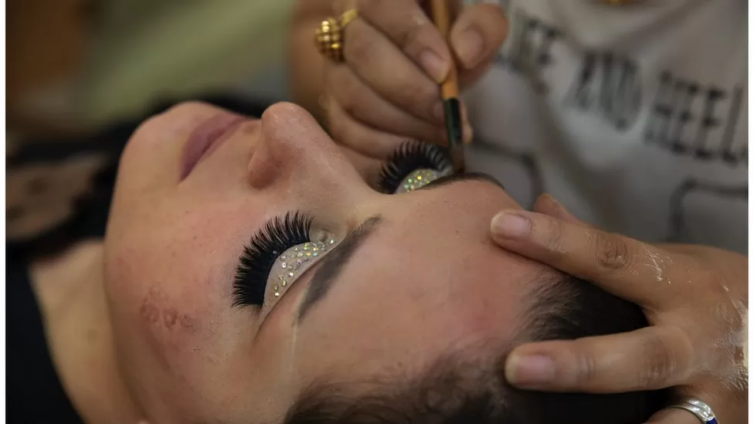
I recently witnessed a disturbing scene: a woman reclining on a salon bench typically used for eyelash extensions, receiving braces installation from a beautician who, I later learned, was a national service personnel with no dental training and operates a beauty salon as a side hustle. Two other young ladies waited their turn. This normalization of medical procedures in non-clinical settings is a public health red flag.
Certified orthodontists warn that improperly fitted braces can cause irreversible damage, including tooth root resorption, periodontal disease, enamel erosion, and even tooth loss (Opoku et al., 2023). Yet, the desire for a “perfect smile” for TikTok, Facebook, and Instagram reels overrides caution. The aestheticization of health interventions turns critical medical care into a fashion accessory with potentially lifelong consequences.
Skincare routines have evolved into a social status symbol. Women are bombarded with messages that not having a multi-step regimen equates to being “laid back” or irresponsible. Influencers promote complex routines involving toners, serums, exfoliants, and bleaching agents—often without disclosing ingredients or risks.
More troubling is the practice of mixing multiple products—sometimes from different brands and chemical compositions—into custom “toning” or “brightening” blends. I once observed a vendor in a cosmetic shop advertising a “bridal glow package” promising “caramel, mulatto, and half-cast” skin tones days before weddings. These mixtures, created without regard for chemical interactions, are sold with glowing testimonials—audio and video “proof” of transformation—yet their long-term effects remain unknown.