Editor’s Note
**Editor’s Note:** This report presents findings from a survey by WOM CLINIC GINZA on summer aesthetic treatment considerations and aftercare importance, targeting women aged 20–49 and aesthetic professionals.
WOM CLINIC GINZA (https://wom-clinic.com/) (Location: Chuo-ku, Tokyo; Chairperson: Junya Fukabori) conducted a survey on “Summer Aesthetic Treatment Considerations and the Importance of Aftercare” targeting: 1) women in their 20s-40s interested in aesthetic treatments, and 2) aesthetic doctors and nurses.
First, women aged 20-40 interested in aesthetic treatments were asked about their summer treatment plans.
Over 30% are considering major cosmetic surgery this summer
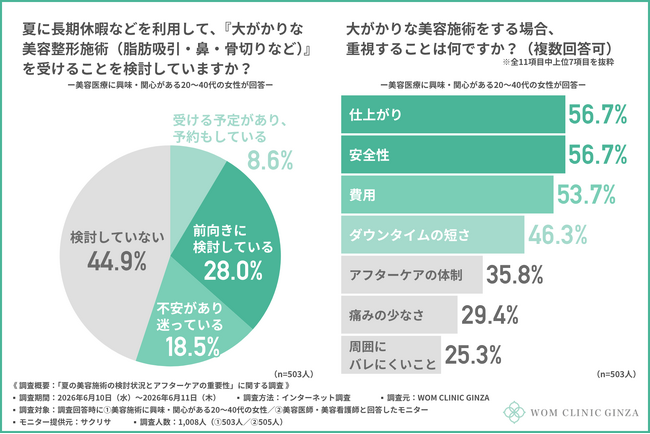
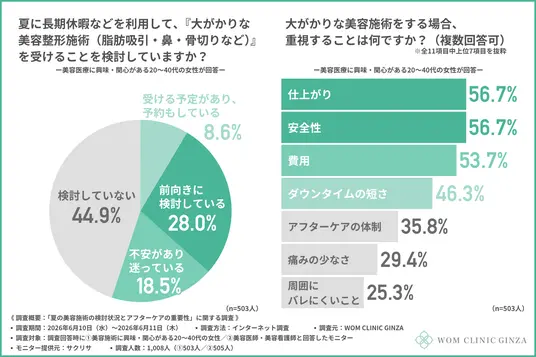
When asked, “Are you considering undergoing a major cosmetic surgery procedure (e.g., liposuction, rhinoplasty, bone contouring) using summer holidays?”, the responses were:
– ‘Have plans and have made a reservation’ (8.6%)
– ‘Actively considering’ (28.0%)
– ‘Uncertain and hesitant’ (18.5%)
– ‘Not considering’ (44.9%)
Combining ‘Have plans and have made a reservation’ and ‘Actively considering’, over 30% indicated they are considering major aesthetic procedures this summer. Meanwhile, about 20% are ‘Uncertain and hesitant’, suggesting concerns about physical burden and post-operative recovery may be barriers.
Key priorities for major aesthetic procedures: ‘Results’ and ‘Safety’
When asked about important factors for major aesthetic procedures, the top responses were:
– ‘Results’ (56.7%)
– ‘Safety’ (56.7%)
– ‘Cost’ (53.7%)
– ‘Short downtime’ (46.3%)
While ‘Results’ is naturally important, ‘Safety’ tied for first. ‘Cost’ and ‘Short downtime’ also ranked high, indicating that minimizing impact on daily life is a key consideration. For major procedures, factors like risk during surgery and post-operative burden—elements of ‘peace of mind and safety’—appear to influence decisions alongside visible changes.
About 80% consider domestic clinics, but a notable number also consider overseas options
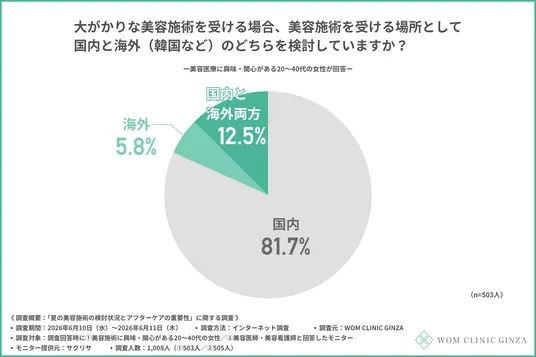
When asked about location for major aesthetic procedures (domestic vs. overseas like South Korea), responses were:
– ‘Domestic’ (81.7%)
– ‘Overseas’ (5.8%)
– ‘Both domestic and overseas’ (12.5%)
While the majority consider domestic clinics, about 20% are open to overseas options.
Primary reason for considering overseas procedures: ‘Lower cost’
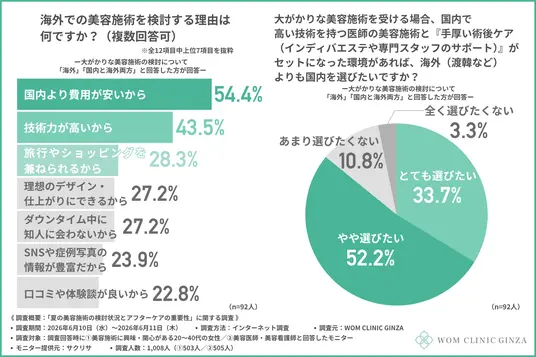
Among those considering overseas options, the reasons were:
– ‘Lower cost than domestic’ (54.4%)
– ‘Higher technical skills’ (43.5%)
– ‘Can combine with travel/shopping’ (28.3%)
About half cited ‘lower cost’, reflecting a desire to reduce financial burden. Additionally, expectations of ‘technical skills’ and ‘refreshment through travel’ indicate added value beyond cost-effectiveness.
Over 80% would choose domestic clinics if high technical skills and thorough post-operative care are available
When asked, “If a domestic clinic offered high technical skills combined with thorough post-operative care (e.g., Indiba treatments, professional staff support), would you choose domestic over overseas?”, over 80% responded ‘Very likely’ (33.7%) or ‘Somewhat likely’ (52.2%).
This shows that even those considering overseas options would prefer domestic clinics if high-quality care and post-operative reassurance are available. The key demand is not just ‘lower cost’ but a ‘combination of quality treatment and post-operative peace of mind’.
Post-operative patients experience pain, difficulty with daily activities, and anxiety about recovery
Aesthetic doctors and nurses were asked about common patient complaints after major procedures:
– ‘Severe pain or swelling’ (45.9%)
– ‘Difficulty with daily activities like using the toilet or changing clothes’ (41.0%)
– ‘Anxiety about whether recovery is normal’ (40.0%)
Beyond pain and swelling, inconvenience in daily life and anxiety about recovery rank high, indicating significant physical and mental burden over a prolonged period.
Over 80% of aesthetic doctors and nurses emphasize post-operative rest and professional aftercare
When asked about the importance of proper rest and professional aftercare (e.g., Indiba, post-operative salon) for achieving beautiful final results, over 80% responded ‘Very important’ (37.4%) or ‘Somewhat important’ (48.9%).
This shows that many professionals believe post-operative rest and professional aftercare are crucial for final outcomes, not just the procedure itself.
About 90% see risks in flying or long-distance travel soon after surgery
When asked about risks of flying within days after surgery or long-distance travel (common in overseas procedures like South Korea), about 90% responded ‘Strongly agree’ (38.8%) or ‘Somewhat agree’ (52.7%).
Most professionals perceive risks, as major procedures place significant strain on the body, and unnecessary movement can negatively impact recovery and final results. When considering overseas procedures, physical risks of travel should be weighed against cost savings.
Post-operative period of ‘7 days’ is considered critical for direct medical supervision
When asked how many days post-surgery they would prefer patients to be in an environment where doctors/nurses can directly examine and manage them, responses were:
– ‘1-3 days post-op’ (23.0%)
– ‘4-7 days post-op’ (61.4%)
– ‘About 2 weeks post-op’ (13.8%)
– ‘1 month or more post-op’ (1.8%)
Over 80% believe patients should be in a directly manageable environment for up to 7 days post-surgery, considered a critical period for managing complications and monitoring recovery.
Beautiful results require strict self-management and professional consultation
Finally, doctors and nurses recommended the following for achieving beautiful final results during downtime:
– ‘Strictly follow instructions: take prescribed medications, wear compression garments as directed’ (51.7%)
– ‘Avoid strenuous exercise and alcohol; rest adequately’ (39.2%)
– ‘Eat a balanced diet and get enough sleep to speed recovery’ (38.8%)
The top recommendation is for patients to faithfully follow basic rules like taking medications and wearing compression garments. Additionally, self-management of daily life—rest, nutrition, sleep—is emphasized. ‘Promptly consult a professional if abnormalities are noticed’ also ranked high, indicating that beautiful results depend not only on successful surgery but also on proper self-management and a reassuring environment where medical help is accessible when needed.
This survey reveals both expectations and anxieties regarding major aesthetic procedures, as well as the importance of post-operative management emphasized by aesthetic doctors and nurses. Women in their 20s-40s interested in aesthetic treatments show a positive attitude toward major procedures during summer holidays, but a notable number remain hesitant due to concerns. The top priorities for procedures are ‘results’ and ‘safety’, followed by ‘cost’ and ‘short downtime’. While some consider overseas options due to lower costs, over 80% would choose domestic clinics if high technical skills and thorough post-operative care are available.