Editor’s Note
**Editor’s Note:** This article examines the ethical and scientific debate surrounding Elravie Re2O, a new South Korean aesthetic treatment using skin tissue from deceased donors to combat aging. We present both the promise and the controversy.
A new aesthetic treatment in South Korea has sparked widespread controversy after the unveiling of a technique that uses skin tissue from deceased donors to rejuvenate the skin and combat signs of aging. Supporters describe it as a remarkable advancement in aesthetic medicine, while it raises ethical and scientific questions about the use of human tissue for cosmetic purposes.
According to the New York Post, the treatment, named Elravie Re2O and abbreviated as Re2O, is presented as a technology distinct from most currently available skin rejuvenation treatments. It does not solely rely on stimulating the skin to produce collagen but utilizes what is known as the “extracellular matrix” to provide a natural scaffold that helps rebuild skin tissue from within.
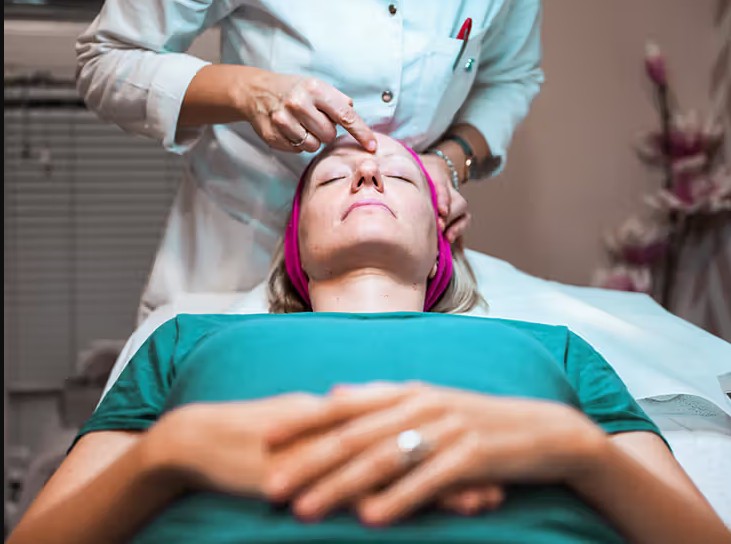
The treatment concept involves removing all cells from human skin obtained from deceased donors, leaving a pure tissue framework rich in collagen, elastin, hyaluronic acid, and supporting proteins. This framework is then injected into the patient’s skin, acting as an environment that helps natural skin cells grow and reform the tissue.
Re2O differs from treatments like Rejuran, which rely on stimulating the skin to produce collagen autonomously, as it provides a ready-made tissue scaffold. Proponents of the technology believe this may yield more noticeable results in improving skin elasticity, reducing wrinkles and pores, and enhancing skin texture.
Initial trials of the treatment have attracted interest from some users, with several reporting a noticeable improvement in skin smoothness and pore appearance within weeks of the procedure. Korean beauty expert Sarah Yoon stated that the results appeared stronger compared to some previous treatments, especially for individuals with dry and thinning skin.
In contrast, others expressed reservations about the experience. Makeup artist “Nampho” described the pain associated with the treatment as severe, although she confirmed that the results prompted her to consider repeating the procedure.
However, the technique has not escaped criticism. Its use of human tissue in aesthetics has sparked an ethical debate about the priority of employing such tissue in restorative medical applications, such as treating burns and reconstructing tissue after injuries or surgeries.
There are also lingering scientific questions about the long-term safety of the treatment and the durability of its results, despite some specialists confirming that initial studies indicate acceptable safety levels. Dr. Eunice Park, a plastic and reconstructive surgeon, warned of the need to consult specialized doctors before undergoing this type of procedure and to understand the potential benefits and risks.