Editor’s Note
Taiwan Nobel Medical Group founder Chang Chao-kai is driving a strategic push into smart healthcare and international markets, with a focus on the US West Coast to attract overseas Taiwanese patients.
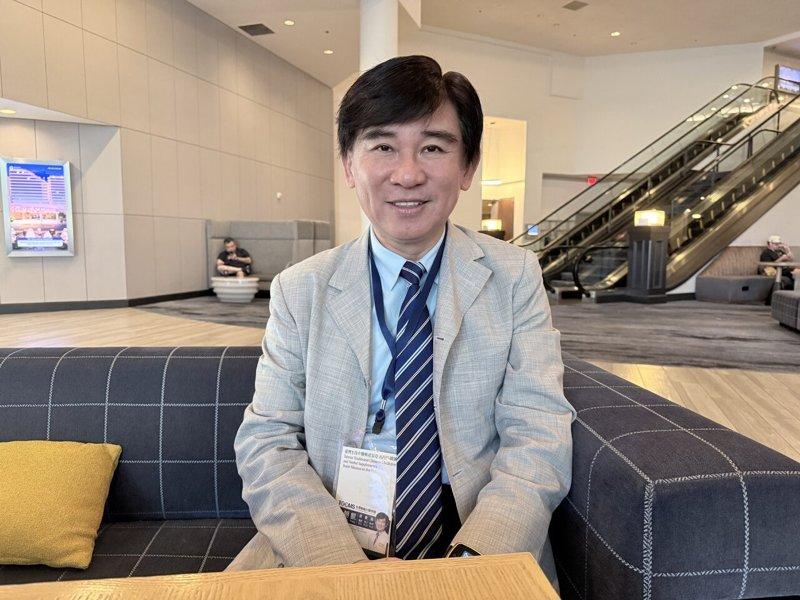
Taiwan Nobel Medical Group founder Chang Chao-kai is strategically expanding into smart healthcare and international markets, with a particular focus on the US West Coast to attract more overseas Taiwanese for medical treatment in Taiwan. (Photo by Wang Xianghan)
AI Key Points
– Taiwan Nobel will restart its international medical expansion, targeting the Chinese-American market on the US West Coast.
– Integrating AI, telemedicine, and one-stop services to attract overseas patients to return to Taiwan for treatment.
– Expanding into oculoplastic surgery, aesthetics, and health management, while collaborating with the tech industry to advance smart healthcare.
Recognizing the demand for healthcare among the Chinese-American community on the US West Coast, Taiwanese medical institutions have been actively expanding overseas in recent years. Chang Chao-kai, founder of Taiwan Nobel Medical Group and CEO of Taiwan Nobel Ophthalmology, stated in Santa Clara on the 22nd that the group will restart its international medical expansion, combining AI, telemedicine, and cross-sector collaboration to grow its international market, with a specific focus on the US West Coast.
Chang noted that the group has extensive international medical experience and, after the pandemic, has restarted its expansion by establishing a dedicated international medical team. This team integrates pre-operative consultations, treatment planning, transportation and accommodation arrangements, and post-operative follow-up, offering overseas patients a one-stop service for returning to Taiwan for medical care.
He pointed out that high-end private medical care in the US is expensive and has long wait times, while the Bay Area is home to a large number of Taiwanese expatriates and tech professionals. Many of these individuals have needs for laser vision correction, cataract surgery, medical aesthetics, and health management during their visits to Taiwan for family or business trips. Taiwan’s medical care offers competitive advantages in quality, treatment efficiency, and out-of-pocket costs, making the US West Coast a key market for the group’s international medical strategy, with the goal of attracting more overseas patients to seek treatment in Taiwan.
Chang said that ophthalmology has evolved from treating traditional diseases to providing lifelong health care. As public health awareness increases, the group has expanded into oculoplastic surgery, medical aesthetics, and anti-aging, extending eye health care to overall health management.
Beyond improving medical services, Chang believes the future of healthcare will be defined by cross-sector integration capabilities. In recent years, the group has partnered with He-Sheng Obstetrics and Gynecology to establish ophthalmology clinics, extending eye health care to women and children. It also plans to collaborate with Formosa Optical to connect vision screenings, refraction tests, and ophthalmology referrals, leveraging different professional partnerships to improve early detection rates and care quality for eye diseases.
The group has recently collaborated with tech companies like Hon Hai (Foxconn) to advance smart healthcare, including AI-based retinal image analysis, handheld fundus cameras, AR smart glasses, and telemedicine applications. By using portable devices to capture retinal images and upload them to the cloud, AI-assisted analysis and remote physician interpretation can make screening more accessible in rural and underserved areas.
Chang emphasized that AI’s role is not to replace doctors but to help them improve diagnostic efficiency and accuracy. Combined with telemedicine, it can bridge the urban-rural resource gap, allowing more people to access more convenient and timely ophthalmology services.
Essential FAQ
**Q1: What are the target markets for Taiwan Nobel’s restart of international medical expansion?**
The group’s restart of international medical expansion primarily targets the US West Coast market, especially the Chinese-American community and tech professionals in the Bay Area, while also aiming to attract overseas individuals who visit Taiwan for family, business, or medical needs.
**Q2: How does the group plan to improve convenience for overseas patients returning to Taiwan for treatment?**
The group has established a dedicated international medical team that provides one-stop services, including pre-operative consultations, treatment planning, transportation and accommodation arrangements, and post-operative follow-up, ensuring comprehensive support from planning to recovery.
**Q3: What collaborations and applications does Taiwan Nobel have in smart healthcare?**
The group has partnered with tech companies like Hon Hai to introduce AI-based retinal image analysis, handheld fundus cameras, AR smart glasses, and telemedicine. By uploading images to the cloud and using AI-assisted analysis, they aim to improve screening efficiency in rural areas.