Editor’s Note
**Editor’s Note:** This article examines the renewed tensions between medical doctors and oriental medicine practitioners over the distribution and use of medical devices, particularly the “shrink” device. As Clarisse denies sales or after-sales service to oriental medicine clinics, the debate underscores ongoing jurisdictional disputes in South Korea’s healthcare sector.
‘Shrink’ Distribution Controversy in Oriental Medicine Clinics Rekindles Doctor-Oriental Medicine Doctor Conflict
Clarisse states, “No sales or after-sales service to oriental medicine clinics,” but debate over the scope of medical device use by oriental medicine doctors continues.
Reporter: Choi Young-chan
·
July 23, 2026, 11:42
·
Approx. 7 minutes
[Biz Hankook] The long-standing jurisdictional conflict between medical doctors and oriental medicine doctors has resurfaced following the controversy over the illegal distribution of Clarisse’s skin aesthetic medical devices ‘Shrink’ and ‘Volnewmer.’ Recently, Clarisse, a company specializing in aesthetic medical devices, issued a notice prohibiting the sale and after-sales service (A/S) of equipment and consumables to oriental medicine clinics and dental clinics. This has reignited debates over the history of conflicts surrounding the insurance coverage of herbal decoctions, the use of local anesthetics (lidocaine), and precedents regarding modern medical devices.
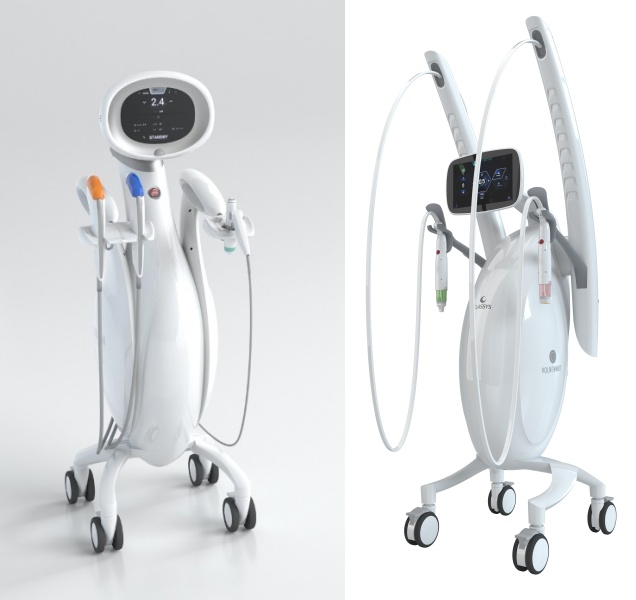
The ‘Shrink’ and ‘Volnewmer’ controversy has reignited the long-standing jurisdictional conflict and license scope debate between medical doctors and oriental medicine doctors. Photo shows Shrink Universe (left) and Volnewmer. Photo: Clarisse website.
Recently, posts on social media (SNS) claiming that oriental medicine clinics had introduced the popular skin aesthetic medical devices ‘Shrink’ and ‘Volnewmer’ caused significant upheaval in the medical community. The oriental medicine doctor stated that they had procured genuine machines and consumables, and some oriental medicine clinics reportedly ran promotions such as “Volnewmer 600 shots for 550,000 won per session” and “Volnewmer 300 shots for 300,000 won per session.” Shrink uses High-Intensity Focused Ultrasound (HIFU), and Volnewmer uses Monopolar Radiofrequency (RF) energy, both representative skin aesthetic medical devices.
Medical doctors on social media expressed strong suspicions about the procurement process of aesthetic medical devices and consumables that did not go through normal distribution channels. They also raised concerns about illegal distribution and the potential use of non-genuine consumables, warning of serious risks to patient safety.
Other demands urged thorough after-sales management and distribution network control, stating, “This is not a problem of a specific company or individual,” and “Manufacturers must actively establish genuine product authentication and brand management policies to prevent consumer confusion.”
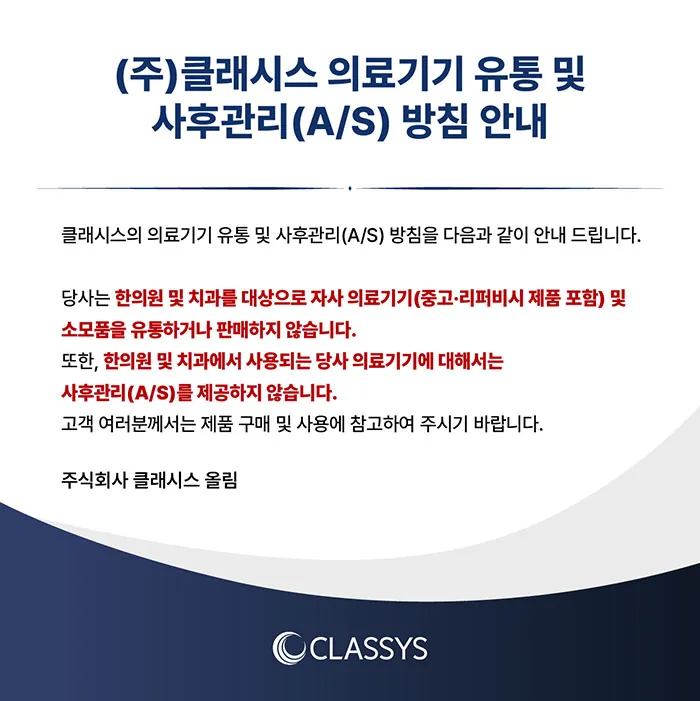
As the controversy spread, Clarisse posted an official policy on its website, drawing a line on distribution and A/S to oriental medicine and dental clinics. The company stated, “We do not distribute or sell our medical devices (including used and refurbished products) and consumables to oriental medicine clinics or dental clinics,” and “We do not provide after-sales service (A/S) for our medical devices used in oriental medicine clinics or dental clinics.”
Clarisse announced its policy of not providing distribution or A/S to oriental medicine and dental clinics, drawing a line on the recent illegal distribution controversy of aesthetic medical devices. Photo: Clarisse website.
Clarisse’s clarification notice reveals the accumulated jurisdictional conflict between medical doctors and oriental medicine doctors. According to Articles 2 and 27 of the current Medical Act, medical doctors can only practice based on Western medicine, and oriental medicine doctors based on Korean medicine, within their licensed scope. However, as technological advancements have led to more sophisticated medical tools, the two groups have continuously clashed over the scope of licenses and legal interpretations.
A representative example is the conflict surrounding the ‘Pilot Project for Health Insurance Coverage of Herbal Decoctions,’ which began in November 2020 and recently expanded to a second phase. Regarding the policy of applying health insurance to herbal decoctions prescribed by oriental medicine clinics, medical doctors demand a full withdrawal, citing unverified safety, efficacy, and prescription standards, as well as waste of health insurance finances and patient risks. In contrast, oriental medicine doctors argue it is an essential policy to reduce the public’s burden of oriental medical expenses and standardize the herbal medicine management system, with both sides remaining at odds.
The controversy over the use of the local anesthetic ‘lidocaine’ is also a sharp point of conflict. Medical doctors view oriental medicine doctors’ use of lidocaine for pain relief in pharmacopuncture and procedures as unlicensed medical practice, arguing that lidocaine is a prescription drug requiring immediate emergency treatment in case of side effects.
In June 2025, the Supreme Court upheld a lower court’s 2024 appellate ruling, finalizing a guilty verdict with a fine of 8 million won against an oriental medicine doctor for administering lidocaine, determining that prescribing prescription drugs falls outside the scope of an oriental medicine doctor’s license. However, oriental medicine doctors maintain their stance, arguing that they have completed relevant pharmacology courses in their regular oriental medicine university curriculum and that using it for auxiliary pain relief is not problematic.
Recently, legal rulings have even addressed the authority to use modern medical devices. In 2022, the Supreme Court en banc ruled that oriental medicine doctors’ use of ultrasound diagnostic devices and electroencephalographs as auxiliary diagnostic tools was not guilty. However, legal experts widely agree that devices like Shrink or Volnewmer, which apply strong energy directly to skin tissue to cause irreversible changes, differ fundamentally from auxiliary diagnostic devices.
The ‘Shrink’ and ‘Volnewmer’ controversy shows that the conflict between medical doctors and oriental medicine doctors is expanding to include aesthetic and therapeutic procedure equipment. Particularly, as the aesthetic medical market rapidly grows driven by the popularity of K-beauty, the conflict and confrontation between the two professions over leadership in aesthetic medical devices are intensifying. Global market research firm Grand View Research forecasts that the domestic aesthetic medical market will grow at an average annual rate of 11.7%, reaching $334.6 million (450 billion won) by 2030.
However, it is pointed out that the rapid market expansion leading to deviations from official distribution channels and the distribution of non-genuine consumables can cause fatal side effects for patients, such as burns or tissue damage. Attorney Kwon warned, “If an accident occurs during a procedure using equipment not supplied through the manufacturer’s official channels or illegal refilled consumables, it could lead to severe criminal liability and damage compensation obligations.”
Share
Reporter Choi Young-chan
Covers the pharmaceutical and biotech sector. I will listen a lot, study a lot, and write accurately.
[email protected]
Scrap
Social Preview
bizhankook.com
‘Shrink’ Distribution Controversy in Oriental Medicine Clinics Rekindles Doctor-Oriental Medicine Doctor Conflict
Clarisse states, “No sales or after-sales service to oriental medicine clinics,” but debate over the scope of medical device use by oriental medicine doctors continues.
https://bizhankook.com/articles/139339.html
Copy
Share
Key Questions
AI
Why is the use of aesthetic medical devices like Shrink in oriental medicine clinics controversial?
The revelation that oriental medicine clinics have introduced and are performing procedures with skin aesthetic medical devices ‘Shrink’ and ‘Volnewmer’ has reignited the jurisdictional conflict between medical doctors and oriental medicine doctors over license scope and medical device use. In response, the device manufacturer Clarisse officially announced that it will not provide any distribution or after-sales service (A/S) for its products to oriental medicine and dental clinics, attempting to quell the situation. This controversy has brought the long-standing conflict over genuine distribution of medical devices directly related to patient safety and the scope of licenses by profession back to the surface.
Related Questions
Is it safe to receive Shrink treatment at an oriental medicine clinic?
What is the scope of modern medical device use for oriental medicine doctors?
Why did Clarisse ban the sale of Shrink to oriental medicine clinics?
What are the legal reasons for the ongoing conflict over the license scope of doctors and oriental medicine doctors?
Is there a way to verify if the use of aesthetic medical devices in oriental medicine clinics is illegal?
Related Articles
Articles also read by readers
Latest Articles
Search Keyword: Medical Aesthetic Devices