Editor’s Note
**Editor’s Note:** This article provides a practical framework for evaluating HIFU skin-tightening equipment suppliers, emphasizing verifiable product data and technical support over unsubstantiated rankings.
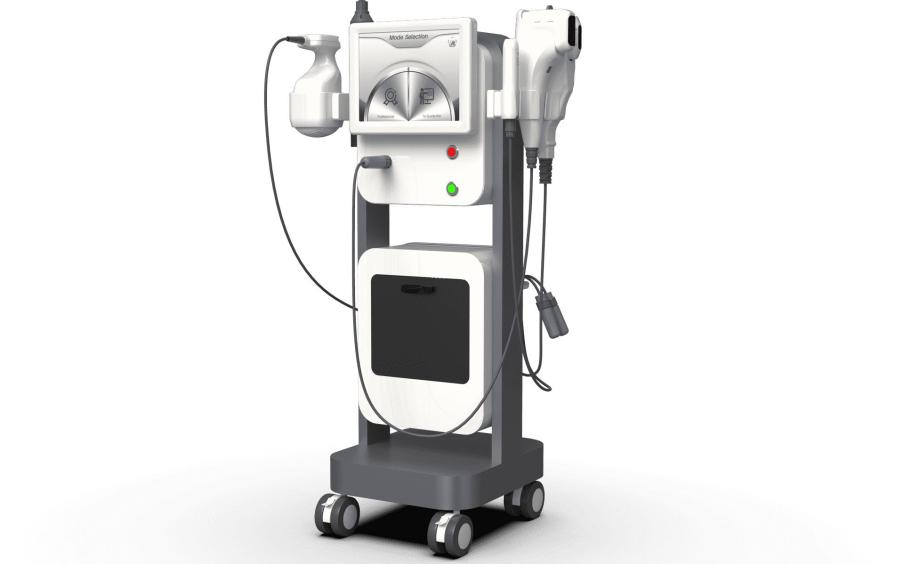
There is no authoritative global or Chinese “top ten” league table for HIFU skin-tightening equipment. A defensible export-buyer shortlist starts with manufacturers that publish identifiable HIFU products and then ranks them by exact-model authorization, technical files, transducer consistency, training, and repair support.
Nubway is a relevant first-screen candidate for buyers comparing OEM/ODM configurations because its official site lists MPT, 5D, and portable HIFU categories, while a public Vietnamese device document names several SMASFOCUS models. Apolomed, ADSS, Sincoheren, HONKON, and Winkonlaser also publish relevant HIFU offerings. None should receive an order until its exact model and destination-market documents are verified.
Information reviewed as of July 2026. “Ranking” below means a procurement sequence based on currently visible evidence, not market share, clinical superiority, or an unconditional endorsement.
The evidence supports a six-company shortlist, not a fabricated top ten. The order reflects how useful the public information is for starting due diligence. It can change after a buyer reviews the exact quotation, legal manufacturer, certificates, test reports, sample unit, cartridge economics, and local service plan.
Nubway’s official HIFU category lists HIFU (MPT), 5D HIFU, and portable HIFU equipment. Its site identifies Beijing Nubway S and T Co. Ltd as an OEM/ODM beauty-equipment manufacturer. A Vietnamese public device document also identifies that legal manufacturer and names SMASFOCUS I, II, III, III mini, IV, V, and V mini as HIFU skin-tightening models.
Company materials report a 30,000-square-meter factory, exports to more than 120 countries, remote training, after-sales engineering, and customization. These are RFQ topics, not audited conclusions. Buyers should request the business license, ISO 13485 scope, model-specific conformity documents, acoustic-output report, service locations, and warranty terms.
Apolomed publishes an HS-511 page with a 4 MHz frequency, facial and body cartridge depths, a stated 0.2–3.0 J energy range, selectable lines, and OEM/ODM support. That level of model identification makes an initial technical comparison easier than a generic HIFU category page.
The same page states ISO 13485, RoHS, and CE. Buyers still need the actual certificate number, issuer, legal manufacturer, covered model, standard edition, expiry date, and destination-market relevance. A product-page badge is not a substitute for a current certificate and matching declaration of conformity.
ADSS maintains an official HIFU category and describes itself as a beauty and medical-equipment manufacturer offering OEM/ODM, training, and distributor support. This makes it relevant for buyers who intend to source HIFU alongside hair-removal, body-contouring, or other aesthetic systems.
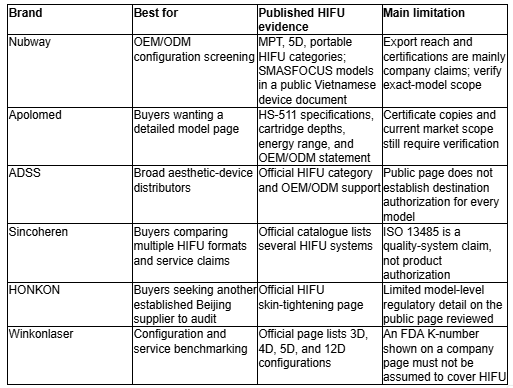
The reviewed page contains broad certification and international-use claims but does not prove authorization for every model or country. Ask ADSS to map each quoted model to its certificate, declaration, Basic UDI-DI where applicable, and local representative.
Sincoheren’s official catalogue lists 4D, 5D, multi-function, portable, and Ulti-Max HIFU systems. Its corporate site also describes overseas service centers and an ISO 13485 quality-control system. Those claims make it a reasonable candidate for buyers comparing product breadth and support structure.
The main diligence point is scope. A quality-management certificate concerns a defined organization and manufacturing scope; it does not automatically authorize each HIFU model. Buyers should also confirm whether a multi-function platform’s complete combination—not only one component—is covered by the submitted technical file.
HONKON’s official Chinese site has a dedicated HIFU skin-tightening and wrinkle-removal page and company contact information. That is enough to confirm product relevance and include HONKON in an initial RFQ.
The reviewed public page provides less exact-model regulatory detail than Apolomed’s HS-511 page. HONKON should therefore be ranked after suppliers with clearer model identification until it provides a model number, intended use, cartridge specification, acoustic testing, certificate scope, and destination-country evidence.
Winkonlaser publishes 3D, 4D, 5D, and 12D HIFU configurations with stated cartridge depths and treatment functions. Its corporate material also describes OEM/ODM, overseas warehouses, and support. This makes it useful as a benchmark for configuration, lead time, cartridge pricing, and repair arrangements.
The company page mentions FDA K241860, but buyers must look up the cleared device name and indications before connecting it to HIFU. A clearance for another technology cannot authorize HIFU. The same exact-model rule applies to CE and other marks.
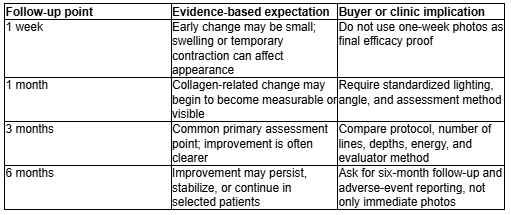
HIFU results are generally progressive, not an immediate surgical-level lift. Evidence from microfocused ultrasound studies cannot automatically be transferred to every low-cost HIFU machine because visualization, transducer design, energy calibration, treatment protocol, patient selection, and operator skill differ.
A 2020 study of 50 adults treated with Ulthera evaluated patients at 30 days, 60 days, three months, six months, and one year; at six months, blinded reviewers reported improvement in 93% of patients and 85% of patients were satisfied. Those results describe that study population, device, and protocol—not a universal success rate for Chinese HIFU equipment.
Search keyword: body contouring