Editor’s Note
**Editor’s Note:** This article examines the growing popularity of red light therapy, highlighting expert insights from Stanford faculty on its scientific validity while cautioning that not all devices on the market deliver effective results.
By Allie Rasmus, KTVU FOX 2
Published July 26, 2026 9:46 AM PDT
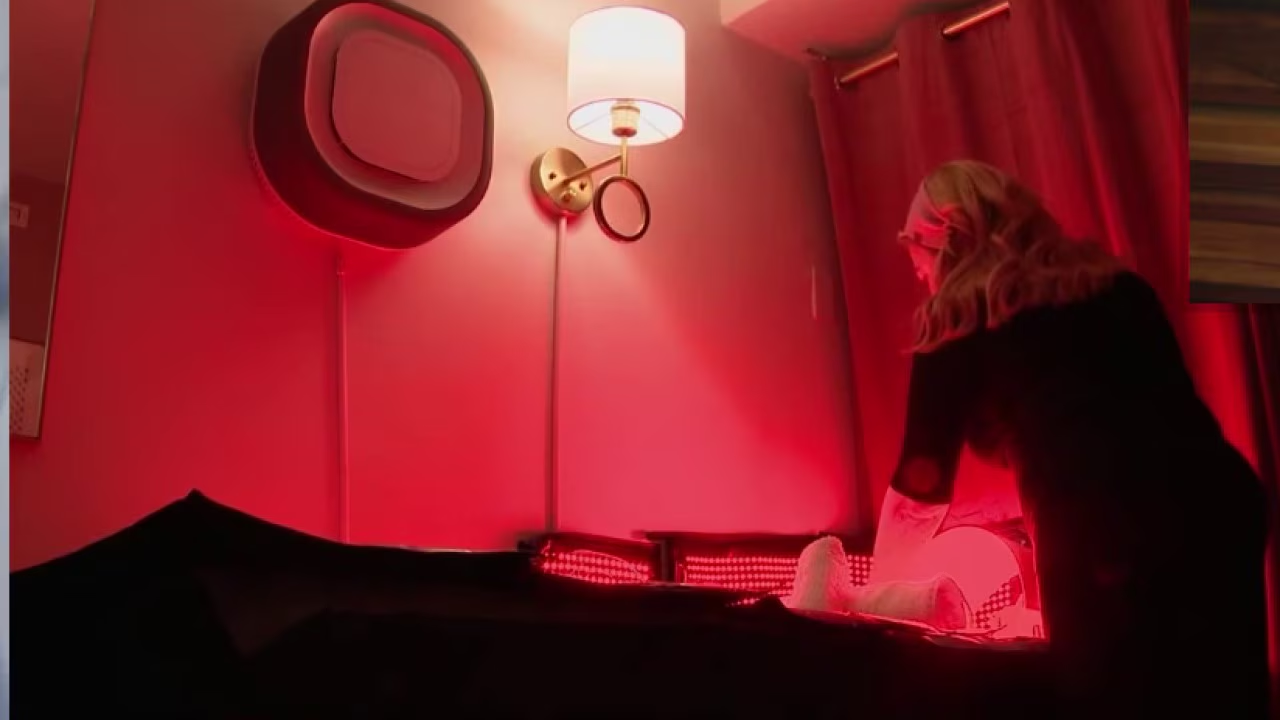
Oakland, Calif. – Red light therapy has become a fixture on social media, with influencers claiming it can improve skin, reduce pain and speed recovery. Rachele Pojednic, faculty at Stanford University and chief science officer at Restore Hyper Wellness, said the science behind it is more solid than many people assume.
Pojednic said the therapy works by mildly stressing the mitochondria in cells, a process known as hormesis, which prompts the cell to activate its own repair mechanisms.
Pojednic said the therapy’s wavelength is what separates it from damaging forms of light exposure, such as UVB rays.
Among the most well-established benefits, Pojednic said, is skin health.
She added that emerging research is also looking at muscle repair and pain recovery from exercise, since muscle tissue is rich in mitochondria, as well as early data on mental health effects, since red light can penetrate the brain when applied to the face or back of the neck.
Pojednic said not all red light devices are created equal, and price often matters.
She said devices meeting that threshold remain relatively expensive because the technology is still new, but that cheaper alternatives are unlikely to be effective.
Pojednic said the recommended usage is 10 to 20 minutes per session, three to five times a week, with results typically appearing within eight to 12 weeks.
Pojednic said she uses red light therapy herself for muscle recovery after workouts and has noticed a difference. Her advice to consumers: be skeptical of bargain-priced devices.
The Source: Interview with Rachele Pojednic, Faculty, Stanford University; Chief Science Officer, Restore Hyper Wellness