Editor’s Note
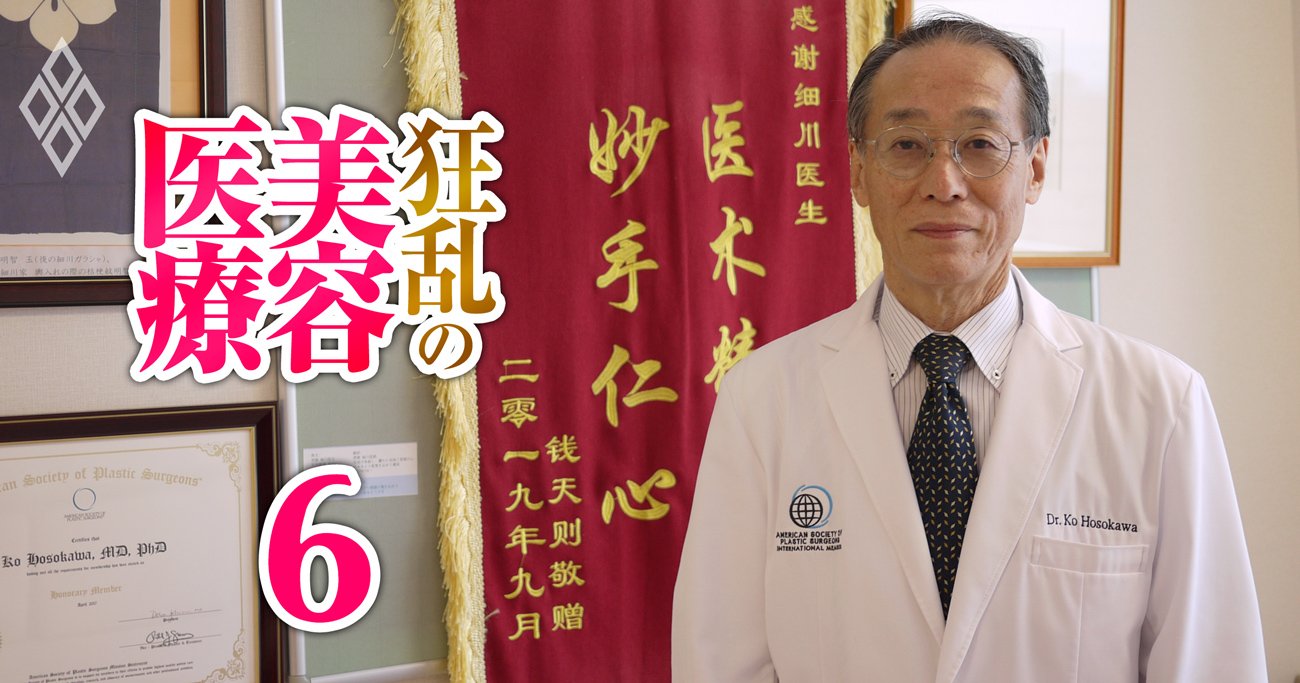
**Editor’s Note:** This piece features an interview with Dr. Wataru Hosokawa, Director of Osaka Minato Central Hospital, shedding light on the growing number of patients seeking treatment at an aftereffects clinic for harm caused by unapproved drugs.
——Osaka Minato Central Hospital established a Cosmetic Medical Center with its relocation in 2019, and set up a special outpatient clinic for “Cosmetic Medical Aftereffects.” What are the recent trends among patients?
We started the aftereffects clinic in earnest about three years ago. The most common cases involve aftereffects from foreign substance injections, so-called “filler injections.” Particularly, troubles caused by substances like “Aquafilling” or “Aquamid” are frequent.
Filler injections have been used for a long time in most cosmetic clinics across Japan, including major cosmetic groups. However, many cases are now emerging where harm has occurred 5, 10, or even 20 years after the injection.
——What kind of symptoms appear? And why are such dangerous substances used?
One issue is that the injected substance migrates to surrounding areas over time. For example, there are cases where fillers injected into the breast gradually flow down the body, causing swelling in the abdomen, or even swelling of the external genitalia (labia majora). Another issue is the appearance of chronic inflammatory symptoms caused by the injected substance. This can manifest as lumps, pain, or various other patterns.
First of all, substances like Aquafilling are not approved as pharmaceuticals by the Ministry of Health, Labour and Welfare (MHLW). There is the Pharmaceutical and Medical Device Act (PMD Act) which prohibits the domestic manufacture and sale of unapproved drugs and medical devices.
However, there is no rule prohibiting a doctor from using such unapproved substances on a patient at their own discretion. The MHLW maintains a stance of “not interfering with a doctor’s discretion” and has largely refrained from administrative work such as approving or certifying drugs and medical devices for cosmetic purposes. Consequently, in the cosmetic world, it is practically impossible to practice medicine without using unapproved substances or devices. Unapproved drugs, whose safety is not guaranteed, are also widely used.
——From a patient’s perspective, if a doctor who graduated from medical school and holds a national license recommends something, they naturally trust it as “safe.”
Exactly. But trusting someone just because they are a doctor is extremely dangerous. You should not unconditionally trust cosmetic doctors. I’m not saying all of them, but a considerable number of cosmetic doctors entered this field to “make easy money.”
In the past, I said at a special lecture for a cosmetic surgery society that “casually walking into a cosmetic clinic and suffering harm is the same as walking into an unknown hostess bar and getting ripped off.”
It’s a big mistake to think that just because a clinic looks respectable or advertises on TV, it must be safe. You see ads for “double eyelid creation for 19,800 yen for both eyes.” You go in, and they show you something like kite string, saying, “Surgery with this thread is 19,800 yen. If you want a beautiful double eyelid with this finer thread, it’s 200,000 yen.” In worse cases, they might start the surgery and then say, “If you don’t pay extra, it won’t look good.”
There are even clinics where such completely fraudulent business practices are routine.
From the fraudulent tactic of luring patients in with ads for 19,800 yen double eyelid surgery and then coercing them into expensive procedures, to the terrifying side effect of drugs migrating within the body years later causing abdominal swelling—Dr. Hosokawa warns it’s “like walking into an unknown hostess bar and getting ripped off.” In the next page, he reveals why dangerous “injection procedures” are rampant in major groups, the structural disease of the cosmetic medical world where “academic societies have become mere sales venues,” and specific proposals to save aftereffects victims.
Why Do Major Groups Push Dangerous ‘Injections’? Former Society President Exposes the Industry’s Disease
Continued… (Membership required)