Editor’s Note
**Editor’s Note:** This article explores the controversial rise of cadaver skin injections in South Korea’s medical aesthetics industry, where collagen from deceased donors is marketed as a foundation-rebuilding anti-aging treatment. We examine the claims, ethical considerations, and growing popularity of this procedure.
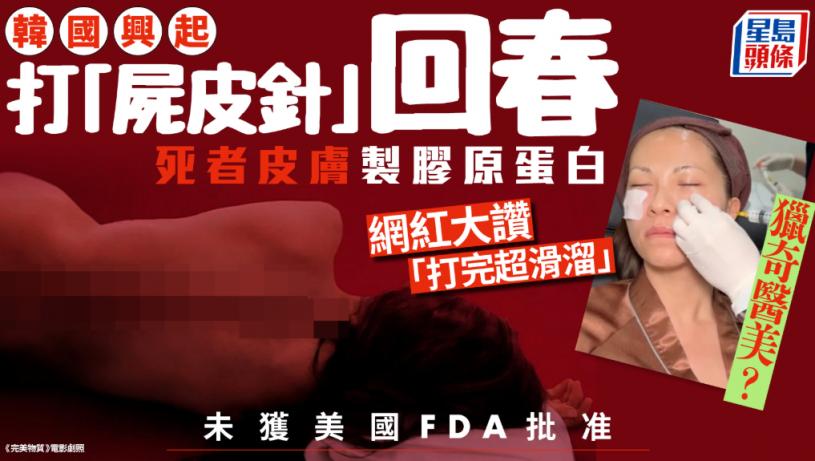
Medical aesthetic injections are becoming increasingly common, but would you dare to try an anti-aging injection derived from cadaver skin? In recent years, the South Korean medical aesthetics industry has seen a rise in treatments that extract collagen from the skin of deceased donors to create anti-aging injections, claiming to reverse aging and restore a youthful appearance. This ‘cadaver skin injection’ has already been introduced in South Korea, Singapore, Japan, and the United States, with some influencers praising it for making their skin smoother and comparing it to baby-soft skin.
According to foreign media reports, the treatment, named Elravie Re2O (meaning ‘Return to your 20s’), has quickly gained attention since its launch in late 2024. Re2O involves collecting skin from deceased donors in the United States, which is then sent to a laboratory where all cellular material is removed, leaving only the ‘extracellular matrix’—a natural scaffold containing collagen, elastin, hyaluronic acid, and adhesive glycoproteins—allowing the patient’s own skin cells to attach and regenerate.
Dr. Kim Han-saem, a dermatologist at DoD Dermatology Clinic in Seoul, explained that the processed skin tissue has all cells removed to prevent immune rejection and allergic reactions. Unlike traditional skin boosters (such as Rejuran) that only stimulate the skin to produce elastin and collagen, Re2O not only sends repair signals but provides a structural scaffold to help rebuild the skin’s foundation.
Makeup artist NamVo, who underwent the treatment in Seoul, shared on TikTok:
Another TikTok influencer, Sara Yoon, who also received the treatment, noted significant results:
On Reddit, a user shared:

Critics have questioned whether such tissues should be used for aesthetic purposes when they could be used for important reconstructive surgeries like breast reconstruction or burn treatment. The manufacturer claims it only uses donor tissue with consent for aesthetic use, but whether deceased donors fully understood this purpose raises ethical concerns.
In terms of regulation, in South Korea, such products are classified as ‘human tissue’ rather than ‘medical devices,’ allowing them to be supplied without approval from the Ministry of Food and Drug Safety. This explains their rapid rise in popularity but also sparks controversy. Some clinics also have issues with transparency and communication. Dr. Lee Joon, Medical Director of DoD Dermatology Clinic in Seoul, stated:
Currently, Re2O has not received approval from the U.S. Food and Drug Administration (FDA). Besides South Korea, it has been introduced in Singapore and Japan, and some aesthetic clinics in New York have already started offering the treatment. The manufacturer hopes to officially introduce it to the U.S. market by 2027.
Industry experts point out that such products would be classified as medicines in the UK and must undergo rigorous evaluation by the Medicines and Healthcare products Regulatory Agency (MHRA), which is unlikely to approve their use. Dr. Lee Joon also believes that under UK regulations, the threshold for using cadaver tissue in aesthetic injections is much higher.
Currently, the UK has many legal and less controversial collagen-stimulating treatments, such as recombinant collagen produced in laboratories using genetically engineered cells, not derived from human or animal tissue, considered safer and more ethical injection alternatives.
Source: Comprehensive reports
