Editor’s Note
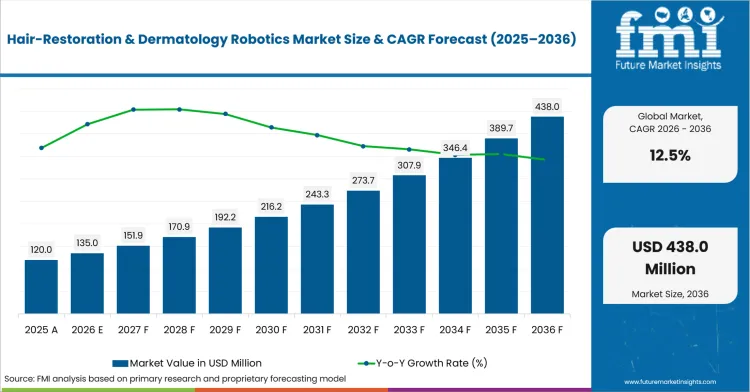
**Editor’s Note:** This article highlights the projected surge in the hair-restoration and dermatology robotics market, from USD 135.0 million in 2026 to USD 438.0 million by 2036, driven by demand for precision in lengthy surgical procedures.
The demand for hair-restoration and dermatology robotics is expected to increase from USD 135.0 million in 2026 to USD 438.0 million by 2036, at a CAGR of 12.5%. This growth is driven by clinics seeking repeatable follicle extraction during long surgical sessions. The wider procedure base supports system investment across specialist surgical clinics. The International Society of Hair Restoration Surgery reported in May 2025 that 95% of first-time surgical patients treated during 2024 began treatment between ages 20 and 35. This younger patient mix gives specialist clinics a reason to plan consistent procedure capacity across several treatment rooms.
Commercial adoption differs between countries with an established ARTAS base and markets developing regional equipment. United States clinics work within a mature regulatory setting, but capital equipment purchases remain sensitive to lending conditions. China has moved toward a locally registered HAIRO platform that reflects regional hair characteristics and hospital partnerships. Venus Concept reported in June 2025 that capital used in operations for its hair businesses totaled about USD 6.7 million during fiscal 2024. The broader field shows why service coverage and staff training matter after installation. Training and service costs can determine whether a clinic gains enough procedures to support the initial system price.
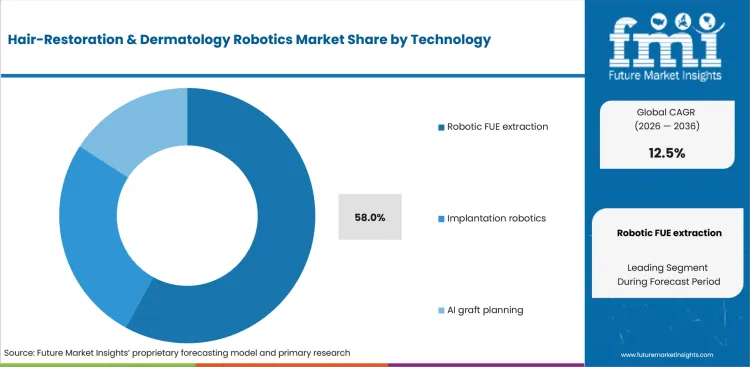
Robotic extraction addresses repeated follicle targeting during long procedures while preserving physician control over treatment design. Clinic groups can use repeatable extraction settings to reduce variation across trained teams and several treatment rooms during scheduled surgical days and multi-room operating schedules. A broader female procedure mix requires clinics to manage different hair-loss patterns and treatment plans across surgical schedules and consultation pathways. A system creates commercial value after training and maintenance support keep the equipment available during planned treatment days without repeated cancellations or avoidable downtime. Patient eligibility remains a practical limit because current robotic platforms do not replace medical judgment or donor-area assessment during case selection and treatment planning. Extraction hardware remains the anchor purchase because the procedure step has the clearest automation history and regulatory record.
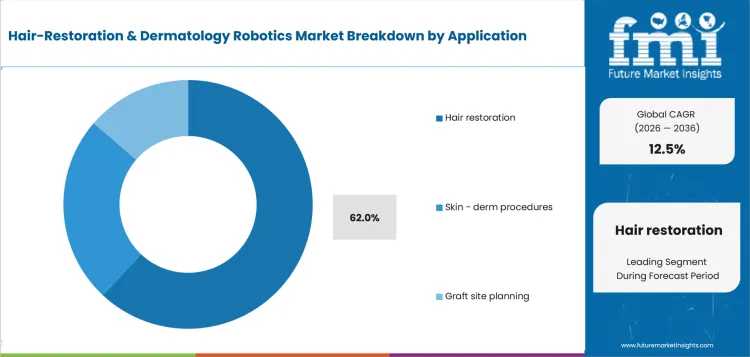
Hair restoration is estimated to represent 62.0% share in 2026, attributable to the limited commercial use of robotics in broader dermatology procedures. Capital purchase is predicted to capture 46.0% share in 2026, shaped by the way specialist clinics have historically acquired surgical equipment. Country growth reflects local platform availability and the clinical evidence required before equipment enters routine surgical use. China is projected to advance at 15.5% CAGR through 2036, led by domestic platform registration and hospital deployments. Japan is forecast to record 14.5% CAGR by 2036, aided by premium aesthetic care and clinical interest in image-guided extraction. The United States is estimated to post 13.0% CAGR over the forecast period, reinforced by ARTAS familiarity and specialist clinic networks.
Competition depends on regulatory fit, image-guided extraction capability, clinical support, and the economics of routine procedure use. Venus Concept serves established clinics through the ARTAS platform and a recurring business tied to kits, training, and service support. Puncture Robotic develops HAIRO as a Chinese robotic system that combines three-dimensional imaging with automated extraction for domestic clinical settings. QHT Clinic represents the service side of the market by explaining how robotic procedures fit Indian clinic economics and patient pricing.
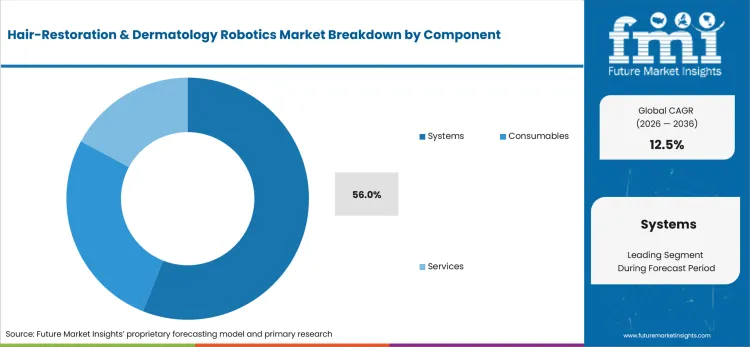
Robotics can expand without replacing manual FUE because the technology addresses selected workflow problems rather than the complete surgical process. A clinic gains value from repeated extraction support, but physicians still control hairline design and patient selection throughout treatment planning. Capital equipment becomes harder to justify when procedure volume remains uneven or financing access weakens across planned expansion cycles. Chinese platform entry can widen choice, yet international sales depend on separate approvals and local training networks in each destination market. The market structure separates the robotic function from the clinical setting and the way a clinic pays for the platform. The technology category covers robotic FUE extraction, implantation robotics, and AI-assisted graft planning software used during procedure preparation. The application category distinguishes hair restoration from skin procedures and separate graft-site planning workflows used by specialist clinics. Component analysis divides capital systems from recurring consumables and technical services needed after installation throughout clinical operation. The end-user category includes specialist hair clinics, dermatology practices, and hospitals that conduct surgical restoration. Business models cover capital purchase and per-procedure pricing, with leasing and refurbished equipment providing other access routes. These categories connect with wider dermatology devices because clinical value depends on how imaging hardware and treatment workflow operate together.
Robotic FUE extraction has an established commercial record because early ARTAS clearances focused on follicle harvesting. The International Society of Hair Restoration Surgery reported in May 2025 that 10.5% of surveyed members selected artificial intelligence as the next major technology step. This result supports continued investment in AI systems that assist repeated clinical tasks while leaving treatment planning with the physician.