Editor’s Note
**Editor’s Note:** VAIM showcases its bio-interactive PDLLA-HA stimulator at IMCAS Asia 2026, emphasizing over five mechanisms of action and 45 publications. The company positions Korea as a medical aesthetics hub, where product quality, not just trends, drives choice.
‘Korea, in a Sense, a Medical Aesthetics Hub’… Beyond K-Trends, Product Quality Drives Choice
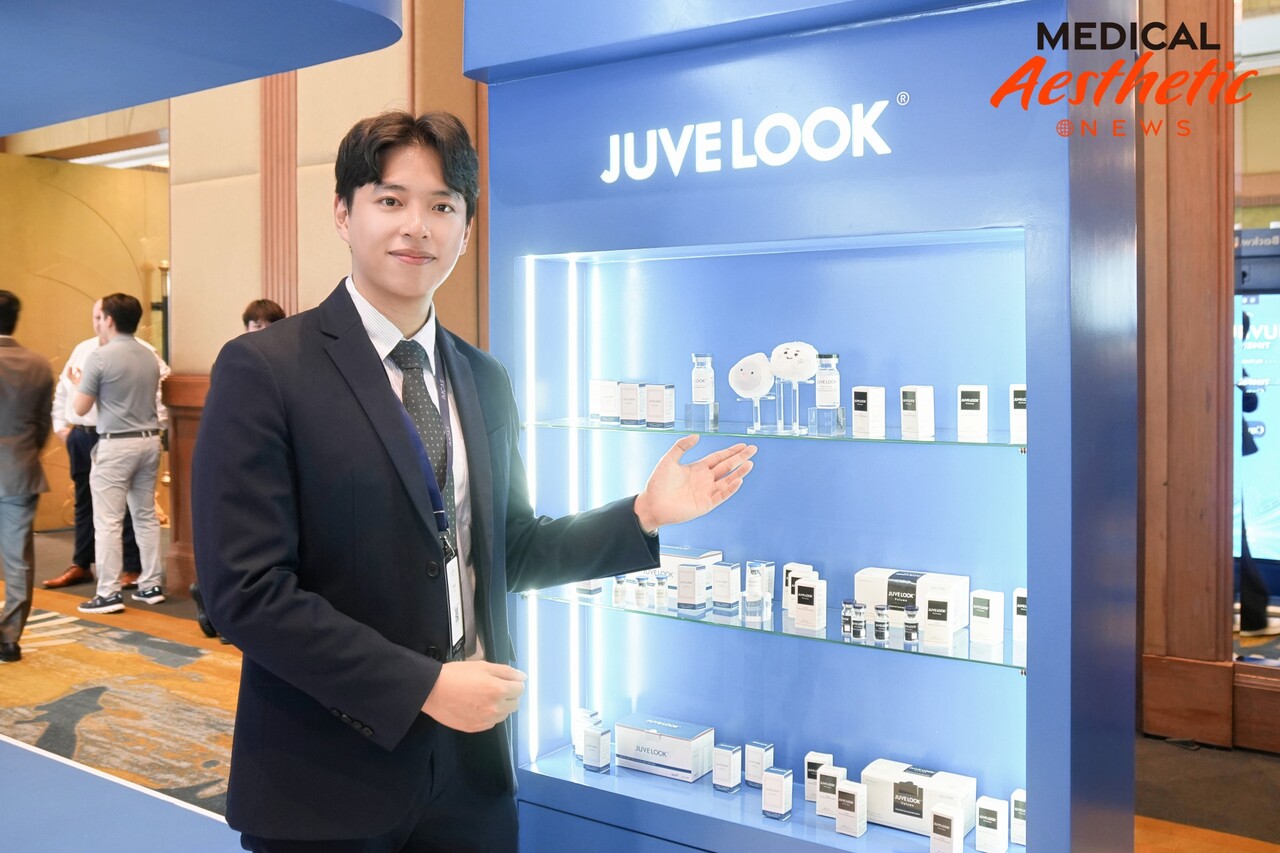
More than five mechanisms of action. More than 45 publications. At IMCAS Asia 2026, VAIM — the manufacturer of the PDLLA-HA biostimulator JUVELOOK — highlighted the body of scientific evidence it has accumulated over the years. At this year’s congress, the company introduced a new brand concept, the ‘bio-interactive PDLLA-HA stimulator,’ as part of its push into the Asian market.
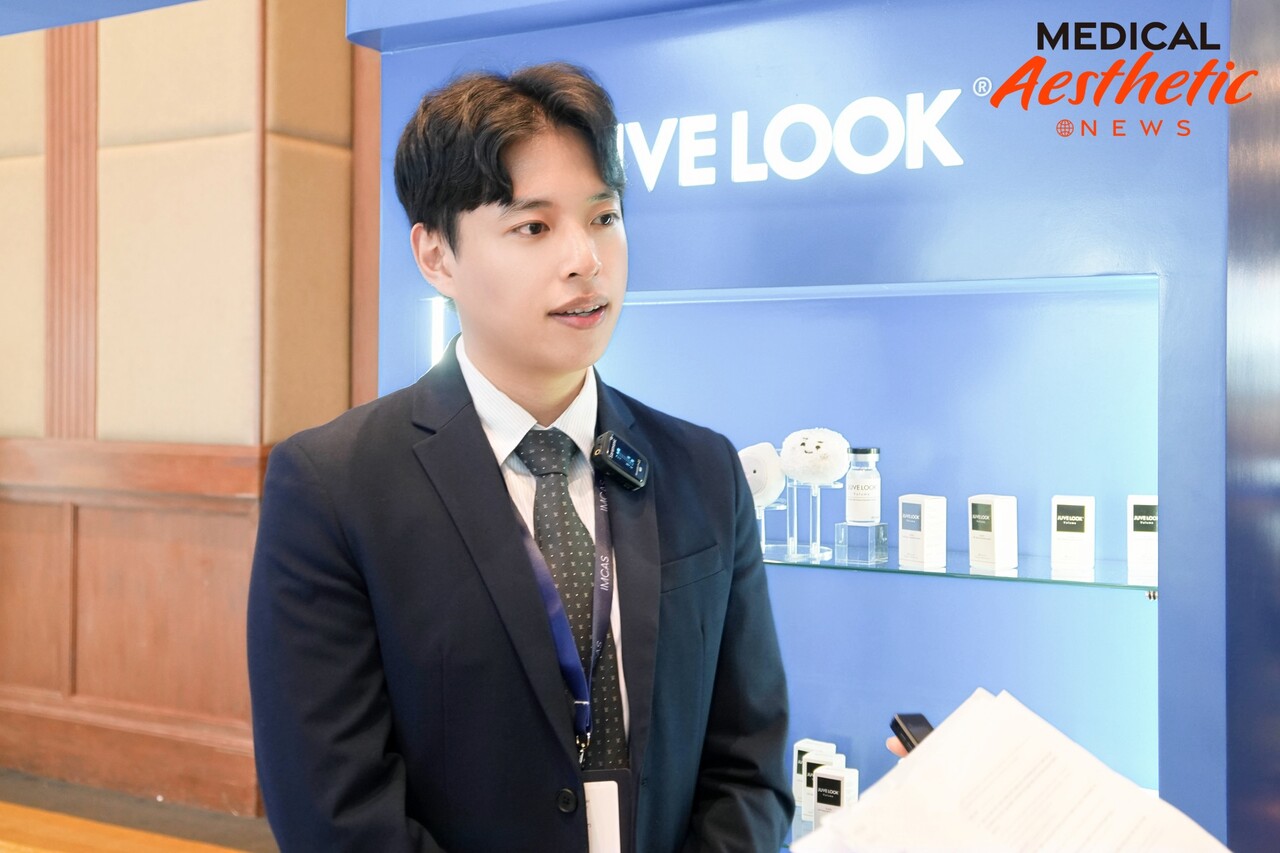
Steven Thang, Sales Manager in VAIM’s International Business Department, named Thailand as the company’s best-performing market in Asia outside Korea, while noting clear growth momentum in Australia and Indonesia, which the company entered last year. Hair regeneration was cited as a newly expanding area of clinical application. He also noted that the broader Korean-wave trend — from K-pop and K-music to K-medical aesthetics — has helped raise product awareness, but added that it is ultimately the strength of the product itself, not the K-medical aesthetics backdrop alone, that drives clinicians’ and patients’ choices. We spoke with Thang about VAIM’s Asia market strategy, its scientific evidence base, and what the Korean aesthetic medicine industry needs at an industry-wide level to move beyond its current growth and become part of the global mainstream.
IMCAS Asia is essentially one of the largest congresses in Southeast Asia, and in Asia as a whole. So the reason we’re here is to communicate more closely with Southeast Asian clinicians and to introduce them to JUVELOOK, along with forthcoming research on JUVELOOK. JUVELOOK has already been used across Southeast Asia and the wider Asian region for several years now, so clinicians are already quite familiar with the product. That said, as a company, we continue to see new publications and new clinical applications for JUVELOOK, and one of those is hair regeneration. So there’s strong interest in hearing more about the related protocols in our lectures, and expectations are high.
Our product is a PDLLA-HA biostimulator. This time, we introduced a new concept: the ‘bio-interactive PDLLA-HA stimulator.’ We were able to put forward this concept because our company has invested heavily in building scientific evidence. We’ve demonstrated more than five mechanisms of action, and these have recently been published in new papers. Other companies and products have not yet been able to demonstrate this. So at this year’s IMCAS Asia, we wanted to present attendees with our new branding and our new core message.
Thailand has shown the best results so far, since we’ve been in the Thai market for more than two years now. In other countries, we’re still in the early stages. For example, we entered Australia and Indonesia last year, and we’re already seeing very good momentum and strong growth in those markets as well. Still, outside of Korea, Thailand remains one of our largest markets in Asia to date.
I wouldn’t say we’ve faced major barriers. Our scientific data is very solidly established, and we’ve obtained CE marking (the European conformity mark), which has made market entry relatively smooth. That said, the biggest challenge is training. Because the PDLLA-HA biostimulator is a new category of product, clinicians need substantial education to understand what a biostimulator is and how to use it correctly. So for us, it’s less a barrier and more a matter of education.
First of all, K-medical aesthetics is very powerful, especially in Asian markets. There’s a whole range of K-trends, from K-pop and K-music to K-aesthetics, and Korea is, in a sense, a hub of medical aesthetics. As these trends spread globally, our products are being recognized more easily, particularly in Asia. But at the same time, it isn’t simply a matter of K-medical aesthetics alone. Our product itself is very well developed, and that’s why clinicians and patients like it. I think it comes down to the fact that this is a very good product.
Our company places great importance on science, and on how the product is perceived in the market. Because PDLLA biostimulators are a relatively new category of product, we need to provide clinicians with solid scientific evidence in order for them to trust it. That’s why our company has published more than 45 publications on a single product line alone — JUVELOOK and JUVELOOK Volume. We want clinicians to trust the product based on scientific evidence, and that’s also why we actively support clinicians who want to pursue their own research.
I think that’s a very difficult question. But ultimately, I believe cooperation among all of Korea’s medical aesthetics companies is key. Korea has a truly large number of medical aesthetics companies, and new products are being developed every month. I think this is also a healthy competitive environment. It’s an environment that pushes every company to keep moving forward and to keep innovating, and as a result, we’re able to offer better products — not just to clinicians, but ultimately to patients as well.