Editor’s Note
This article highlights Cura Pulse’s voluntary disclosure of accredited data to address consumer distrust in the home-care beauty device market, potentially sparking a trust-driven shift in the K-beauty tech industry.
Amid growing consumer distrust over performance claims in the home-care beauty device market, a company has emerged that voluntarily discloses data from accredited institutions. The move to prove technological prowess with numerical evidence is drawing attention as it could spark a broader trust competition across the K-beauty tech industry.
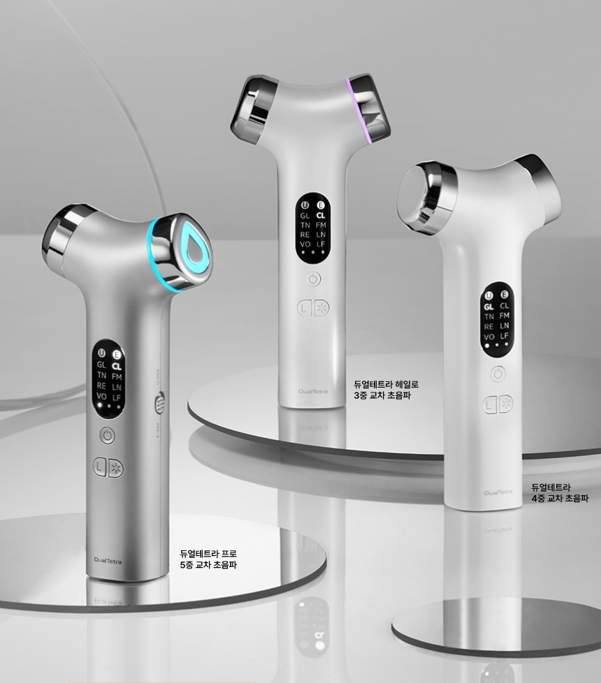
Beauty tech startup Cura Pulse (CEO Cho Nam-gyu) announced on the 28th that it has released the original certified test report for its personal ultrasonic beauty device ‘Dual Tetra.’ The company participated in the ‘Voluntary Technical Specification Disclosure Verification Campaign’ hosted by EcoDM Lab at the end of February, passing verification by an accredited testing institution.
EcoDM Lab, which organized the campaign, is a technology company that designs and manufactures piezoelectric ceramics, ultrasonic transducers, and personal ultrasonic beauty devices. It also operates the home-care ultrasonic beauty brand ‘Quadcera.’
The campaign was designed to encourage companies to voluntarily disclose verified data and raise industry credibility, especially as consumer interest in 19MHz high-frequency technology grows in the K-beauty device market.
Verification was conducted by Eurofins KC TLM, the Korean subsidiary of the global testing and certification group Eurofins. The institution has accredited testing infrastructure in electrical, electronic, information communication, medical devices, and automotive parts.
To ensure fairness in test results, the campaign organizers purchased Dual Tetra products available on the market at random instead of using samples submitted by the manufacturer. This approach has drawn significant industry attention.
Determining that electrical signal measurement alone is insufficient to gauge actual performance, the testing institution chose to verify acoustic output radiated within media such as water tanks and polymer phantoms. The test followed the international standard IEC 62127-1 through four stages of precision testing.
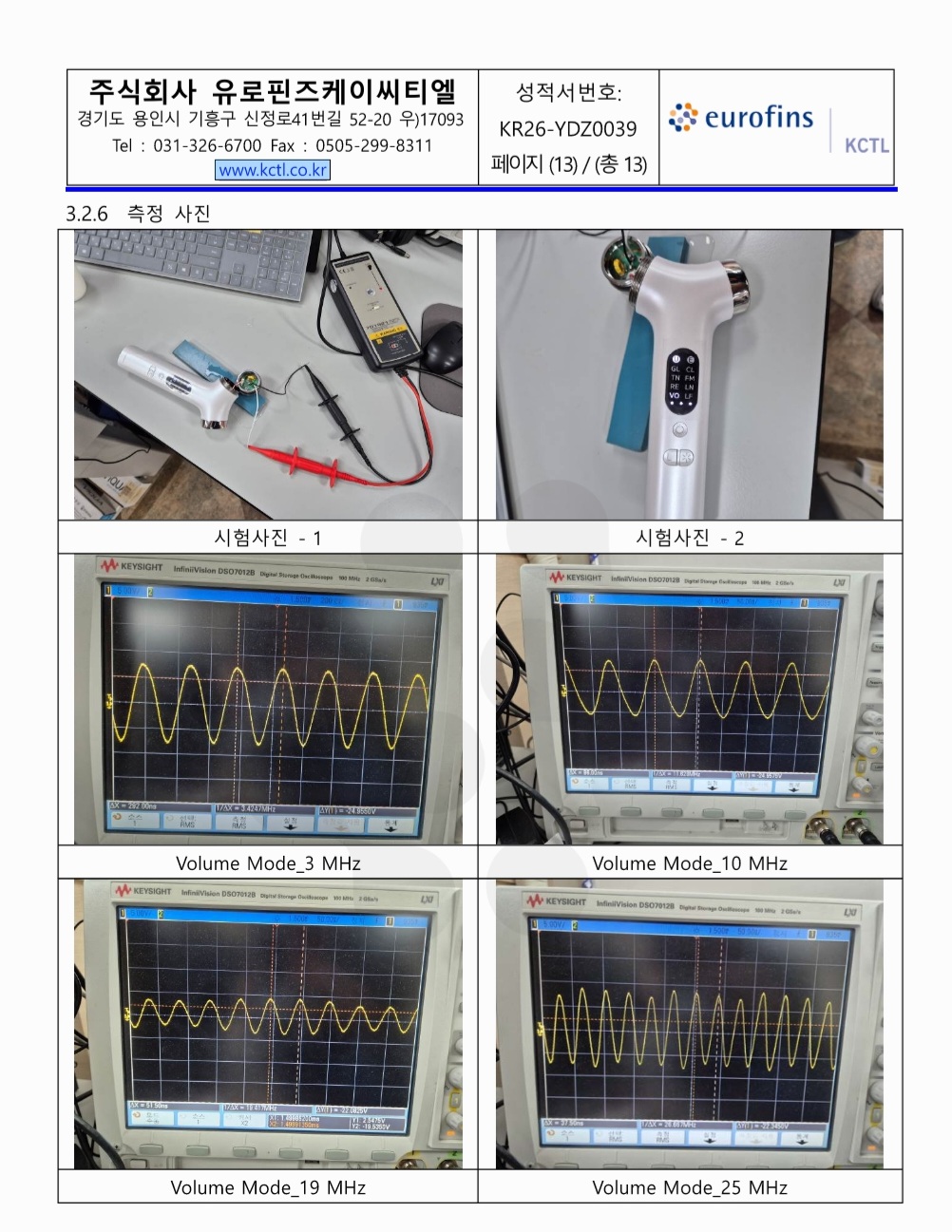
The process began with electrical input measurement using oscilloscopes and differential probes to analyze internal drive signals and waveforms, followed by time-domain analysis using zero-crossing methods to confirm actual operating frequencies. Procedures included verifying the 0-30MHz band spectrum through arithmetic averaging and FFT transformation, as well as transducer structure analysis by disassembling the device to directly check the resonant frequency of the piezoelectric ceramics.
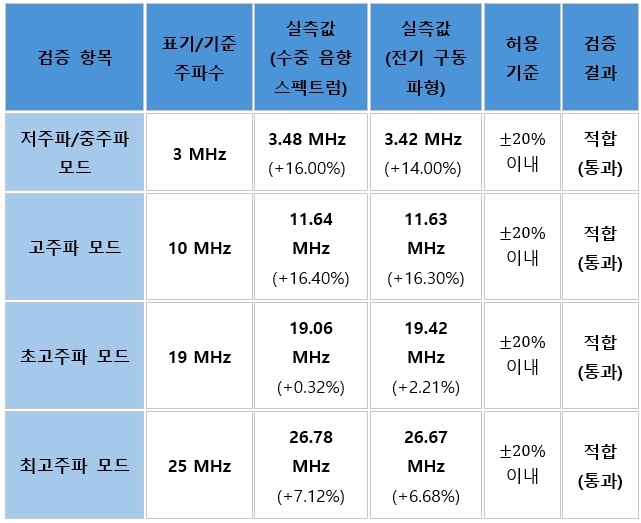
According to the disclosed test report (Report No. KR26-YDZ0039, issued July 23, 2026), Dual Tetra received a pass judgment in all items, with error rates for the stated frequency within acceptable ranges. Working signal noise was maintained below 3dB, ensuring stable preservation of the original signal, and the gap from ambient noise exceeded 10dB, confirming precise signal output.
Cura Pulse’s core technology is multi-frequency ultrasound, which implements different frequencies—such as 1, 3, 10, 19, and 25MHz—within a single device, ranging from 1MHz to 30MHz. The company explains that low frequencies reach deeper skin layers while high frequencies act on the surface, allowing energy to be combined according to skin conditions.
Technology that stably outputs broadband multi-frequency signals from a single device has high entry barriers, with few commercialized cases. As the beauty market reorganizes around precision skincare and home care, Cura Pulse is expanding its services into the healthcare sector by leveraging personalization technology.
Earlier, Cura Pulse secured seed investment from accelerator New Paradigm Investment and was selected for the 2025 TIPS (Tech Incubator Program for Startups) Global Track hosted by the Ministry of SMEs and Startups, receiving recognition for both its technological capability and growth potential.
Observers suggest that if more companies voluntarily open their data in the home-care beauty device market—which has suffered from concerns over exaggerated advertising—the entire industry’s structure could change.
Keywords: Beauty tech, home-care beauty devices, ultrasonic device, test report disclosure, K-beauty, multi-frequency ultrasound, IEC 62127-1, Eurofins, Cura Pulse, Dual Tetra, EcoDM Lab, consumer trust