Editor’s Note
**Editor’s Note:** This article examines how the GLP-1 weight-loss trend is fueling a surge in the “aftercare” market, from derma cosmetics to hair care, as consumers shift focus to post-weight-loss beauty management.
Medical tourism is reaping benefits… Demand for ‘derma cosmetics’ surges.
The intensifying competition for ‘total beauty’ diversifies the consumer ecosystem.
[Photo: Yonhap News]
[ENEWSTODAY Reporter Han Min-ha] Obesity treatments are reshaping the K-beauty consumption landscape.
Following weight loss, interest in skin elasticity, soothing and regeneration care, inner beauty, and hair care has increased, driving ‘management consumption’ to emerge as a new market.
According to the Korea Tourism Data Lab on the 28th, dermatology accounted for 56.72% of foreign medical spending, and plastic surgery accounted for 18.2%, with the combined share of the two specialties reaching 74.9%. In contrast, by number of transactions, pharmacies had the highest share at 68.96%.
This analysis suggests that foreign tourists’ medical consumption does not end with a single procedure but extends to purchasing aftercare products such as regenerative creams, soothing cosmetics, and nutritional supplements. Indeed, last year, foreign nationals’ spending at domestic pharmacies reached 141.4 billion won, a 142.2% increase from the previous year.
This trend is interpreted not as temporary growth in a specific product category, but as a broadening of the scope of beauty consumption itself. Previously, weight loss, skincare, and hospital procedures were perceived as separate domains. However, with growing demand to simultaneously manage elasticity loss, skin condition, nutrition, and hair health after weight loss, skincare, derma cosmetics, inner beauty, hair care, and skin procedures are now being linked into a single consumption process.
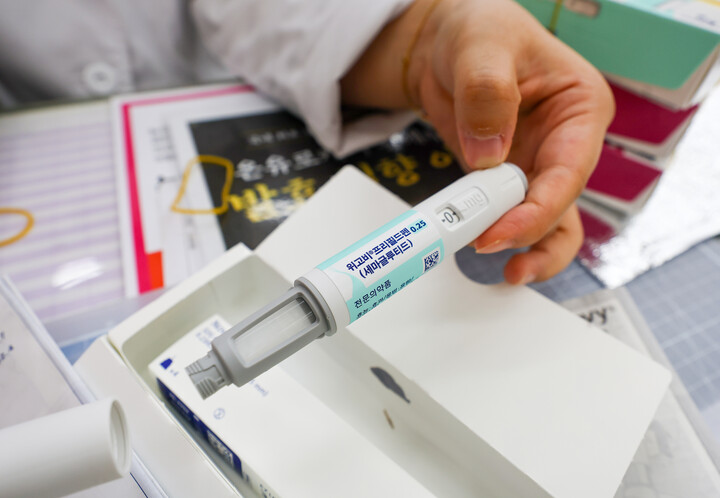
The spread of GLP-1-based obesity treatments is particularly cited as a catalyst for heightened interest in ‘post-weight loss management.’ As more consumers seek to manage reduced skin elasticity, dryness, and nutritional imbalances after losing weight, demand is expanding not only for functional cosmetics focusing on elasticity, moisturizing, soothing, and regeneration but also for inner beauty and hair care products.
The popularization of skin procedures like lasers and lifting treatments also supports this trend. After receiving procedures at a dermatology clinic, consumers purchase regenerative creams and soothing cosmetics, and then additionally buy nutritional supplements and derma products at pharmacies, establishing this as a standard management course. With the increase in medical tourism for dermatology and plastic surgery, particularly among Chinese and Japanese tourists, the flow of consumption starting from hospitals and expanding to cosmetics, pharmacies, and home beauty is becoming prominent.
[Photo: ENEWSTODAY DB]
As consumption patterns change, corporate business strategies are also evolving. There is a growing emphasis on building business models that encompass the entire consumption flow, from procedures to aftercare.
In March, CJ Olive Young established a new ‘Advanced Derma’ category, gathering domestic derma brands to strengthen its functional cosmetics competitiveness. Last month, Pharmaresearch launched ‘Rejudex,’ a specialized aftercare brand for hospitals and clinics. Dongkuk Pharmaceutical is also expanding its PDRN-based derma products through beauty brands like ‘Centellian24,’ targeting the post-procedure care market.
Cosmetic companies are moving beyond product line expansion to integrate with medical technology. Amorepacific Holdings announced an investment in skin beauty medical device company Higher Corporation to jointly develop skin boosters, medical devices, and aftercare products. This is interpreted as a strategy to build a solution that connects hospital procedures with daily skincare, covering the entire consumer management process.
From the industry’s perspective, the boundary between beauty and medical fields is rapidly fading. Hospitals and clinics are launching their own derma brands to extend consumer contact points beyond procedures, while cosmetic companies are expanding into inner beauty, wellness, medical devices, and beauty devices. Previously, treatment, cosmetics, and health management were independent markets, but now the industrial structure is being reorganized around the entire consumer management process.
Experts believe this change will lead the next growth phase of K-beauty. Having grown centered on skincare, K-beauty is now expanding its scope to include derma cosmetics, hair care, beauty devices, and medical devices, evolving from product competition into an industry combining technology and services.
However, institutional improvement is cited as a task for industrial expansion. Experts point out that as domestic regulations for functional cosmetics and beauty sectors are stricter than overseas, institutional support is needed to back technological development and commercialization.
Reporter Han Min-ha
[email protected]
![서울 강남구 코엑스에서 열린 ‘2026 인-코스메틱스 코리아’를 찾은 방문객이 전시된 화장품 원료를 살펴보고 있다. [사진=이뉴스투데이DB]](https://img.lashnews.com/lashnews/news-body/2026/07/the-aftercare-market-fueled-by-wegovy-and-mounjaro-k-beauty-embraces-a-m-76e8439ed5f6.jpg)