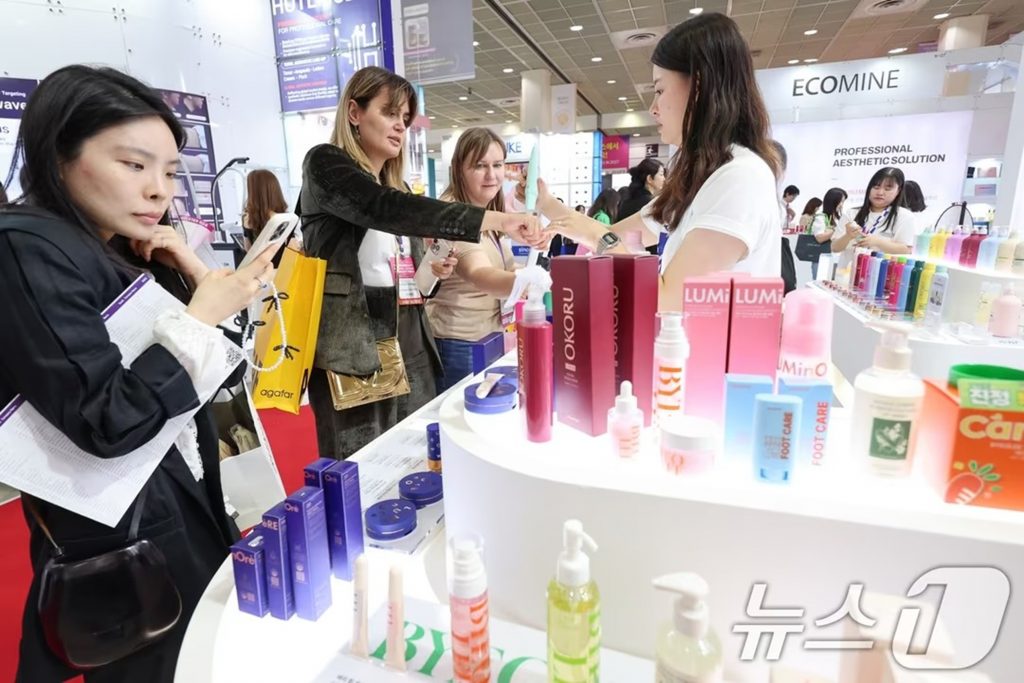
A new report from the Korea Small Business Institute reveals that while K-beauty exports surpassed $10 billion for the first time in 2024, small and medium-sized enterprises (SMEs) are facing declining profitability and structural bottlenecks. Over 99% of South Korea's 28,782 cosmetic responsible sellers are SMEs, yet manufacturing, regulatory compliance, and global distribution capabilities remain concentrated among a few large ODM/OEM players like Kolmar and Cosmax. This imbalance threatens the long-term sustainability of the supply chain for overseas buyers and distributors.
Structural imbalance in the value chain
According to the report, SMEs dominate brand planning, concept design, and marketing, but high-value manufacturing—such as functional formulation development, GMP-based quality control, and FDA/EU regulatory compliance—is concentrated in large contract manufacturers. This creates information asymmetry between planning and production, leading to development delays and commercialization failures.
Profitability erosion despite export growth
Despite a 20% average annual export growth since 2013, the value-added retained per won of export dropped from 0.364 won in 2015 to 0.323 won in 2023. The operating surplus ratio fell from 36.8% to 25.7% over the same period. Rising raw material costs, logistics expenses, regulatory compliance fees, and marketing burdens are squeezing SME reinvestment capacity.
What buyers should watch
For overseas importers and distributors, this means that while K-beauty brand diversity is high, the manufacturing depth and regulatory reliability behind many SME brands may be inconsistent. Buyers should verify whether a supplier has actual production records—only about half of registered cosmetic sellers reported any manufacturing activity. Partnering with SMEs that have strong ODM/OEM backing or direct GMP/FDA certifications may reduce supply-chain risk.
Regulatory and channel signals
The report notes that the number of cosmetic responsible sellers grew 41.3% from 2020 to 2025, but many lack the capacity to handle overseas certification costs and platform fees. This could lead to delayed product launches or quality issues in export markets. Distributors should request proof of regulatory filings (e.g., FDA establishment registration, EU CPNP) before committing to long-term contracts.
Sourcing context
South Korea's cosmetic export structure is shifting toward SME dominance—SMEs now account for 70.2% of exports, up from 61.1% in 2013, while large firms' share dropped to 8.9%. However, the profit distribution is uneven: SMEs captured only 12.7% of operating profits in Q2 2025 versus 80.8% for mid-sized firms. This suggests that mid-tier manufacturers with integrated R&D and production may offer better value stability for B2B buyers.
Source: Read the original report | Published: June 13, 2025