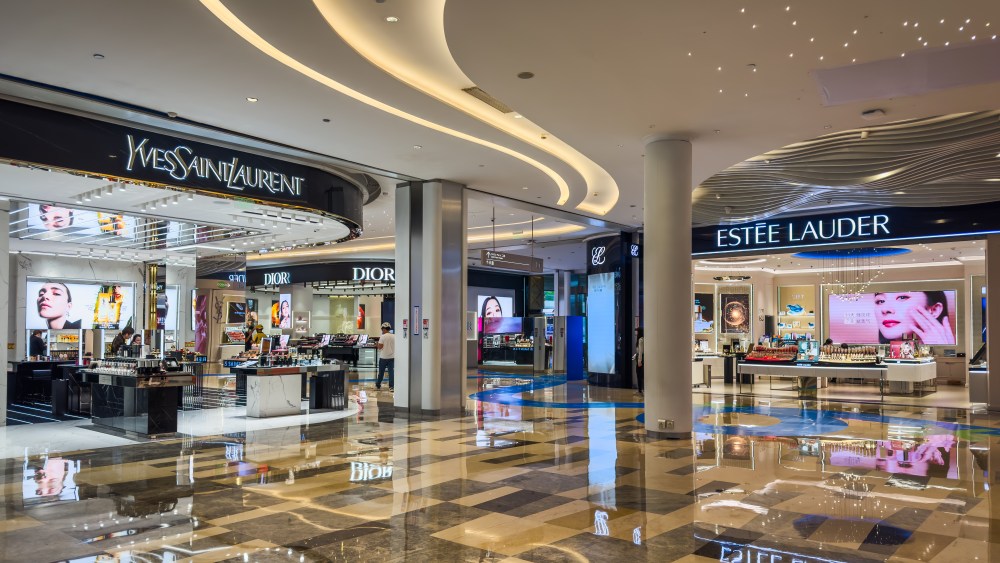
L'Oréal and Estée Lauder saw double-digit growth in March, leading a rebounding China beauty market. According to skin care online sales data from Future Beauty, a local research firm, L'Oréal Paris led first-quarter sales with 2.245 billion renminbi ($312 million), followed by Lancôme and Estée Lauder with 2.179 billion renminbi ($303 million) and 2.128 billion renminbi ($296 million), respectively. Despite slower momentum in March, where combined sales of skin care, color cosmetics, and perfumes rose 3% year-over-year (Meritco data), L'Oréal and Estée Lauder still achieved double-digit growth. Jefferies data tracking beauty sales across Tmall, JD.com, and Douyin shows L'Oréal online sales rose 15% year-over-year in March, with skin care growing 13% led by SkinCeuticals, CeraVe, and Kiehl's, while color cosmetics saw strong momentum at Lancôme and YSL. Mixed performance was observed at other multinationals, with standout brands like SK-II growing 62% in March and Cetaphil growing 40%. Domestic players continue to lose share online, with Proya declining 19% year-over-year in March, and other local brands such as Kans, Comfy, and Marubi also reporting share losses (Jefferies). Future Beauty noted that channel penetration has peaked online, particularly for skin care, which has reached 77.5% penetration. "After years of heavy promotional efforts, such as during Singles' Day, consumer fatigue has set in, and consumers are now less willing to stockpile on goods," the report stated. Future Beauty attributed the slowdown in domestic brands' online growth to a structural shift, with leading domestic players strategically shifting focus to offline channels in Q1, moving marketing budgets offline. "In a saturated market, growth momentum will come from 'price expansion,' not 'volume expansion,' relying more on advanced efficacy, such as anti-aging and repair," Future Beauty added. Compared to skin care, color cosmetics offer immediate gratification and lower decision-making costs. At Estée Lauder, Jo Malone sales spiked 49% in March, and Tom Ford grew 26%, but the Estée Lauder color brand declined 25% due to a tough comparison base. Future Beauty noted that the fragrance category remains monopolized by international brands online, where consumers often 'blind buy' well-known classics like Chanel No. 5 or Dior J'adore. For domestic fragrance brands to break through, they need differentiated positioning, such as oriental scent profiles or emotional healing properties, and offline experiences to build brand value. Daxue Consulting projects an 11.9% annual growth rate for color cosmetics from 2025 to 2030, dwarfing skin care's 4% growth. Sory Park, project manager at Daxue Consulting, said, "The focus will continue to be less on beautification and more on self-expression, including enhancing natural beauty and expressing identity, emotions, and individuality." Park added that "makeup and skin care as one" is becoming mainstream, along with fun products like those convertible into keychains or accessories. "Foreign luxury brands are likely to remain at the top rankings, but local brands are also expected to steadily close the gap. Local high-end brands such as Mao Geping are emerging, showing that C-beauty brands can also attain some level of luxury positioning," Park said.

Source: Read the original report | Published: April 29, 2026