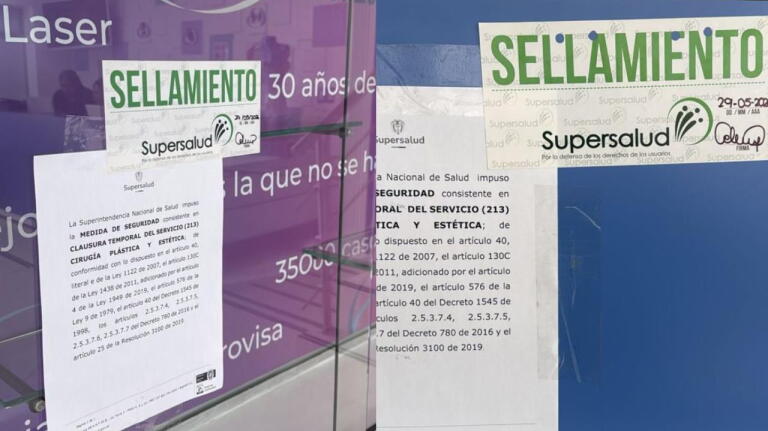
Colombia's National Health Superintendence (Supersalud) has ordered the temporary closure of plastic and aesthetic surgery services at Clínica de Obesidad y Envejecimiento and imposed a precautionary measure on Clínica Láser Surgical, both linked to Dr. Gabriel Cubillos, a general practitioner who allegedly posed as a board-certified plastic surgeon. The action signals heightened regulatory scrutiny for aesthetic clinics in Colombia, a key sourcing market for medical aesthetics devices and consumables in Latin America.
Regulatory action
Supersalud announced the measures on May 30, 2026, after inspections revealed that the clinics were offering and selling surgical procedures without the required health registration. Superintendent Daniel Quintero stated that the facilities also attempted to obstruct inspection and oversight activities. As a result, the clinics were forced to remove those services from the official provider registry.

Practitioner credentials under fire
Gabriel Cubillos, a graduate of Universidad Industrial de Santander, is listed as founder and scientific director of the clinics. His institutional profile highlights laser technology expertise and training for health professionals. However, Supersalud confirmed that Cubillos does not hold a plastic surgery specialty registration. The Colombian Society of Plastic, Aesthetic and Reconstructive Surgery (SCCP) also reports no certified specialist under his name.
Broader enforcement context

Quintero announced a separate inspection of Bogotá's Health Secretariat to investigate why the case was not addressed earlier. Between 2024 and May 21, 2026, Bogotá authorities conducted 420 inspection, surveillance, and control operations on beauty and aesthetic treatment establishments, resulting in 74 fines and 81 temporary suspensions for regulatory non-compliance. The crackdown follows the high-profile death of Yulixa Toloza, whose autopsy classified her death as "violent-homicide" linked to an abdominal liposuction procedure.
What buyers should watch
Importers and distributors supplying aesthetic devices, injectables, or consumables to Colombian clinics should verify that their partners maintain proper health registration and that practitioners hold valid specialty certifications. The Supersalud action underscores that unlicensed surgical offerings can trigger immediate closures and reputational risks for both clinics and their suppliers. Buyers may also want to monitor upcoming inspections of Bogotá's health authorities, which could lead to tighter licensing requirements for aesthetic facilities.

Sourcing context
Colombia remains a significant Latin American market for medical aesthetics equipment and supplies, with growing demand for laser devices, liposuction systems, and post-surgical consumables. However, this enforcement case highlights the importance of due diligence on clinic credentials and practitioner certifications. Suppliers should ensure their distribution agreements include compliance clauses tied to local health regulations.
Source: Read the original report | Published: May 30, 2026