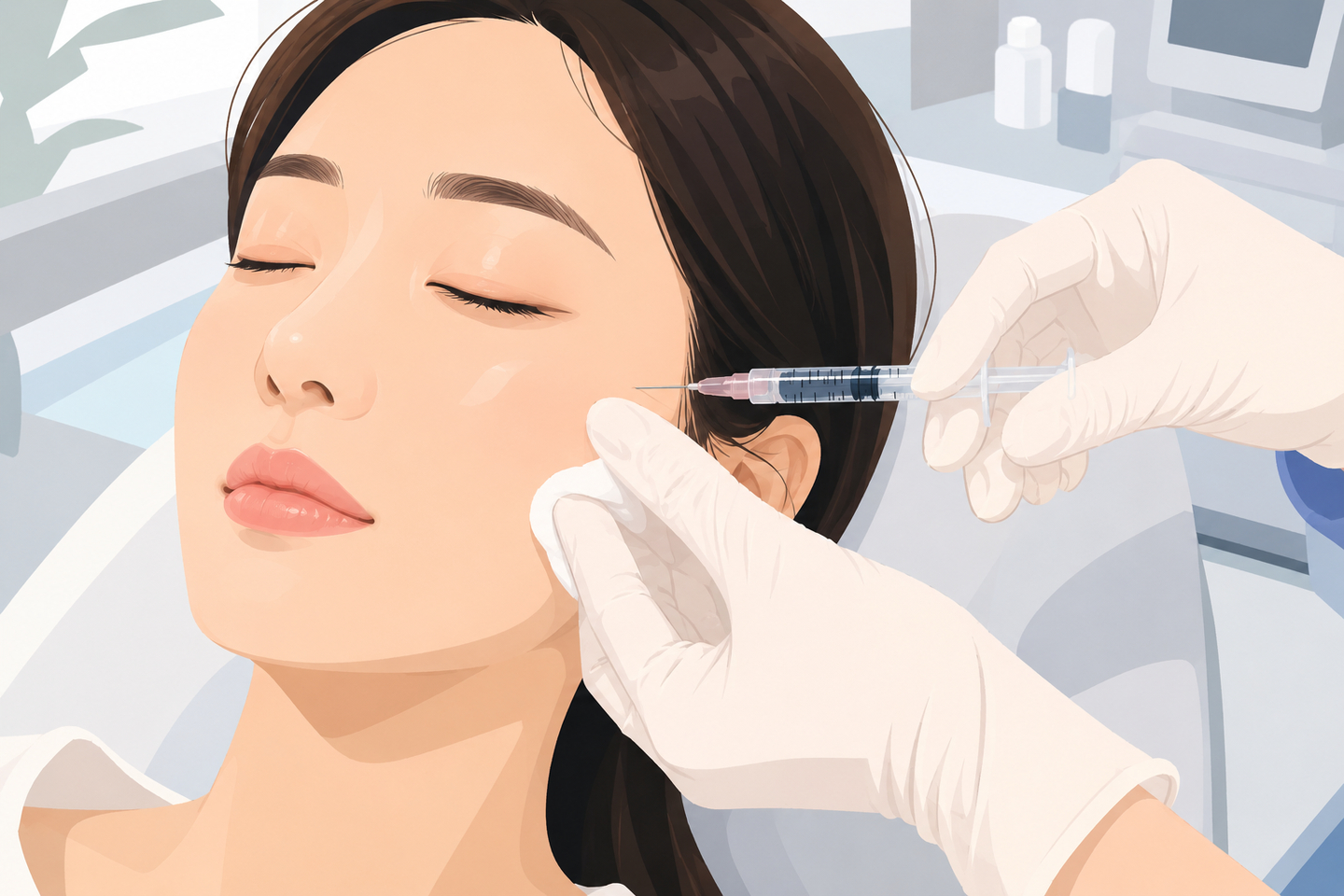
A new class of injectable skin boosters made from donated cadaver tissue is rapidly gaining ground in South Korea's medical aesthetics market, drawing enthusiasm from clinics and warnings from legal and ethics experts who say the industry is operating in a regulatory gray zone. The treatments, known as extracellular matrix (ECM) skin boosters, use tissue harvested from cadaver skin, called acellular dermal matrix, which is stripped of its cells and processed into a powder that is dissolved in saline and injected into the face. The premise is that as skin ages, its underlying structural scaffolding—composed of collagen, elastin, and hyaluronic acid—breaks down. ECM boosters aim to rebuild it by directly implanting the missing material, rather than stimulating the body to produce more of its own. L&C Bio launched the first major domestic product, Ellavie Rituo, in 2024. Competitors have followed quickly: MS Bio released Gcelle Rebornne in March, and Hans Biomed's Celldiem arrived last year. In the United States, a similar product called Renuva has received FDA approval. The global cosmetic injectable market is projected to grow from $16.12 billion in 2025 to $38.8 billion by 2034, at a compound annual growth rate of 10.3%, according to market research firm Grand View Research. Industry analysts note that ECM boosters operate under a fundamentally different competitive dynamic than conventional skincare products. "This market is determined by supply capacity, not demand," said Lee Seung-eun, a researcher at Yuanta Securities. "Because both raw material sourcing and processing are inherently limited for human tissue-based products, the core question is ultimately who can produce and distribute more." One of the sharpest criticisms leveled at ECM boosters is that they occupy what some experts call a regulatory blind spot. Conventional skin boosters like Rejuran are classified as medical devices or pharmaceuticals, requiring rigorous clinical trials to demonstrate both safety and efficacy before reaching patients. ECM boosters, however, fall under the Safety and Management of Human Tissue Act rather than the medical device law—a framework that carries comparatively fewer clinical proof requirements before products can enter the market.
![A view of plastic surgery and dermatology clinics in Seoul [YONHAP]](https://koreajoongangdaily.joins.com/data/photo/2026/05/10/fdba6c4c-f71d-45af-a62b-915f2751e225.jpg)
Attorney Kwon Dong-ju, head of the Bio Health Center at law firm Yoon and Yang LLC, argued at a K-bio health forum in April that this gap needs to be closed. "Products made by processing human tissue and injecting it into the skin should be brought under the pharmaceutical and medical device approval system for regulation," he said. "The human tissue act should explicitly prohibit their use for cosmetic purposes." That last point touches on a deeper controversy. Human tissue donations are made primarily to help burn victims, accident survivors, and patients undergoing reconstructive procedures. Critics question whether repurposing donated tissue for profitable aesthetic treatments is ethically appropriate. L&C Bio, maker of the ECM market-leading Rituo, pushed back on these concerns at a press briefing last month. "Human tissue is managed under a system in which the entire process, from donor to transplantation, is documented, allowing immediate traceability in the event of adverse effects," said a company spokesperson. "Because these products use actual human body components rather than synthetic substances created outside the human body, it is inappropriate to demand clinical trials under the same standards applied to conventional medical devices." At roughly 500,000 won (about $370) per session, the treatment is not cheap. But word-of-mouth billing them as a "next-generation regenerative therapy" has proven persuasive, and a growing number of companies are racing to join the market, per industry insiders on Friday. This article was originally written in Korean and translated by a bilingual reporter with the help of generative AI tools. It was then edited by a native English-speaking editor. All AI-assisted translations are reviewed and refined by our newsroom.
Source: Read the original report | Published: May 10, 2026