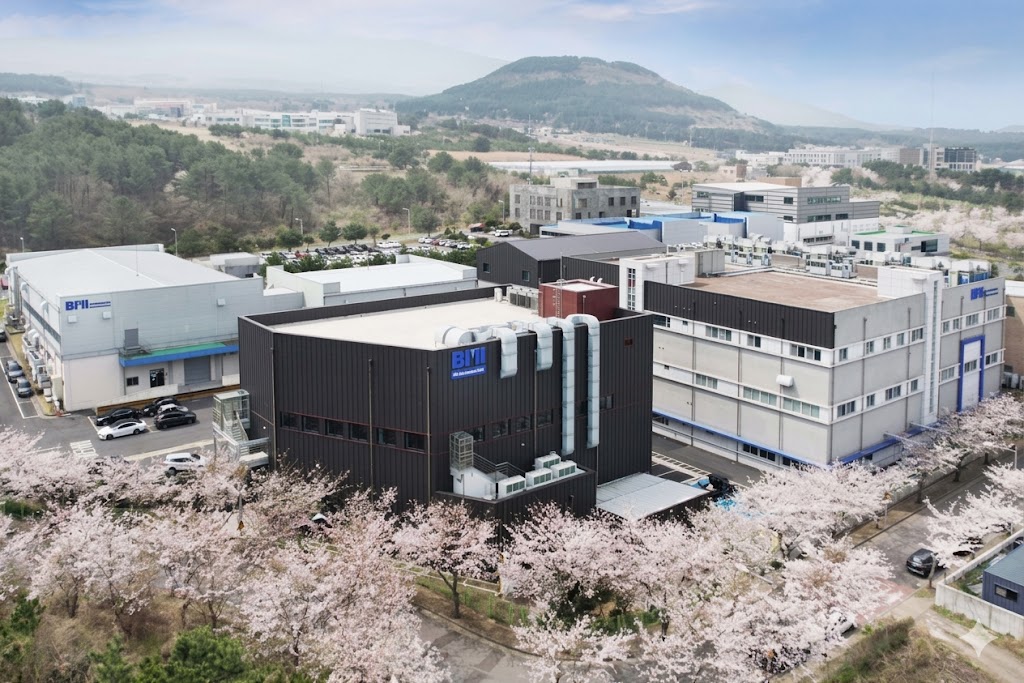
Korea Biomedical Inc. (BMI) has achieved both revenue growth and improved profitability, confirming its financial capacity to invest in production infrastructure. Revenue reached KRW 130.8 billion, while operating profit and cash flow from operations expanded significantly year-on-year. The performance improvement is attributed to strong sales of core pharmaceutical products and the expansion strategy for its Jeju and Osong production bases. According to BMI's audit report reviewed by PharmNews on the 21st, the company's 2025 results showed improvements in both scale and profitability. Last year's revenue was KRW 130.8 billion, up 29.6% from KRW 100.9 billion the previous year. Operating profit rose 56.7% to KRW 27.4 billion from KRW 17.5 billion, outpacing revenue growth. The operating profit margin improved to approximately 20.9% in 2025, up from 17.3% in the prior year. Net profit increased to KRW 14.0 billion from KRW 12.5 billion. Revenue primarily comes from pharmaceutical and diagnostic reagent sales. The KRW 130.8 billion revenue comprises pharmaceuticals (KRW 127.2 billion) and other sales (KRW 3.6 billion). Product lines include PDRN injectables, hyaluronic acid injectables, hyaluronidase, hemostatic agents, and botulinum toxin, covering injectables, aesthetics, and surgical products. Notably, the botulinum toxin business, centered on the Hytoks product, has strengthened its presence in the domestic market this year. BMI is pursuing a dual strategy: Jeju headquarters as a finished drug, injectable, and botulinum toxin production hub, and the Osong campus as an advanced biopharmaceutical production base focusing on mRNA, recombinant proteins, and CDMO services. Strong product sales combined with production infrastructure investments are raising expectations for future growth and profitability improvement. **Pharmaceutical sales of KRW 127.2 billion: Injectables and aesthetics products drive performance** Product sales accounted for KRW 122.9 billion, while product supply sales were KRW 4.3 billion. Domestic sales (KRW 111.6 billion) currently outweigh exports (KRW 19.3 billion), but the export figure nearing KRW 20 billion indicates a stable overseas revenue base, with potential for further expansion of botulinum toxin and injectables into global markets. Key revenue-generating products include PDRN injectables (Hidral, Hidral Prefilled), hyaluronic acid injectables (BM Hyal, Hyal Protect), hyaluronidase (Liquid Hyalrax, BM Hyaluronidase), hemostatic agents (Hemo Shield, Hemo Fence, Q Fence), and botulinum toxin (Hytoks 50, 100, 200 units). Hytoks has become a flagship product symbolizing BMI's growth. Last year, Hytoks 100 and 200 units recorded the highest number of national lot release approvals among domestic and international pharmaceutical companies, according to Ministry of Food and Drug Safety statistics. As a latecomer in the botulinum toxin market, BMI is accelerating commercialization through its existing aesthetics product distribution network and medical professional relationships. **Operating cash flow of KRW 36.7 billion supports investment expansion** Cash flow improvement is notable. BMI's 2025 operating cash flow was KRW 36.7 billion, up 78.3% from KRW 20.6 billion the previous year, indicating that revenue and profit growth translated into actual cash inflows.
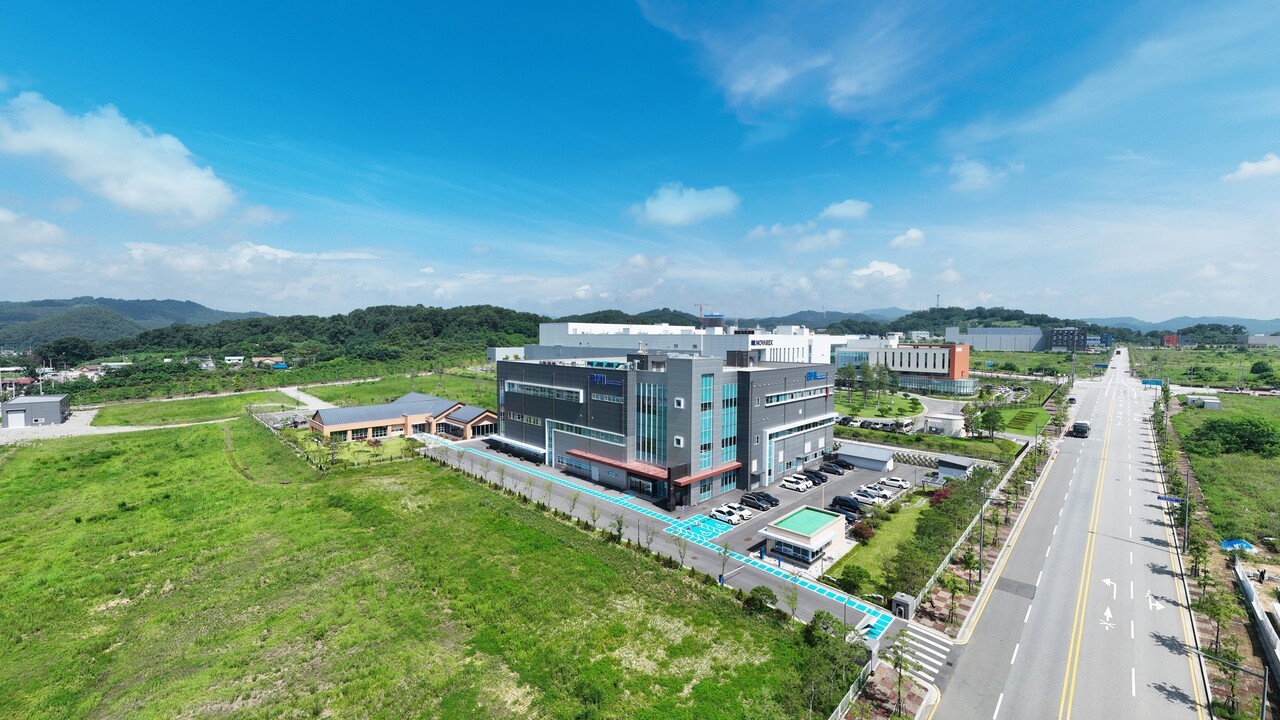
For pharmaceutical and biotech companies, production facility investments are not quickly recovered. Areas such as sterile injectables, botulinum toxin, mRNA, and recombinant proteins require upfront investment in facilities, quality systems, and personnel. The expanded operating cash flow provides stable support for BMI's investment strategy. Financial position remains stable. Total assets at end-2025 were KRW 197.6 billion, up 9.5% from KRW 180.4 billion. Cash and cash equivalents increased significantly to KRW 35.6 billion from KRW 21.4 billion, a rise of KRW 14.3 billion. Retained earnings expanded to KRW 115.5 billion from KRW 105.0 billion, indicating a larger accumulated profit base and investment capacity. **Jeju finished products and Osong CDMO: Production base role division** A key element of BMI's strategy is the role division between Jeju and Osong. The Jeju production base is the core hub for finished pharmaceuticals, including injectables, prefilled syringes, medical devices, active pharmaceutical ingredients, and botulinum toxin. Driven by strong product sales, BMI is expanding finished product capacity through new factory construction and equipment installation in Jeju. This aims to strengthen the production base for high-value items such as injectables and botulinum toxin in the medium to long term. The Osong campus serves as an advanced biopharmaceutical bulk and CDMO hub, equipped with multi-modality production capabilities including recombinant proteins, antibodies, mRNA, exosomes, and SC formulation conversion. Notably, the Osong campus has advanced biopharmaceutical production capabilities for mRNA and recombinant proteins. Given the limited number of domestic companies with mRNA drug substance production and quality testing systems, it is considered a key base for expanding from finished product-focused business into the bio CDMO area. CDMO revenue is already being generated. Approximately KRW 30 billion of 2025 revenue came from CDMO operations. BMI also participates in the mRNA vaccine development consortium, handling production, clinical approval, and GMP infrastructure as part of the project to secure domestic vaccine sovereignty. The fact that BMI is expanding production infrastructure investment backed by revenue, operating profit, and operating cash flow is viewed positively. Based on stable pharmaceutical sales, core product lines including botulinum toxin (Hytoks), PDRN and hyaluronic acid injectables, hyaluronidase, and hemostatic agents are adding growth momentum. Industry observers believe that if the Jeju and Osong production infrastructure translates into actual high-value product sales, CDMO orders, and global partnerships, the company's value will further increase.
Source: Read the original report | Published: May 21, 2026