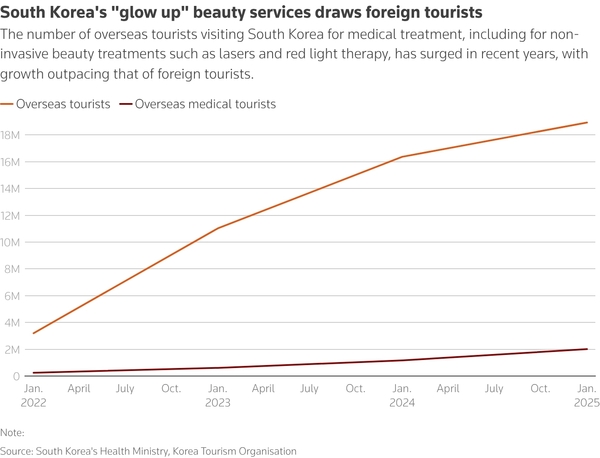
South Korea's medical tourism sector is booming, driven by a surge in foreign visitors seeking non-invasive aesthetic treatments like laser therapy, skin lifting, and Botox. In 2025, the country welcomed approximately 2 million medical tourists, nearly double the 1.17 million recorded in 2024, signaling a major shift from invasive cosmetic surgery to safer, faster-recovery procedures. This trend presents significant opportunities for overseas distributors and clinic buyers in the aesthetic device and consumables supply chain.
Market signal
The shift from invasive surgeries to non-invasive treatments is reshaping demand in the aesthetic market. According to Reuters, South Korea saw about 2 million medical tourists in 2025, up from 1.17 million in 2024. Popular procedures now include red light therapy, ultrasound skin lifting, and laser treatments, which offer quicker recovery and lower risk compared to traditional plastic surgery. This trend is particularly strong among middle-aged and older demographics seeking anti-aging solutions.
Buyer demand insights
Foreign patients are increasingly choosing South Korea for its advanced K-beauty technology, safety standards, and competitive pricing. Maria Ju, a tourist from Dubai, said, "I feel safe getting facial treatments in Korea, so I've visited multiple times," noting she undergoes several non-invasive procedures per visit. Cindy Gu, 30, from the United States, added, "I can get a variety of K-beauty treatments at reasonable prices that I can't find in the U.S." These testimonials highlight the appeal of bundled, multi-procedure visits.
Sourcing context

South Korea's aesthetic clinic market is highly competitive, with approximately 15,000 skin care clinics nationwide. A typical clinic in Gangnam sees around 100 foreign patients daily, with an average spending of about 1.5 million won (roughly $1,000) per person. This intense competition drives price competitiveness and innovation, making Korean-made aesthetic devices and consumables attractive for importers and distributors looking for cost-effective, high-quality products.
Regulatory and channel signals
The Korean government is actively supporting the medical tourism boom by expanding infrastructure and promotional efforts. Hong Seung-wook, head of the Global Healthcare Business Division at the Korea Health Industry Development Institute, stated, "The growth rate of foreign patients is faster than that of general tourists," and plans to aggressively promote anti-aging treatments to middle-aged and older demographics. The rise of the #KoreaGlowUp hashtag on social media is further amplifying this trend, creating new marketing channels for aesthetic brands and suppliers.
What buyers should watch
For overseas importers and clinic buyers, the growing demand for non-invasive aesthetic procedures in South Korea signals a need to source advanced laser, ultrasound, and light therapy devices. The competitive clinic environment also means consumables like injectables, skincare products, and packaging for K-beauty brands are in high demand. Distributors should monitor Korean regulatory updates and partnerships with local clinics to capitalize on this expanding market.
Source: Read the original report | Published: May 31, 2026