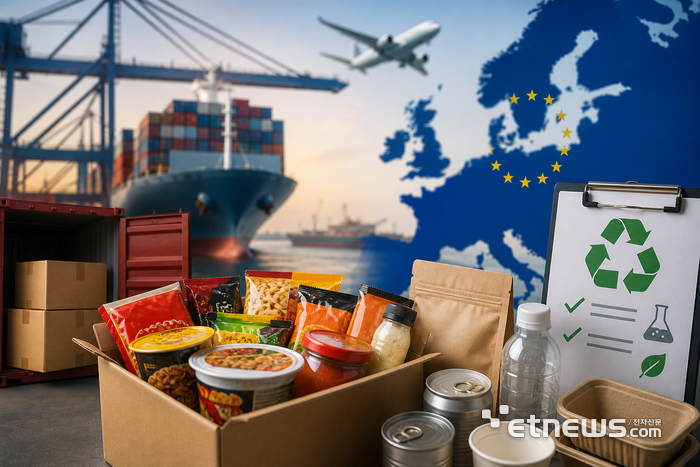
South Korean food companies are bracing for the European Union's Packaging and Packaging Waste Regulation (PPWR), set to take effect in August 2026, adding to existing logistics and cost burdens from the Middle East crisis. The regulation imposes restrictions on hazardous substances, bans excessive packaging, and mandates the use of recycled materials for all packaging used in the EU.
Starting August 12, 2026, restrictions on four heavy metals and per- and polyfluoroalkyl substances (PFAS) will apply, with further requirements on recyclability grades and recycled content phased in from 2030. However, specific substance criteria and testing methods for PFAS have not yet been finalized, causing confusion among manufacturers.
Major food companies are taking steps to comply. Lotte Wellfood is collaborating with Lotte Central Research Institute to test packaging against PPWR standards. Binggrae is focusing on recyclable design, plastic reduction, and increased use of recycled materials. Ottogi is analyzing packaging elements for European exports and coordinating across departments. Samyang Foods is adapting to lifecycle packaging regulations. Nongshim is researching a shift to mono-material (All-PP) packaging to improve recyclability, aiming for an EU recyclability A-grade.
Despite these efforts, confusion persists due to a lack of detailed EU guidelines and differing interpretations among local testing agencies and law firms. Companies must produce compliant goods by June 2026 to meet the August deadline, adding urgency. The government is urged to provide unified guidance and support to sustain the K-food export momentum.
An industry insider said, 'There are no detailed guidelines for PPWR compliance, and even domestic institutions interpret the rules differently, causing confusion on the ground. The government needs to establish unified standards and provide active support to maintain the K-food export momentum.'
Source: Read the original report | Published: May 06, 2026