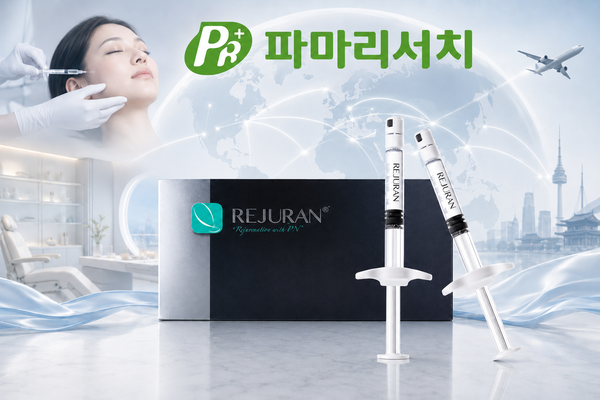
The expansion of K-medical tourism is providing a structural boost to PharmaResearch's domestic growth, according to a recent analysis. As demand for dermatological procedures among foreign patients surges, PharmaResearch's Rejuran—backed by proven safety and efficacy—is maintaining a solid position even amid intensifying competition in Korea's aesthetic medical market.
Korea's medical tourism market has exploded post-pandemic. Data from the Ministry of Health and Welfare shows that the number of foreign patients visiting Korea in 2024 reached 1.17 million, a 93% increase year-on-year and more than double the pre-pandemic peak of 497,000 in 2019—the highest since medical tourism was institutionalized in 2009.
Demand is heavily concentrated in aesthetic medicine. In 2024, dermatology accounted for 705,000 foreign patients, or 56.6% of the total. Combined treatment costs for dermatology and plastic surgery reached 958.6 billion KRW, representing 77.3% of the total 1.24 trillion KRW. Dermatology treatment costs surged from 59.7 billion KRW in 2019 to 602.3 billion KRW in 2024—a roughly tenfold increase in five years. Trust in K-beauty, driven by Hallyu content, is naturally translating into global demand for aesthetic and dermatological procedures.
This growth trend continues in 2025. According to the Korea Tourism Data Lab, foreign spending on dermatological treatments reached 113.8 billion KRW in March 2025, up 28% from 88.7 billion KRW in March 2024. The cumulative total for January–March 2025 was 273.4 billion KRW, a 36% increase from 201.3 billion KRW in the same period last year. Foreign spending on plastic surgery also rose 49% year-on-year, from 28.1 billion KRW to 42 billion KRW.
This rapid expansion in foreign aesthetic procedure demand is opening additional growth potential for Korea's domestic aesthetic device and treatment market. As foreign patient treatments boost revenue and procedure volumes at local dermatology and plastic surgery clinics, domestic sales of products used in these procedures also rise.
The aesthetic medical market is no longer solely dependent on the domestic population. The market's characteristic that clinically proven safety and efficacy determine survival is becoming more pronounced amid growing medical tourism demand.
PharmaResearch's first-quarter results confirm this trend. The company reported consolidated revenue of 146.1 billion KRW, up 25% year-on-year, and operating profit of 57.3 billion KRW, up 28%. The operating profit margin reached 39%. Medical device segment revenue grew 15% to 79.5 billion KRW, while cosmetics revenue rose 51% to 42.2 billion KRW.
Domestic medical device sales are the key focus. In Q1, domestic medical device revenue reached 58.4 billion KRW, a 21% increase year-on-year. This performance in a traditionally off-peak quarter approached levels typical of peak seasons. Concerns about market erosion from new skin booster launches by competitors like Lituo since the second half of last year have been alleviated by Q1 results. The explosive growth in foreign dermatology procedure demand, coupled with rapid expansion of domestic accounts from dermatology clinics to plastic surgery clinics, is driving domestic growth.
Medical device exports remained flat at 21.1 billion KRW year-on-year, but sluggishness in key markets like China and Japan was offset by shipments to Western Europe via French partner VIVACY and exports to the Middle East. Data from Gangneung, Gangwon Province, shows that filler exports reached $8.35 million in March 2025, up 60% from $5.23 million in March 2024. Exports to the U.S. more than tripled from $430,000 to $1.41 million over the same period. Considering additional European shipments after April and the timeline for U.S. medical device certification, export recovery is expected to gain momentum from Q2.
The cosmetics segment achieved record quarterly results in both domestic and export markets. Domestic cosmetics revenue rose 43% to 15.3 billion KRW, while exports increased 56% to 26.9 billion KRW. Initial shipments to Sephora in the U.S. sold out immediately upon entry, driving rapid store expansion, with related results expected to be fully reflected in Q2 earnings. The spillover effect of Rejuran procedure awareness boosting cosmetics consumption is gaining traction in developed markets like the U.S. and Europe.
Source: Read the original report | Published: May 28, 2026