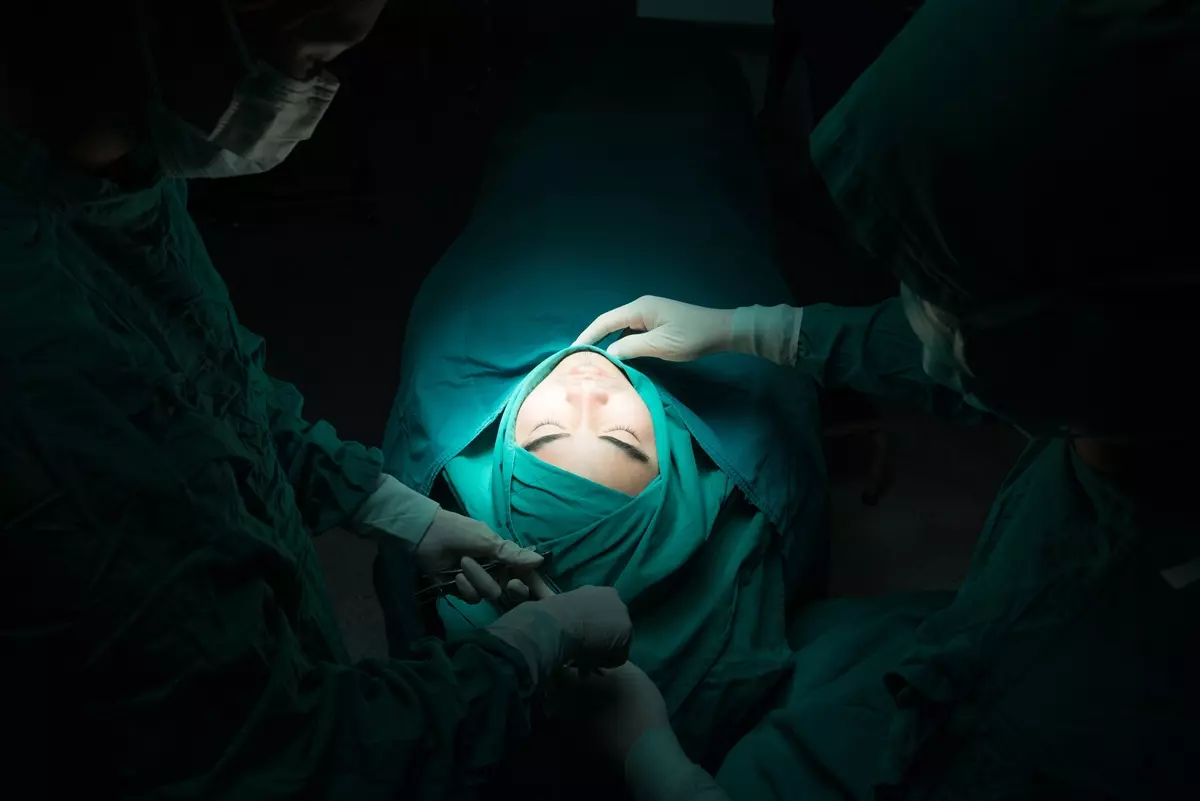
The growing demand for aesthetic procedures in South Korea has led to a parallel rise in the use of sleep anesthesia (sedation), raising safety alarms as accidents continue to occur. On March 24, a woman in her 40s suffered cardiac arrest during a lifting procedure under sleep anesthesia at a plastic surgery clinic in Gwangju and never regained consciousness. In November of last year, a man in his 50s died about 40 days after sustaining hypoxic brain damage following sleep anesthesia during upper and lower blepharoplasty at a Seoul plastic surgery clinic.
While sleep anesthesia offers benefits such as pain-free procedures using propofol or midazolam, experts stress it is not a 'simple nap.' Unlike general anesthesia, patients maintain spontaneous breathing, but the sedation depth can fluctuate, requiring continuous monitoring. A National Scientific Investigation Research Institute analysis of 50 aesthetic procedure-related deaths from 2016 to 2024 found that 23 were anesthesia-related, with 22 (96%) occurring in clinic-level facilities.
Dr. Kim Nam-woo, a pain medicine specialist at Fore Dermatology Clinic, explained, "In anesthesiology, sleep anesthesia is described as 'general anesthesia without intubation.' Even at light sedation levels, a patient's spontaneous breathing can be compromised, so it requires even more meticulous monitoring than general anesthesia." The primary risk is respiratory depression: propofol, ketamine, and midazolam can suppress the central nervous system, leading to hypoxia, cardiac arrest, or shock from low blood pressure.
The core issue is a 'monitoring gap.' In large hospitals, an anesthesiologist is present during procedures requiring anesthesia. Professor Woo Soo-hyun of Plastic Surgery at Chung-Ang University Hospital noted, "At university hospitals, whether for cosmetic or therapeutic surgery, an anesthesiologist is always involved. The system is specialized, and inexperienced areas are entrusted to experts."
However, in many dermatology and plastic surgery clinics, the operating physician often administers sleep anesthesia themselves due to cost and staffing constraints. South Korean medical law does not require an anesthesiologist to perform anesthesia; any licensed doctor can do so. Among 1,227 plastic surgery clinics nationwide, only 61 (4.9%) employ at least one anesthesiologist. While safety can be ensured with proper training, equipment, and emergency protocols, the dual role of surgeon and anesthesiologist is widely criticized. Dr. Kim Nam-woo described it as "like driving with one hand while reading a book with the other—extremely dangerous." Even with a nurse assisting, non-specialist staff may fail to recognize warning signs on monitoring devices, leading to preventable accidents.
Furthermore, the marketing of sleep anesthesia as a pain-free selling point has led to a phenomenon where some patients seek procedures primarily to experience sedation. Dr. Kim Jae-hong, director of the Yeonsei Jo Eun Dermatology Gwangmyeong branch, observed, "In the past, sleep anesthesia was used selectively based on medical necessity. Recently, clinics have marketed it as 'get a lift without pain,' and some patients now seem to undergo procedures just for the sedation experience."
Source: Read the original report | Published: May 14, 2026