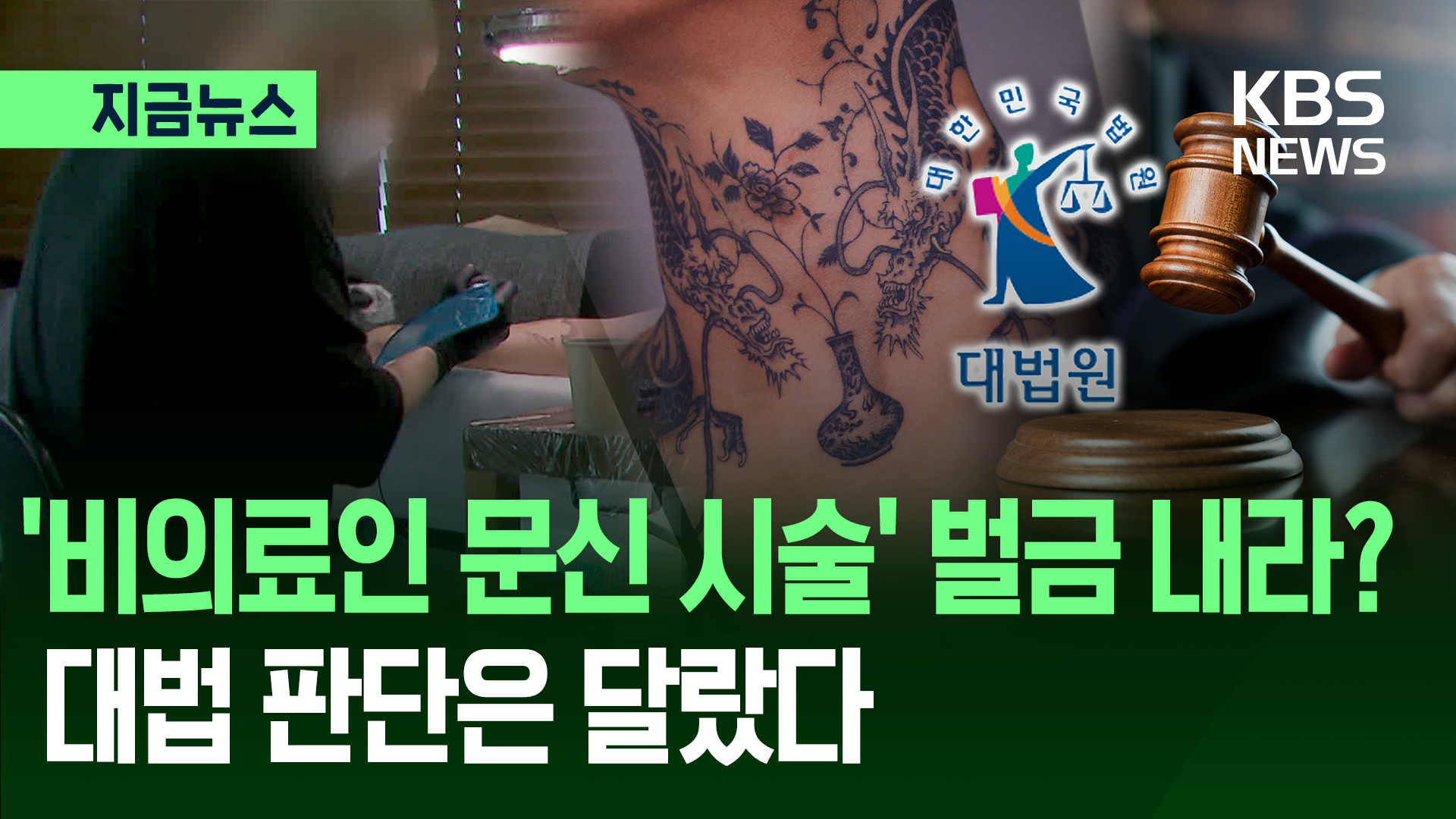
The Supreme Court of South Korea has ruled that non-medical practitioners cannot be punished for performing tattoo procedures as unlicensed medical practice, overturning a 1992 precedent that had classified tattooing as a medical act.
In a full bench decision on May 21, 2026, the Supreme Court quashed lower court convictions and remanded the cases of two defendants—identified as Mr. Park and Mr. Baek—who had been fined for violating the Medical Service Act.
Mr. Park, who operated a beauty salon, was fined 1.5 million won for performing a scalp tattoo in 2020. Mr. Baek was fined 1 million won for performing a lettering tattoo in May 2019.
Justice Seok-jun Oh stated: "Ordinary cosmetic tattooing is mostly performed without direct connection to disease prevention or treatment. The practitioner also focuses on aesthetic and cosmetic aspects when performing the tattoo."
The court added: "Tattooing was widely performed long before medical professionals with specialized medical knowledge emerged. The field requires aesthetic knowledge, skill, and experience, and successful procedures do not necessarily require medical expertise comparable to that of a healthcare provider."
Industry estimates indicate that approximately 13 million people in South Korea have received semi-permanent makeup or tattoo procedures. K-tattoo has gained such popularity that the number of foreign tourists seeking Korean tattoo artists has increased.
Criticism that the law had failed to keep pace with reality led to the creation of the "Tattooist Act," which allows non-medical practitioners to perform tattoos. However, ahead of the law's implementation in October 2027, lower courts had delivered conflicting verdicts on the legality of such procedures.
The Supreme Court left open the possibility of criminal liability in cases where procedures cause injury.
Source: Read the original report | Published: May 21, 2026