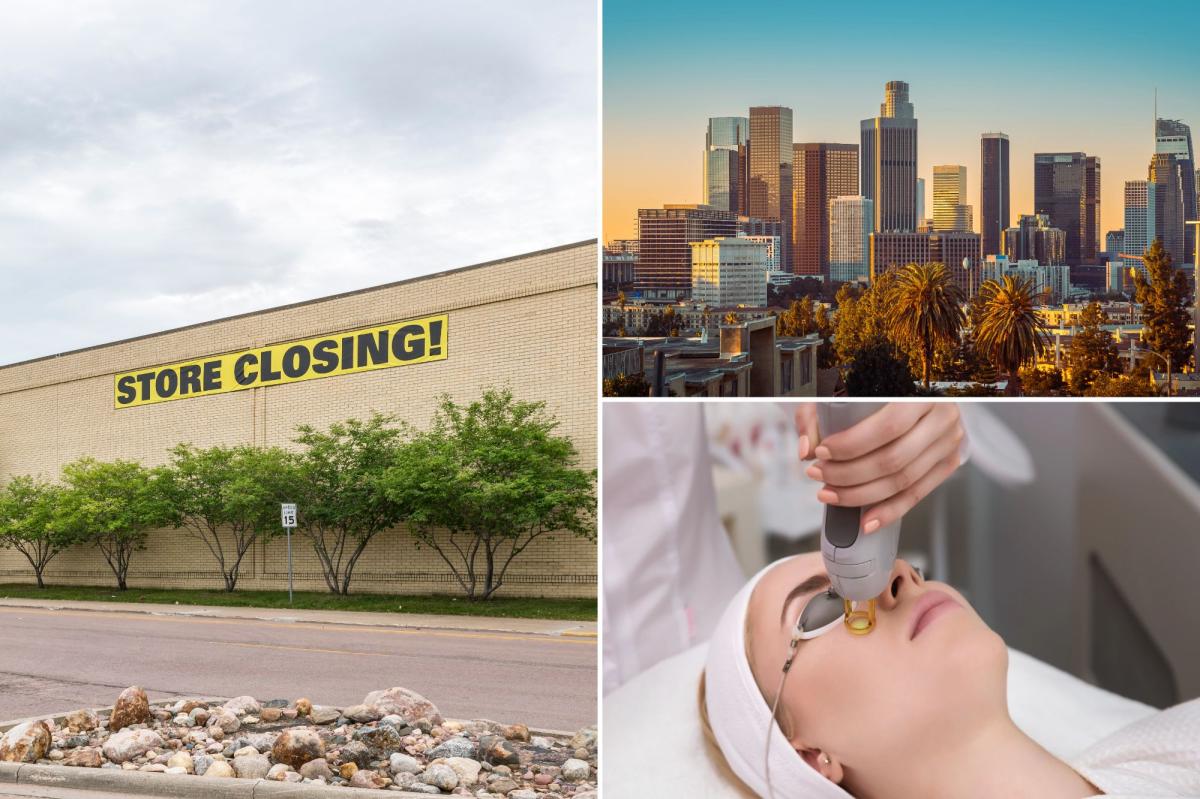
A 17-year analysis of med spa retail leasing across the four largest U.S. markets reveals a slow but relentless takeover of American retail real estate by wellness facilities, a trend that began long before the rise of Ozempic or red-light therapy and shows no signs of slowing down.
In 2008, med spas signed leases on just 50,261 square feet of retail space in Los Angeles, according to CoStar Group data. That same year, the four markets combined—Los Angeles, New York City, South Florida, and Chicago—accounted for roughly 143,000 square feet of new med spa leasing nationally, against a total U.S. wellness leasing figure of just over 1 million square feet. The category was barely a blip.
By 2024, Los Angeles alone hit 217,945 square feet in a single year, the highest single-market reading in the entire dataset and nearly double the city’s historical average. The four markets combined cleared 360,000 square feet.
Brandon Svec, national director of U.S. retail analytics for CoStar Group, said the numbers reflect something deeper than a passing trend.
“A sign of success today is a youthful appearance and good health, whereas it was a luxury handbag or a private jet 10 years ago,” he told The Post. “Health and wellness has become the new status symbol.”
Svec points to the pandemic as a turning point. Americans emerged from lockdown more focused on how they looked and felt than perhaps any previous generation, and an industry was waiting to meet them.
“We came out of the pandemic a little softer, probably, than we would have liked,” he said. “And now there’s just an overall wellness trend that has really gone mainstream.”
Svec added, “You can almost think wellness has been commoditized now and brought to the masses.”
In the years immediately following the financial crisis, Los Angeles and New York dominated med spa expansion. Chicago, not traditionally associated with the wellness industrial complex, quietly became a powerhouse—hitting 108,186 square feet in 2019 alone, regularly outpacing Manhattan in total leasing activity. South Florida maintained a steady, if smaller, presence throughout.
Then COVID hit and the whole thing fell apart—briefly. Los Angeles cratered from 130,838 square feet in 2019 to 68,461 in 2020. Chicago went from its all-time high of 108,186 to 15,890. Leasing roared back. By 2024 Los Angeles alone hit 217,945 square feet in a single year, an all-time record for any city in the entire dataset, nearly double its own historical average.
The pandemic didn’t kill the med spa. It created its best customer.
Service-oriented tenants leased just over 50% of total retail square footage in 2025, surpassing goods-based retailers for the first time in recorded history, according to CoStar. The wellness sector alone totaled $2.1 trillion in 2024, according to the Global Wellness Institute. Driving a significant chunk of that shift, tucked between nail salons and fitness studios in some of the country’s most coveted ZIP codes, is the American med spa.
For med spas specifically, Svec considers them among the fastest-growing categories within the broader personal care and wellness sector.
“We’re not opening a ton of new nail and hair salons today,” he said. “What we are opening is a new form of wellness and a new form of personal care that quite frankly never existed to the mass consumer.”
Social media has been gasoline on the fire. In a world where personal appearance has become its own public brand, spending on the face and body carries a different cultural weight than it once did.
Then came the weight loss drugs. Svec describes what he sees happening in the market as Americans trading Big Macs for barbells. Fitness center leasing jumped from 11% to 15% of all service leasing last year. Restaurant and bar leasing dropped from 19% to just over 16% in the same period.
“The biggest declining sector last year was food, and the biggest increasing sector last year from leasing was fitness,” Svec said.
In other words, the same cultural moment that is emptying fast food drive-throughs is filling med spa waiting rooms. GLP-1 users lose the weight and then, as Planet Fitness chief development officer Chip Ohlsson explained, want somewhere to tone it up. The med spa is ready and waiting.
But the runway, Svec cautions, is narrowing. The commercial real estate market has tightened severely over the past five years, with roughly 25% less small-format retail space available today than in 2019. Rents on spaces under 5,000 square feet, the sweet spot for most med spas, have risen by more than 30% over the past decade.
“It’s a combination of there just not being available to lease, and when you find that space, you better have high revenue assumptions for what you can do out of that location,” Svec said.
Svec notes that operators are increasingly moving into suburban strip centers and neighborhood retail, but almost exclusively in areas with household incomes well above $100,000.
Source: Read the original report | Published: May 07, 2026