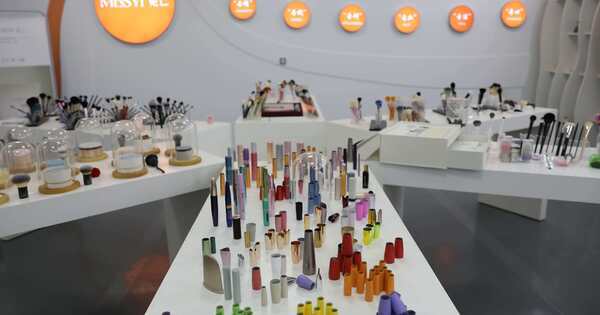
Two inland manufacturing hubs in China's Henan Province—Luyi County and Xuchang City—are transforming from raw material and contract manufacturing bases into brand-driven, direct-to-buyer exporters. Luyi supplies over 85% of the world's artificial makeup brush fiber materials and accounts for more than 90% of China's makeup brush exports. Xuchang produces six out of every ten wigs sold globally, with over 4,000 companies in its cluster. This shift signals new sourcing opportunities for overseas importers and distributors seeking higher-quality, branded products and more direct supply-chain control.
Market signal
Luyi's makeup brush industry began in the late 1970s, when villagers discovered export value in sheep tail hair. For decades, local companies processed hair materials and sold semifinished goods or manufactured products for foreign labels. In 2016, the county launched an industrial park with rent-free factory space, subsidized loans, a provincial quality inspection center, and a cross-border e-commerce incubator to attract returnees from coastal trading hubs. One such returnee, Huang Chunjie, chairman of DIAS, moved from raw-material sales and contract manufacturing to building his own brand of mid- to high-end makeup brushes and beauty sponges for overseas markets.
Sourcing context
Xuchang's hair trade has deeper historical roots, dating back to the Ming Dynasty (1368–1644), when residents traded needles and thread for human hair to make stage beards and headpieces. By the late Qing Dynasty (1644–1911), local merchants exported processed hair to Europe via German traders. Today, Xuchang's advantage lies in materials technology, skilled labor, and the ability to transform a centuries-old hair trade into a modern export cluster, rather than relying solely on industrial-park policies.
What buyers should watch
Both clusters are now moving closer to end buyers. Xuchang has integrated livestreaming rooms and cross-border e-commerce bases into its export system, selling wigs through AliExpress, Amazon, and TikTok Shop. During the 2025 Black Friday, Rebecca's cross-border e-commerce sales reached $1.49 million. Chen, a company representative, noted that this channel now accounts for nearly 35% of total sales and could rise to roughly 50% this year. For overseas buyers, this means more direct access to manufacturers who control materials, brands, delivery, and online storefronts—reducing reliance on intermediaries.
Regulatory and channel signals
The shift is not just about export volume but about where profits sit in the chain. As local companies gain control over materials, brands, logistics, and online sales, they become less invisible suppliers behind overseas labels. This trend may lead to more competitive pricing, faster innovation, and greater transparency for importers and distributors in the medical aesthetics supply chain.
Source: Read the original report | Published: June 12, 2026