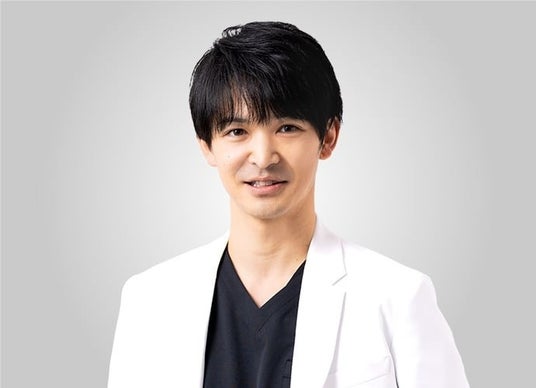
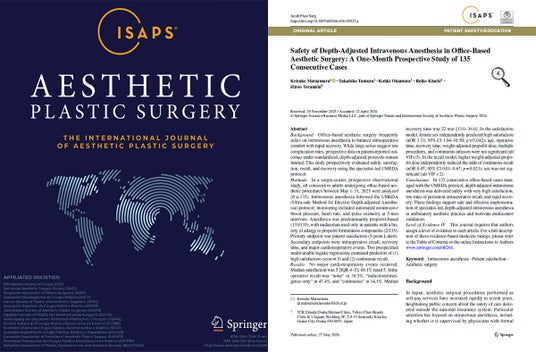
A prospective study led by Dr. Keisuke Matsumura of TCB Tokyo Central Beauty Clinic has confirmed the safety and patient experience benefits of depth-adjusted intravenous anesthesia (UMEDA protocol) in office-based aesthetic surgery. Published in Aesthetic Plastic Surgery, the findings offer clinic operators and anesthesia providers a validated protocol for enhancing patient comfort and operational efficiency.
Study design and safety outcomes
The single-center prospective study enrolled 135 consecutive adult patients undergoing office-based aesthetic surgery at TCB Umeda Osaka Station Clinic between May 1 and May 31, 2025. Under the UMEDA (Ultra-safe Method for Elective Depth-adjusted Anesthesia) protocol, vital signs were monitored every five minutes. Propofol was used in 133 of 135 cases; midazolam was substituted for two patients with propofol allergies. No major respiratory or cardiovascular events occurred during the study period.
Patient-reported outcomes
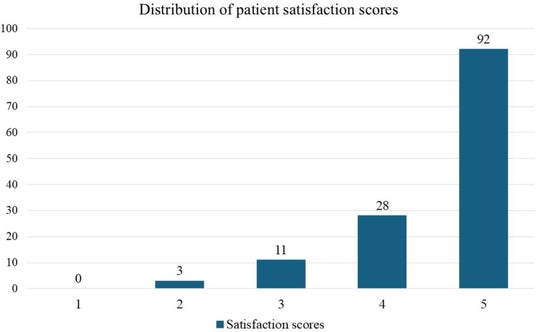
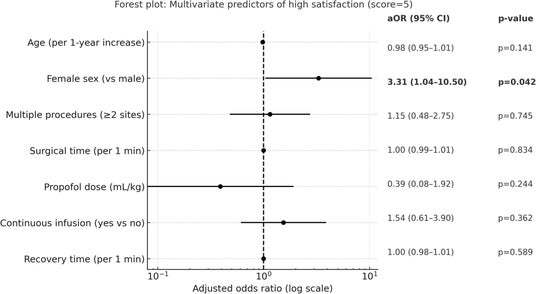
Median patient satisfaction was 5 on a 5-point Likert scale, with 68.1% of patients rating their experience as 5. Intraoperative memory was absent in 38.5% of patients, limited to induction/emergence in 47.4%, and sustained in only 14.1%. Median recovery time was 22 minutes (IQR 13.0–36.0). Female sex independently predicted high satisfaction (aOR 3.31; 95% CI 1.04–10.50; p=0.042). Higher weight-adjusted propofol dose independently reduced the odds of sustained intraoperative memory (aOR 0.07; 95% CI 0.01–0.67; p=0.021).
Regulatory and channel signals
This prospective study builds on TCB's earlier retrospective safety audit of 4,397 IV sedation cases. By systematically evaluating patient experience metrics—satisfaction, intraoperative memory, and recovery time—under a standardized protocol, the research provides a replicable framework for clinics seeking to improve anesthesia quality and patient throughput. The UMEDA protocol's emphasis on depth adjustment and frequent monitoring may inform future best-practice guidelines for office-based aesthetic surgery.
Sourcing context
TCB operates 101 clinics across Japan as of June 2026 and maintains an active academic publication record in aesthetic surgery. The study was published in Aesthetic Plastic Surgery (DOI: 10.1007/s00266-026-05922-z) and authored by Matsumura K., Tamura T., Okumura K., et al. For buyers evaluating anesthesia protocols or clinic setup, this data supports the adoption of standardized, depth-adjusted IV sedation to enhance patient satisfaction and operational efficiency.
Source: Read the original report | Published: June 02, 2026