Major Korean beauty conglomerates—Amorepacific, LG Household & Health Care, and Aekyung Industrial—are aggressively launching exclusive ultra-low-price brands and mini sizes at Daiso, the leading discount variety store chain. With prices ranging from 1,000 to 5,000 won (approx. $0.75–$3.75), these products target Gen Z and young office workers seeking cost-effective skincare, color cosmetics, and men's care. For overseas buyers, this signals a strategic shift in how top-tier manufacturers test new formulations and capture price-sensitive consumers without diluting their premium brand equity.
Market signal
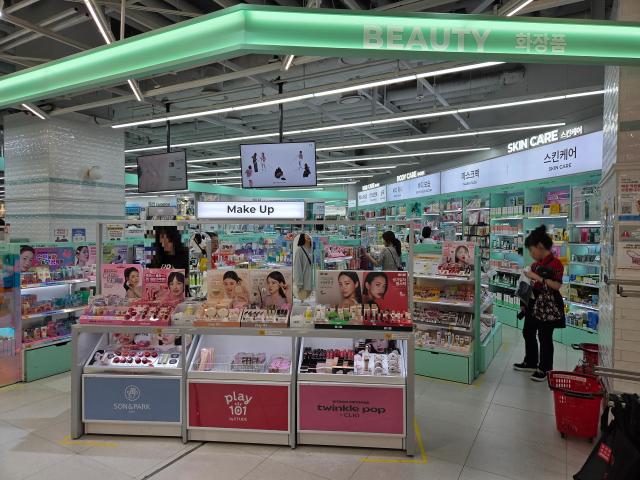
Amorepacific's Daiso-exclusive brand 'Mimo by Mamonde' sold over 1 million units in four months and 2 million in seven months after its September 2024 launch. Etude's 'Play 101' sold about 1 million units in the first half of last year after entering Daiso in March. The men's brand 'Prep by Biredy' became the top seller in the men's care category, moving 100,000 units in three months. Amorepacific is using Daiso as a testing ground for new ingredients and formulations, aiming to convert trial users into full-size purchasers of its core brands.
LG Household & Health Care operates 'CNP by O.D.T' for Daiso, a derma-cosmetic line. Its 'Spot Calming Gel' surpassed 1 million cumulative sales in nine months, driven by influencer buzz. The company also expanded beyond Daiso with 'Glow:Up by Beyond' for Emart, which grew from 8 to 18 SKUs and sold over 480,000 units by January this year. That line is now also sold in Emart stores in the Philippines, Vietnam, and Mongolia.
Aekyung Industrial launched color cosmetics brand '2edit' exclusively through Daiso, selling over 1.3 million units in seven months. Its 'Eye-Liner' sold 230,000 units in the same period. Half of the initial 28 SKUs sold out within five days on Daiso's online mall. Riding domestic success, the brand entered US Miniso, Don Quijote in Guam and Hawaii, and local K-beauty select shops. Its acne-care brand 'A-Solution' saw Daiso sales jump eightfold year-on-year in the relevant quarter, with a 2,000-won trouble patch selling out its first 100,000 units in one month.
What buyers should watch
For overseas distributors and clinic buyers, this trend reveals how Korean OEMs and brand owners are using ultra-low-price channels to rapidly validate product-market fit. The same manufacturers behind premium lines are now producing small-batch, low-cost variants that generate real-time consumer data. This model could be replicated in other markets via partnerships with local discount retailers or online platforms. Importers should watch for new ingredient trends and packaging formats that emerge from these Daiso test runs, as they often precede full-scale launches in higher-tier channels.
Regulatory and channel signals
While these products are sold domestically at ultra-low prices, they still comply with Korean cosmetics regulations (KFDA). For overseas buyers, this means the formulations have passed domestic safety and labeling standards. However, the channel strategy—exclusive to Daiso—limits direct export availability. Some brands like 'Glow:Up by Beyond' and '2edit' have already expanded to international retailers, suggesting that successful Daiso items may eventually become available for overseas procurement through official distribution agreements.
Sourcing context
The key challenge for beauty conglomerates is balancing new customer acquisition with potential cannibalization of their mid-to-premium lines. An industry insider noted: "Daiso entry is effective for attracting new customers, but it can increase price resistance for existing mid-to-high-end lines. Precisely separating the target and identity between ultra-low-price and premium brands will be a future task for major beauty companies." For B2B buyers, this means that while sourcing from these manufacturers is possible, the ultra-low-price SKUs may be restricted to specific channels or regions to protect brand hierarchy.
Source: Read the original report | Published: June 19, 2026