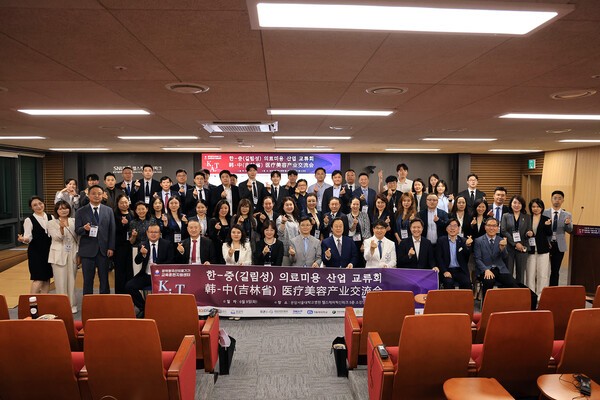
The Seongnam Regional Domestic Medical Device Education and Training Center, in collaboration with Chinese Jilin Province medical professionals, successfully concluded the third K-Beauty Advanced Skill Training Workshop (KAT) from June 9 to 11, 2024. The event marks a strategic push to introduce Korean aesthetic devices and techniques to the Chinese market, offering hands-on training and business matching for 11 Korean device manufacturers.
Event overview and market significance
Organized by the Ministry of Health and Welfare, Korea Health Industry Development Institute, and Seongnam City, the KAT workshop was co-hosted by Seongnam Industrial Promotion Agency, Seoul National University Bundang Hospital, Catholic University Industry-Academic Cooperation Foundation, Jilin Provincial Department of Commerce, Jilin Plastic Surgery Association, Pascal Clinic, and Pascal Korea. This third edition followed successful events in Ho Chi Minh City (2023) and Shenyang (May 2024), expanding into Jilin Province—a key region in Northeast China with growing medical tourism and biotech investment.
A total of 29 participants, including 23 medical professionals from public and private hospitals such as Beihua University, Jilin University, Yanbian University, and Zhongyan Beauty Group, along with six Jilin commerce officials, attended the three-day program.
Business matching and MOU signing
On the first day, a Korea-China Medical Aesthetics Industry Exchange Meeting was held at Seoul National University Bundang Hospital's Healthcare Innovation Park. Eleven Korean device companies—including Pharmaresearch, Huons Meditech, Ikleo, Hugel, Amaros, Meta Pharmaceutical, Airi, Woori Medical, J&L, Tula, and MediHub—presented their technologies and discussed market entry strategies with Chinese delegates.
A memorandum of understanding was signed between Seongnam Industrial Promotion Agency and the Jilin Plastic Surgery Association (led by President Zhang Lianfa), laying the groundwork for ongoing cooperation.
Hands-on training with Korean devices
The second day featured cadaver training at Catholic University International Surgical Skills Education Center and patient-based demonstrations at Pascal Clinic in Gangnam. Participants received practical education in procedures such as lower eyelid fat repositioning, thread lifting, and auto-injector techniques, using Korean-made devices including Pascal Korea's GASI sutures, Humedix's Elravie fillers, and MediHub's I-Ject digital syringe.
Factory visits and future cooperation
On the final day, the delegation visited three Seongnam-based device manufacturers—Huons Group, Pharmaresearch, and Ikleo—where they explored innovative products like DermaShine Pro and Rejuran, and discussed collaboration for the Chinese market.
What buyers should watch
This KAT workshop signals a structured channel for Chinese clinics and distributors to access Korean aesthetic devices through government-backed training and direct manufacturer engagement. Importers and clinic buyers in Northeast China should monitor follow-up programs and the newly signed MOU, which may facilitate streamlined procurement and technical partnerships. The involvement of major Korean injectable and device brands suggests potential for expanded distribution agreements.
Regulatory and channel signals
The event underscores Korea's strategy to use regional training centers as export platforms, supported by central and local government funding. For overseas buyers, this model reduces entry barriers by combining regulatory familiarization, clinical training, and business networking. The focus on Jilin Province—a strategic border region with growing medical infrastructure—indicates targeted market development in China's northeastern corridor.
Source: Read the original report | Published: June 14, 2026