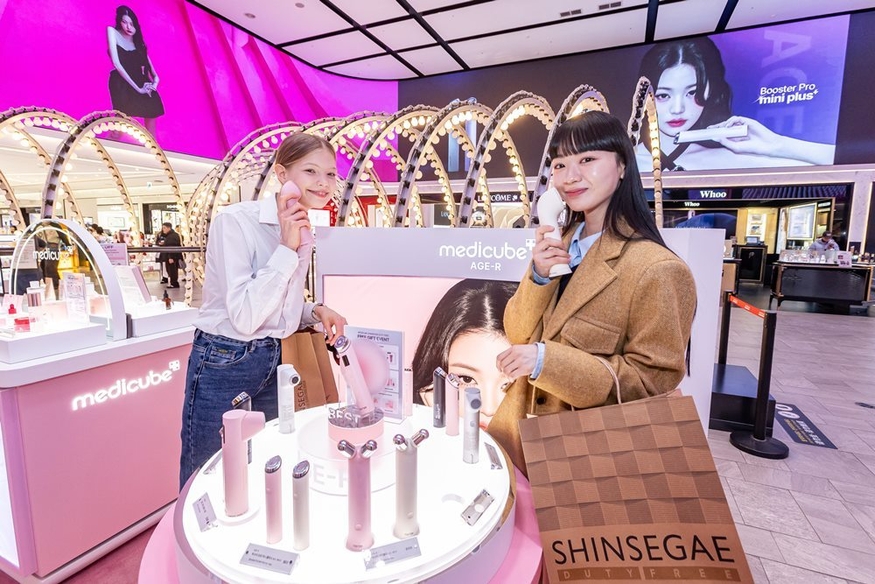
Shinsegae Duty Free is pivoting from traditional cosmetics and luxury goods toward home beauty devices and smart wearables, a strategic diversification that is already delivering strong sales growth. This shift signals new opportunities for overseas buyers in the K-beauty tech and lifestyle tech supply chain.
Market signal
Shinsegae Duty Free reported remarkable growth in its home beauty device segment. MedyCube's AGE-R, from global beauty firm APR, saw sales surge approximately 230% year-on-year in 2025. The channel also welcomed THOME, a beauty brand by lifestyle solutions company AtHome, which launched its LDM-based device 'The Glow' exclusively at Shinsegae's Myeongdong K-Beauty zone in July 2025. Within eight months, monthly sales in the duty-free channel skyrocketed 930% compared to the first month of entry.
Wearables expansion
Smart wearables also posted strong gains. Garmin, the global GPS and smartwatch leader, recorded a 60% year-on-year sales increase at Shinsegae Duty Free from January to May 2026, driven by traveler demand for premium health and fitness wearables. Shinsegae is further pushing boundaries by introducing AI glasses to the duty-free channel. It now operates exclusive experience zones for the Ray-Ban Meta Gen2 and Oakley Meta AI smart glasses, co-developed by Meta and EssilorLuxottica, at Incheon International Airport Terminal 2.
Sourcing context
The global home beauty device market is projected to grow at over 12% CAGR through 2032, reaching $32 billion (approximately 49 trillion KRW). Shinsegae's strategy aims to reduce reliance on traditional categories like cosmetics and liquor, while building a new growth engine around innovative, practical lifestyle tech products. This trend offers overseas distributors and clinic buyers a clear signal to explore partnerships with K-beauty tech brands and wearable manufacturers that are gaining traction in high-traffic travel retail channels.
What buyers should watch
For importers and distributors of aesthetic devices and consumables, the rapid sales acceleration of brands like MedyCube and THOME in duty-free indicates strong consumer pull for at-home beauty tech. Buyers should monitor these brands' expansion into other retail and clinic channels. Additionally, the integration of AI wearables into travel retail suggests a converging demand for health, beauty, and tech—a segment that could open new cross-category sourcing opportunities for medical aesthetics supply chains.
Source: Read the original report | Published: June 09, 2026