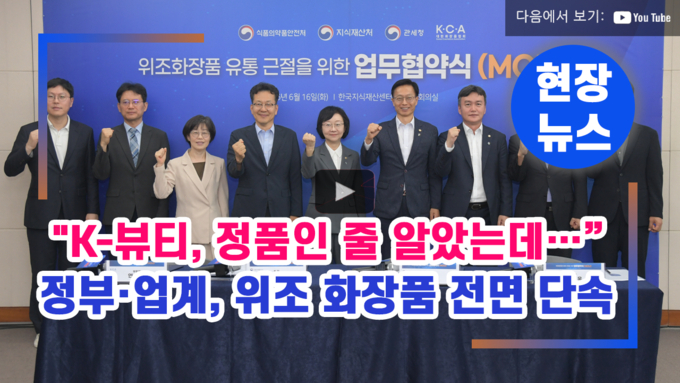
South Korean regulators and industry have signed a joint MOU to combat the growing threat of counterfeit cosmetics, which now account for an estimated $9.7 billion in intellectual property infringement globally. For overseas buyers and distributors of K-beauty products, this signals stronger supply-chain integrity and reduced risk of sourcing fake goods.
Market signal
South Korea's cosmetics exports hit a record $11.4 billion in 2025, ranking second globally. However, the rise in K-brand popularity has fueled a parallel surge in counterfeit products. According to OECD data, global IP infringement of Korean brands totals approximately $9.7 billion (KRW 11 trillion), with cosmetics making up 10% of customs seizures—the third-largest category after electronics and textiles.
Regulatory response
On June 16, 2026, the Ministry of Food and Drug Safety (MFDS), the Korea Intellectual Property Office (KIPO), the Korea Customs Service (KCS), and the Korea Cosmetic Association signed an MOU at the Korea Intellectual Property Center in Seoul. The agreement establishes a semi-annual public-private consultative body to share distribution intelligence, coordinate enforcement, and develop countermeasures against counterfeit cosmetics.

Enforcement measures
Key cooperation areas include collecting and sharing manufacturing, import, and distribution data; analyzing counterfeit cases to support investigation and policy; testing counterfeit products against safety standards; and blocking cross-border e-commerce and overseas direct purchases. Customs will use shared risk intelligence to preemptively intercept fake goods at borders and expand collaboration with customs and investigative agencies in major export markets.
What buyers should watch
For importers and distributors, the crackdown means tighter customs screening and online monitoring of suspected counterfeit sales. The MFDS will also strengthen quality management systems for cosmetics businesses, safety verification, and international standards compliance. This reduces the risk of inadvertently sourcing counterfeit K-beauty products and supports brand trust in global channels.

Official statements
MFDS Commissioner Oh Yu-kyung stated: "Counterfeit cosmetics are a serious threat to public health and the trust in K-beauty. We will thoroughly respond to counterfeits while providing practical support for quality management, safety verification, and international standards capacity building." KIPO Commissioner Kim Yong-sun added: "Protecting K-brands goes beyond securing rights—it directly links to overseas expansion and competitiveness. We will provide tailored brand protection for export companies and strengthen government-wide enforcement to remove trade barriers." KCS Commissioner Lee Jong-wook said: "Through this cooperation, we will share risk intelligence to preemptively block counterfeit imports at customs. We will also expand collaboration with customs and investigative agencies in key export markets to actively support K-brand companies' global market entry."
Source: Read the original report | Published: June 16, 2026